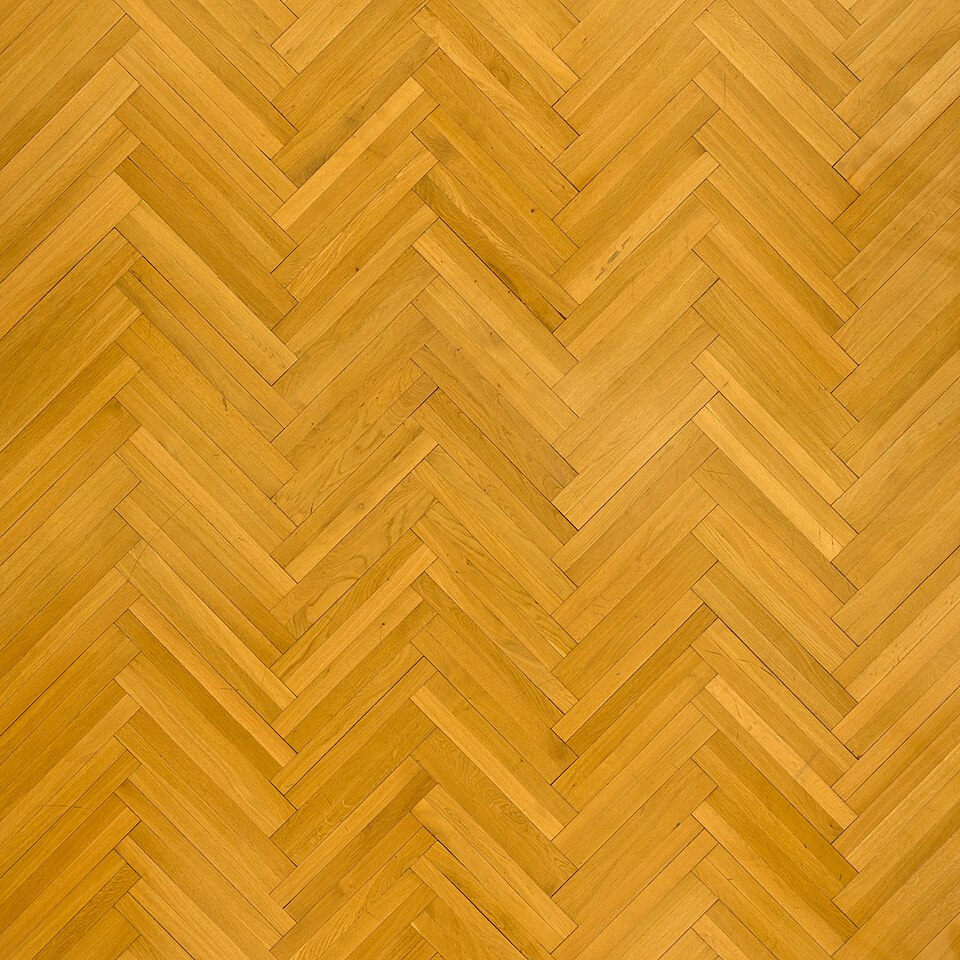
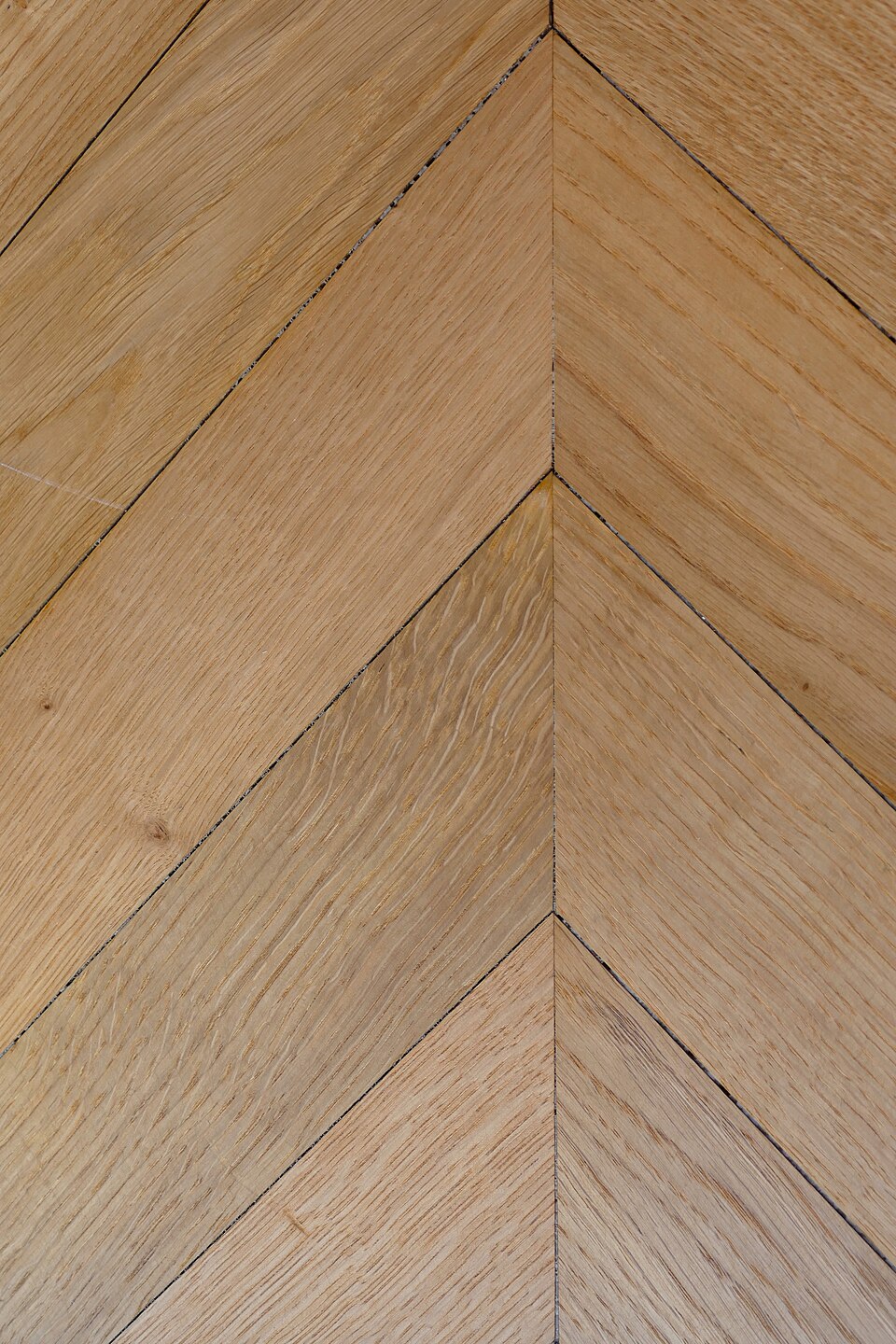
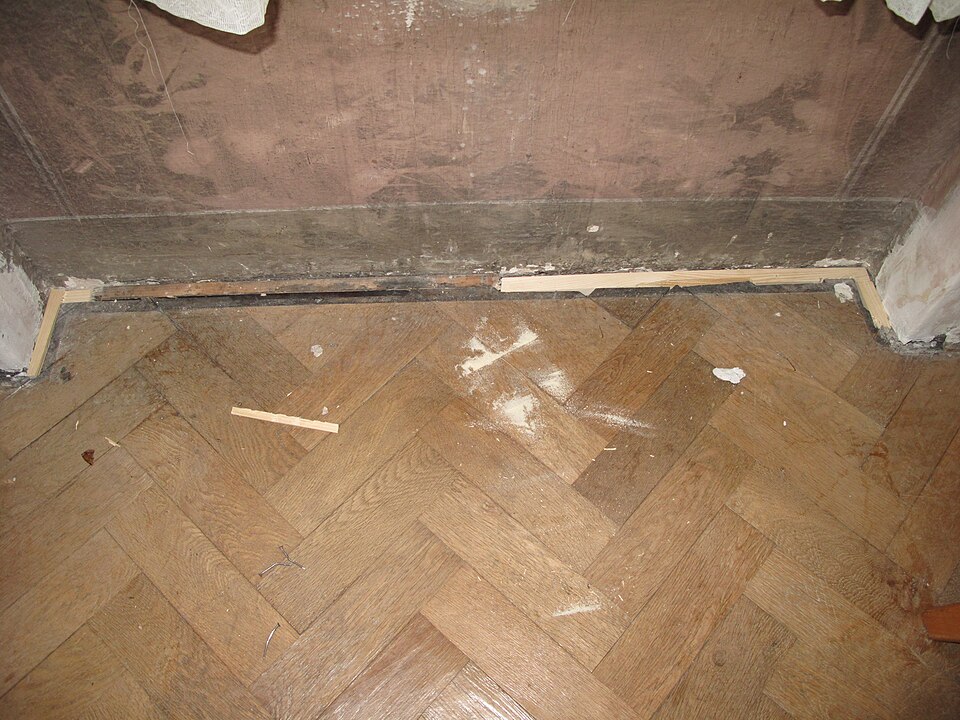
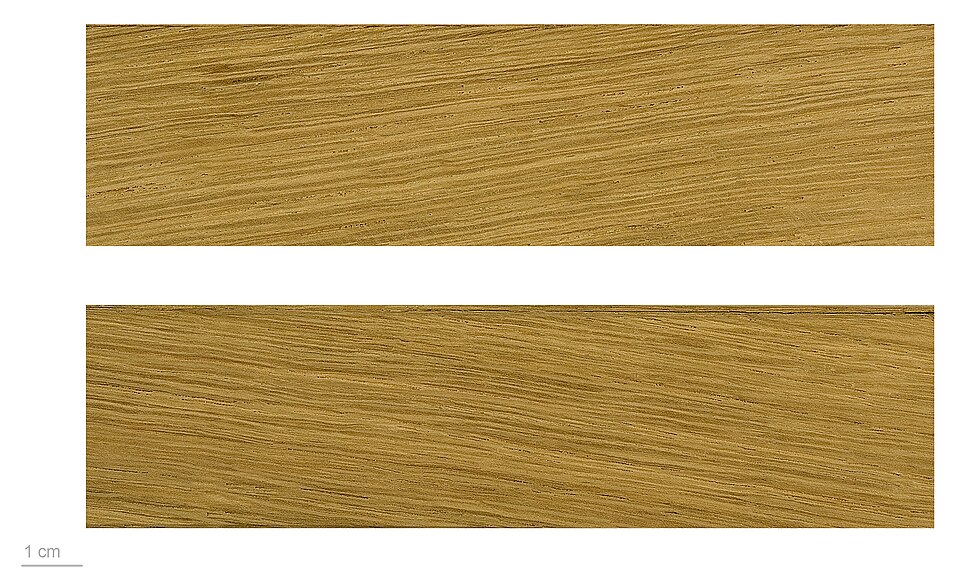
Point de Hongrie (Hungarian point) parquet
Quick answer
Point de Hongrie, or Hungarian point, is the French name for a parquet whose blades are laid like bâtons rompus but with their ends cut on the mitre, so they meet in unbroken zigzags. The cut is commonly about 45 degrees. English-speaking trades usually call the same layout chevron.
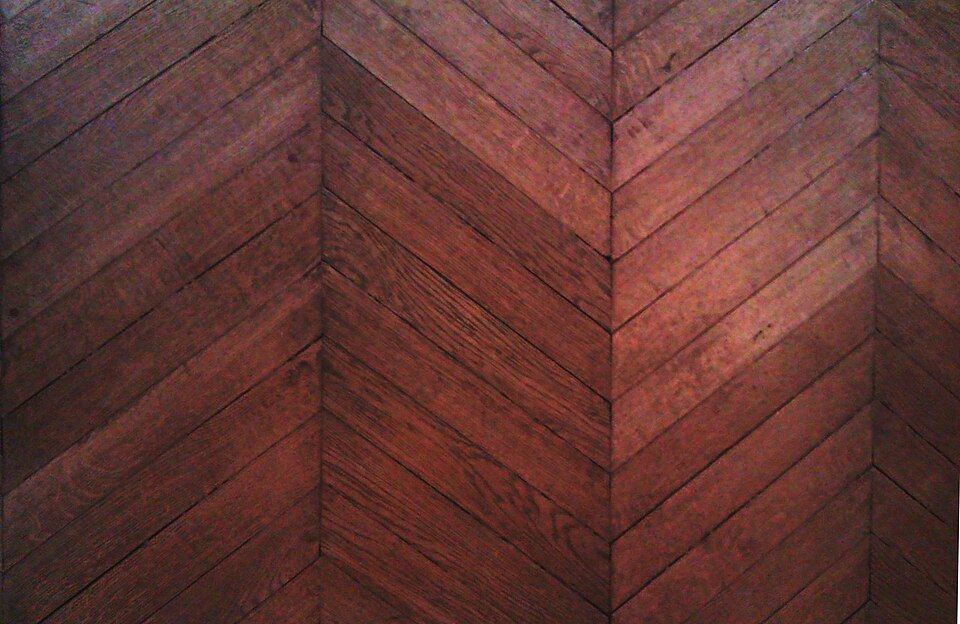
Point de Hongrie, literally "Hungary point", is the French name for a parquet whose blades are laid like bâtons rompus but with the ends cut on the mitre, so they meet in continuous zigzags1. The cut is commonly about 45 degrees2. English-speaking trades normally call the same layout chevron.
What is point de Hongrie parquet?
The Trésor de la langue française, the dictionary of the French research body CNRS, defines it in one line: a parquet whose blades, laid as in a bâtons rompus parquet, have their ends cut on the mitre1. The same entry defines bâtons rompus as a parquet whose blades, all of identical dimensions, are laid parallel to each other in bays1.
So the French definition rests on two ideas: long blades of equal size laid in bays, and mitred ends. When the ends are cut at an angle, neighbouring bays meet in a continuous line instead of the stepped edge you see in herringbone. This page covers the French terminology and history; for the English-language product view see the chevron flooring page.
Point de Hongrie or bâtons rompus: which term is which?
The two French terms are closely related, and in everyday use they are often mixed up.
| Term | Dictionary meaning | Visual result |
|---|---|---|
| Bâtons rompus | Blades of identical dimensions laid parallel to each other in bays1 | Stepped zigzag |
| Point de Hongrie | Laid as bâtons rompus, with ends cut on the mitre1 | Continuous, unbroken zigzag |
Manufacturers do not always follow the dictionary strictly. Bauwerk's French leaflet, for example, speaks of the French "pose à bâtons rompus" regaining interest in interior design, and separately says its 45 degree board suits chevron laying, "also known as point de Hongrie"4. When you order, ask for a drawing or a sample laid out, rather than relying on the name alone. Our herringbone vs chevron guide sets the two layouts side by side.
What angle is the cut?
A French library research service reports that the blades are of equal length with ends cut at about 45 degrees, sometimes 50 degrees, so the bays meet at right angles. It describes the result as zigzags that seem to give the floor two tones2.
Product literature gives a similar figure. Bauwerk's Formpark Rombico is a 2-ply board measuring 735 x 130 x 9.5 mm with a 45 degree blade angle4. The angle matters because left- and right-hand blades must match exactly: a different angle from another maker means the boards cannot be mixed. English-language sources also mention 60 degrees; see the chevron page.
Where does the name come from?
Nobody has established it. The Lyon library's Guichet du Savoir, asked about the origin in 2016, found no link between this parquet and Hungary or the embroidery stitch of the same name2. It lists other names: chevron, arêtes de poisson, fougères and en épis, and variants described as point de Hongrie retourné2.
How old is it in French interiors?
The Guichet du Savoir cites Franck Briatte's book Art et techniques du parquet for the pattern appearing in the 17th century, and a parquet maker's website for the early 17th and 18th centuries. It adds that the pattern was widespread and peaked around 19002. These are second-hand statements, so treat the dates as indicative.
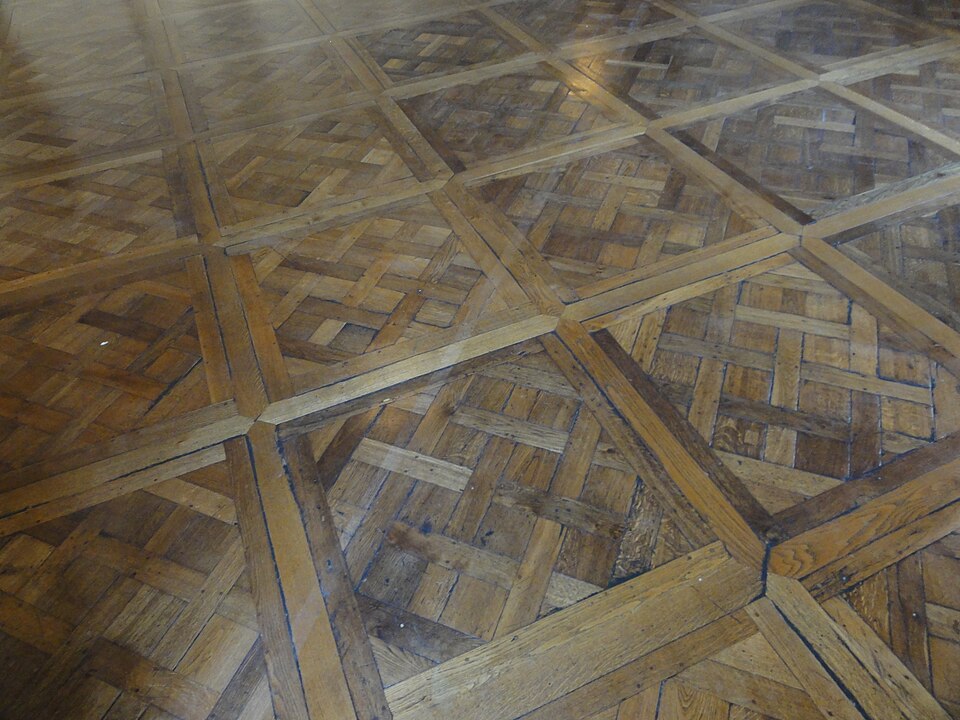
The dictionary gives context for the wider word. Its earliest dated sense of parquet as a flooring, an assembly of compartments laid on joists to serve as the floor of an apartment, is from 16641. That date concerns parquet in general and not this pattern. For the prestigious panel tradition of the same period, see Versailles panels.
How is point de Hongrie laid?
The NWFA treats chevron and herringbone together. These patterns are often glued down. They can be nailed if the pattern keeps an exposed side tongue, but the impact of a pneumatic nailer can force boards out of place and knock the pattern out of square3. Fasteners may also supplement a glue-down3.
Setting out starts from the room's control line. For chevron, measure the whole pattern width and divide by 2: the mitred point is the centre. The working lines fall on the opposite mitred end of each picket3. The NWFA also says the direction should follow client preference and may look best with the points running along the longest dimension of the room or toward a focal point3. For the wider methods, read our installation methods guide.
What does it look like, and what should you choose?
Because the mitres meet along unbroken lines, the floor reads as a directional arrow pattern, in contrast to the woven look of herringbone. The Guichet du Savoir notes the two-tone impression created by the zigzags2. The wood and build still decide durability, not the pattern. European oak is the usual species in French practice, solid or engineered.
As one example of an engineered version, the Paris maker OscarOno's point de Hongrie in select oak is an oak chevron in flatgrain select oak, 12 mm thick with a 4 mm top layer, in 150 or 190 mm widths, lacquered. Compare it with other makers' boards for angle, thickness and finish before ordering.
Frequently asked questions
What does point de Hongrie mean?
What is the difference between point de Hongrie and bâtons rompus?
What angle is a point de Hongrie blade cut at?
Is point de Hongrie the same as chevron?
Sources
- Parquet (definition), CNRTL, Trésor de la langue française informatisé (CNRS / ATILF). Accessed .
- Question d'origine : parquet point de Hongrie, Le Guichet du Savoir, Bibliothèque municipale de Lyon. Accessed .
- Wood Flooring Installation Guidelines (revised 2025), National Wood Flooring Association. Accessed .
- Formpark Rombico product leaflet, Bauwerk Parkett. Accessed .
This page compiles published data from the sources listed above. Read our editorial policy. Last updated .