Black walnut
Quick answer
Black walnut (Juglans nigra) is a North American hardwood prized for its dark chocolate-brown heartwood. It is softer than the American oaks and hard maple on published Janka figures, but has comparatively low shrinkage and is described as stable in use. Its colour is the main design variable: pale sapwood, optional steaming and light exposure all change how a floor looks.
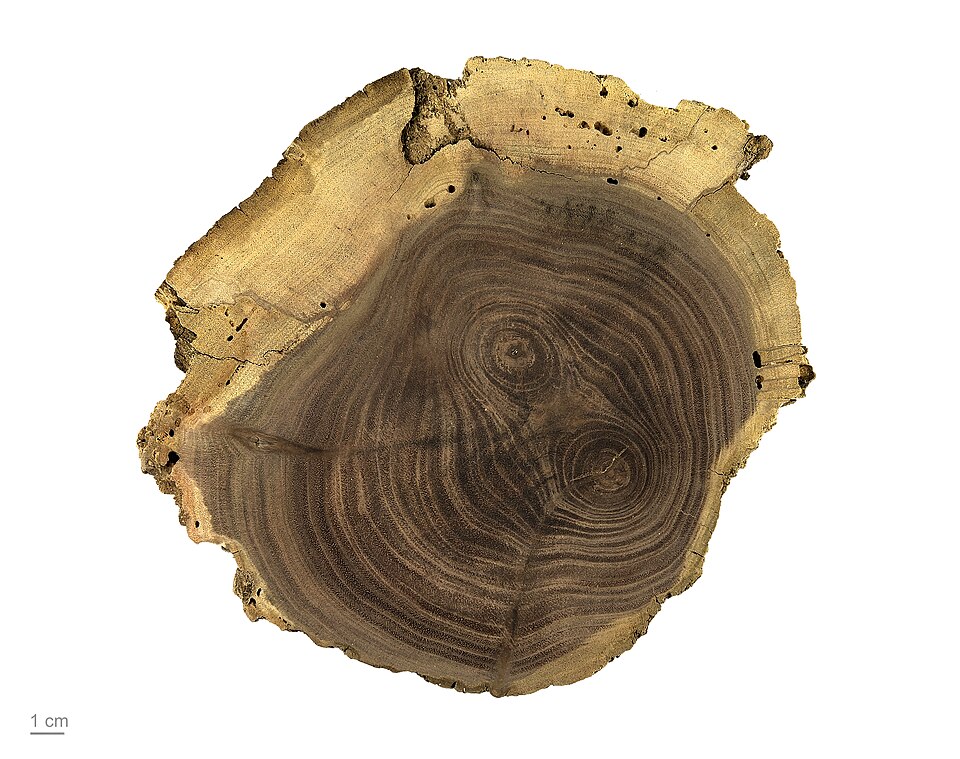
Black walnut (Juglans nigra) is a North American hardwood known for dark chocolate-brown heartwood. The Wood Database lists it at 1,010 lbf (4,490 N) on the Janka scale and 610 kg/m³ average dried weight1, which makes it softer and lighter than the American oaks. The USDA Wood Handbook describes it as normally straight grained, easily worked and stable in use5.
What is black walnut?
AHEC gives the Latin name as Juglans nigra and the other common name as black walnut6; The Wood Database also lists American walnut1. The Wood Handbook says the species ranges from Vermont to the Great Plains and south into Louisiana and Texas, with about three-quarters of the wood grown in the Central States5. AHEC describes trees growing widely across the eastern USA in mixed hardwood forests and on farms6. The Wood Database gives a typical height of 100 to 120 ft (30 to 37 m)1. AHEC adds that American walnut is a different species to European walnut, which tends to be lighter in colour6.
The European species, Juglans regia, has its own European walnut profile.
What colour and grain does walnut have?
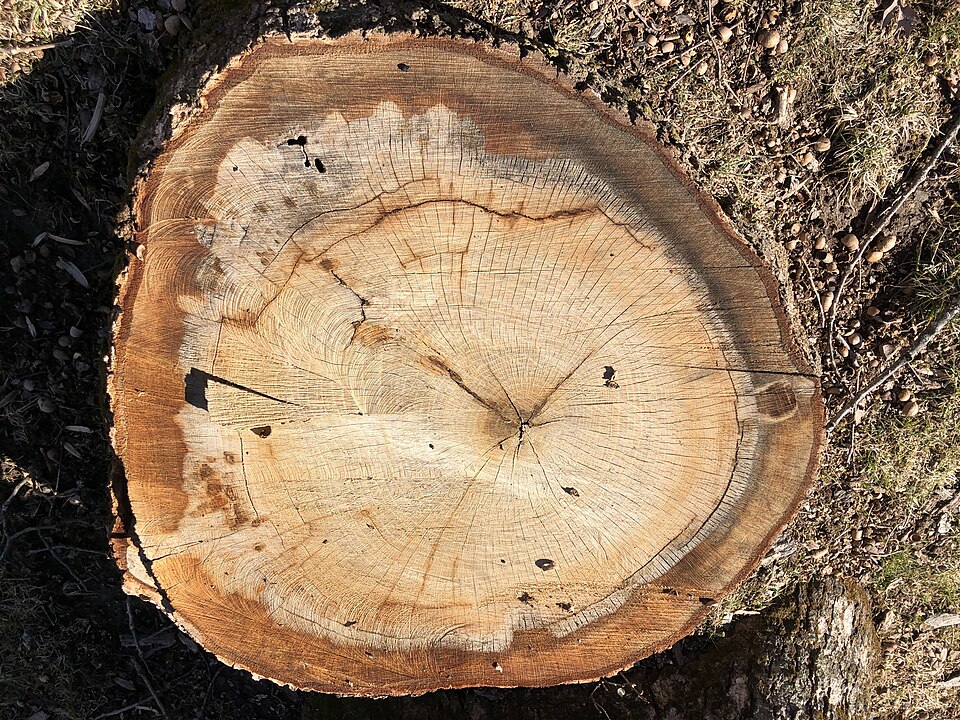
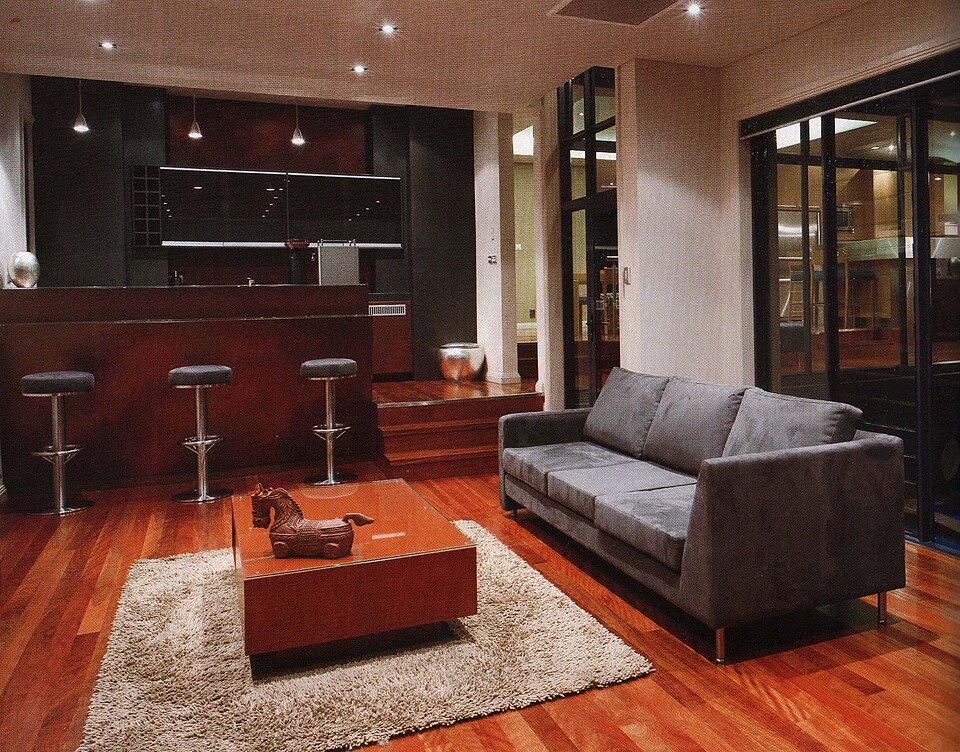
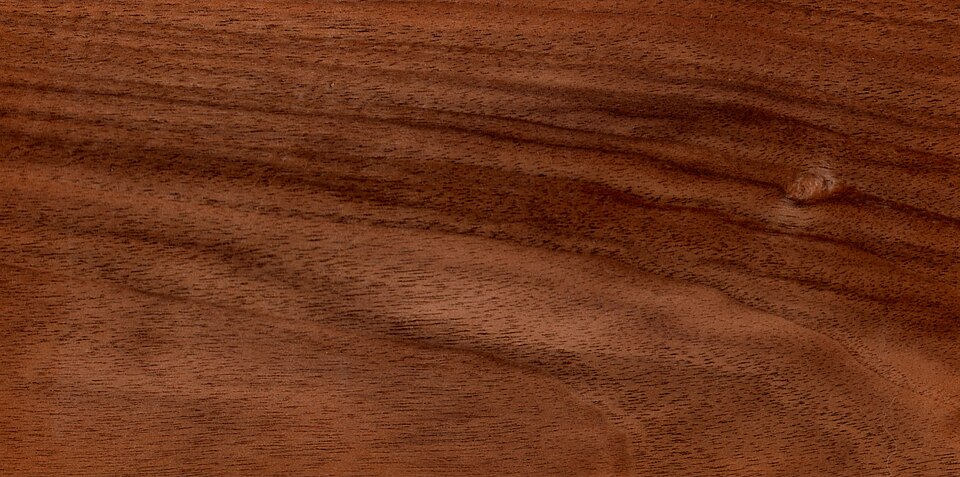
The Wood Database describes heartwood from pale brown to dark chocolate brown with darker streaks and sometimes a grey, purple or reddish cast, and sapwood from pale yellow-grey to nearly white. The grain is usually straight but can be irregular, with a medium texture and moderate natural lustre; curl, crotch and burl figure occur1. AHEC calls the sapwood creamy white and the heartwood light brown to dark chocolate brown, making the contrast quite distinct, and notes occasional dark or even purple streaks and wavy or curly grain6. The Wood Handbook adds that sapwood can be up to 8 cm (3 in.) wide in open-grown trees5.
That contrast shapes how walnut floors are sold. AHEC says lumber is generally sold un-steamed and unselected for colour, and that specialist producers may offer steamed walnut, intended to darken the sapwood and reduce the colour difference6. The NWFA/NOFMA walnut grades follow the same logic: Clear Walnut must show a face of 100 % true heartwood colouring, Select Walnut admits natural colour variation including steamed dark sapwood without prominent contrast, and No. 1 Common may contain prominent variation between light sapwood and dark heartwood7. For design choices around plank width and grade, see solid wood flooring.
Does walnut change colour over time?
AHEC notes that some species change colour over time on exposure to light, and that darker timbers such as walnut will lighten, while lighter timbers such as cherry will darken6. Treat this as a reason to plan rugs and furniture placement early and to compare a sample against an aged piece, rather than judging a new floor from a freshly sanded board. See also American cherry, which moves in the opposite direction.
How hard and dense is black walnut?
| Source | Hardness | Density |
|---|---|---|
| The Wood Database | 1,010 lbf (4,490 N), Janka | 610 kg/m³ average dried weight1 |
| USDA Wood Handbook | Side hardness 1,010 lbf (4,500 N) at 12 % moisture | Specific gravity 0.55 at 12 %5 |
| AHEC | 4,492 N | 609 kg/m³ and specific gravity 0.55 at 12 %6 |
The Wood Database gives specific gravity as 0.51 (basic) and 0.61 (at 12 % moisture content)1, which differs from the 0.55 in the other two sources, so check which basis a datasheet is quoting. The Wood Handbook defines hardness as resistance to indentation measured with a modified Janka test5. Against the same database's figures for other species, walnut is the softest of the group:
| Species | Janka hardness (The Wood Database) |
|---|---|
| Hard maple | 1,450 lbf4 |
| White oak | 1,350 lbf2 |
| Red oak | 1,220 lbf3 |
| Black walnut | 1,010 lbf1 |
Whether that matters depends on traffic, furniture and expectations; our guide to Janka hardness explains what the number does and does not tell you. AHEC describes walnut as tough, hard and of medium density, with moderate bending and crushing strength and low stiffness6.
How stable is black walnut?
The Wood Handbook gives shrinkage from green to ovendry of 5.5 % radially, 7.8 % tangentially and 12.8 % volumetrically5, and The Wood Database adds a tangential-to-radial ratio of 1.41. In the same Wood Handbook table, tangential shrinkage is 8.6 % for northern red oak, 9.9 % for sugar maple and 10.5 % for white oak5, so walnut moves less across the width of a plain-sawn board than those species. AHEC says walnut dries slowly and has good dimensional stability when dry6. Even so, every wood floor responds to humidity, so read moisture and acclimatisation before installing.
How does walnut take finishes?
The Wood Handbook says black walnut is well suited to natural finishes5. The Wood Database says it glues, stains and finishes well, though it is rarely stained, and notes that planer tearout can occur with irregular or figured grain1. AHEC says it can be stained and polished to an excellent finish6. Our guide to wood floor finishes compares the main coatings.
Walnut is also unusual for fuming. A peer-reviewed paper on ammonia fuming cites earlier work reporting the lowest colour change for black walnut among 38 species fumed, against the highest for black locust9. That is a secondary citation within the paper, so treat it as an indication rather than a measurement from the study itself.
Where is walnut used in flooring?
AHEC says walnut is used for flooring and panelling, and sometimes to contrast with lighter-coloured hardwoods6. The Wood Handbook lists furniture, architectural woodwork and decorative panels among its valued uses5. The NWFA names walnut among the common domestic species used for solid hardwood flooring in the United States, together with red oak, white oak, hard maple, hickory, pecan, cherry, birch, ash and beech8. Compare it with American white oak, American red oak and hard maple.
Is black walnut sustainable?
AHEC's inventory figures show U.S. walnut growing stock of 139.3 million m³ (1.0 % of total U.S. hardwood growing stock), growth of 4.8 million m³ a year against a harvest of 1.9 million m³, and growth exceeding harvest in all major supplying states except Michigan6. AHEC is a trade body promoting American hardwood, so these are industry-reported figures drawn from U.S. Forest Service inventory data. The Wood Database lists black walnut as least concern on the IUCN Red List and not listed in the CITES Appendices1.
Frequently asked questions
How hard is black walnut?
How does walnut compare with oak and maple for hardness?
Does black walnut change colour with light?
Is American walnut the same as European walnut?
Is black walnut sourced sustainably?
Sources
- Black Walnut, The Wood Database. Accessed .
- White Oak, The Wood Database. Accessed .
- Red Oak, The Wood Database. Accessed .
- Hard Maple, The Wood Database. Accessed .
- Wood Handbook: Wood as an Engineering Material (FPL-GTR-282), chapters 2, 4 and 5, USDA Forest Products Laboratory. Accessed .
- A Guide to Sustainable American Hardwoods (2nd edition, 2024), American Hardwood Export Council. Accessed .
- NWFA/NOFMA International Standards for Unfinished Solid Wood Flooring (revised April 2018), National Wood Flooring Association. Accessed .
- Environmental Product Declaration: industry average solid wood flooring, National Wood Flooring Association. Accessed .
- Wood color changes by ammonia fuming, BioResources 7(3), 3767-3778 (Miklečić, Španić, Jirouš-Rajković, 2012). Accessed .
This page compiles published data from the sources listed above. Read our editorial policy. Last updated .