American white oak
Quick answer
American white oak is the timber of a group of North American oaks, principally Quercus alba, and, alongside red oak, one of the dominant species in U.S. solid flooring. It is a medium-hard, fairly heavy wood with high shrinkage between the radial and tangential directions, so movement is controlled by how boards are sawn, dried and acclimatised. Its heartwood pores are plugged with tyloses, which sets it apart from red oak.
American white oak is the timber of a group of North American oaks, principally Quercus alba. The Wood Database lists it at 1,350 lbf (5,990 N) on the Janka scale and 755 kg/m³ average dried weight1, a medium-hard, fairly heavy floor timber. The National Wood Flooring Association names white oak and red oak as the dominant species in U.S. hardwood forests and so the majority of solid hardwood flooring production7.
What is American white oak?
AHEC gives the Latin name as Quercus species, principally Quercus alba, and lists northern white oak and southern white oak as other names5. The USDA Wood Handbook names white (Q. alba), chestnut (Q. montana), post, overcup, swamp chestnut, bur, chinkapin and swamp white oak as the principal species of the group, with lumber coming chiefly from the South, South Atlantic and Central States4. The Wood Database gives the distribution as the eastern United States, with trees 65 to 85 ft (20 to 25 m) tall1.
What does white oak look like?
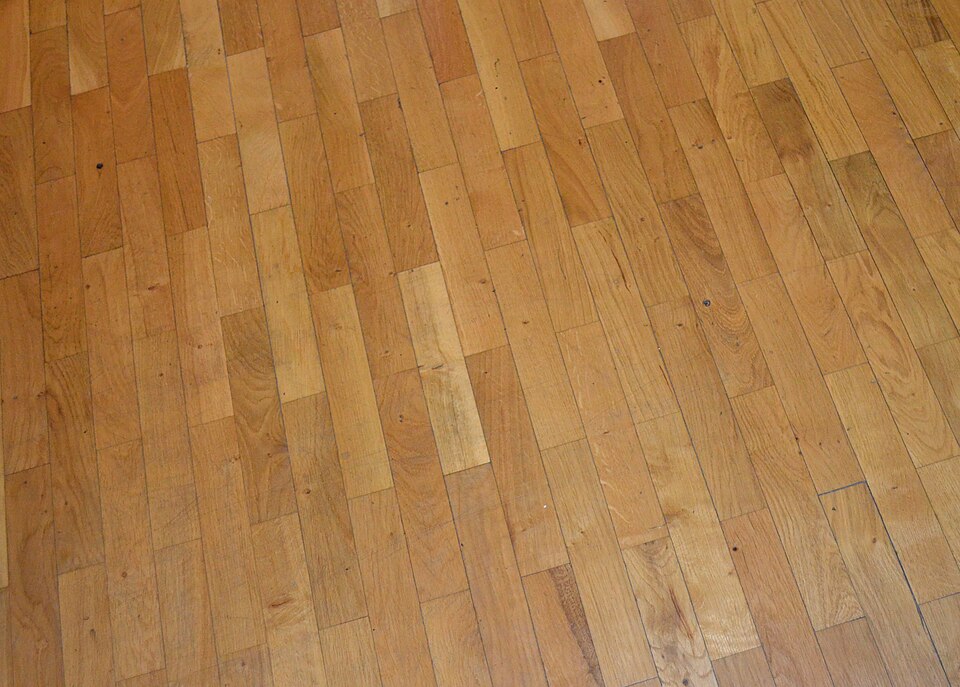
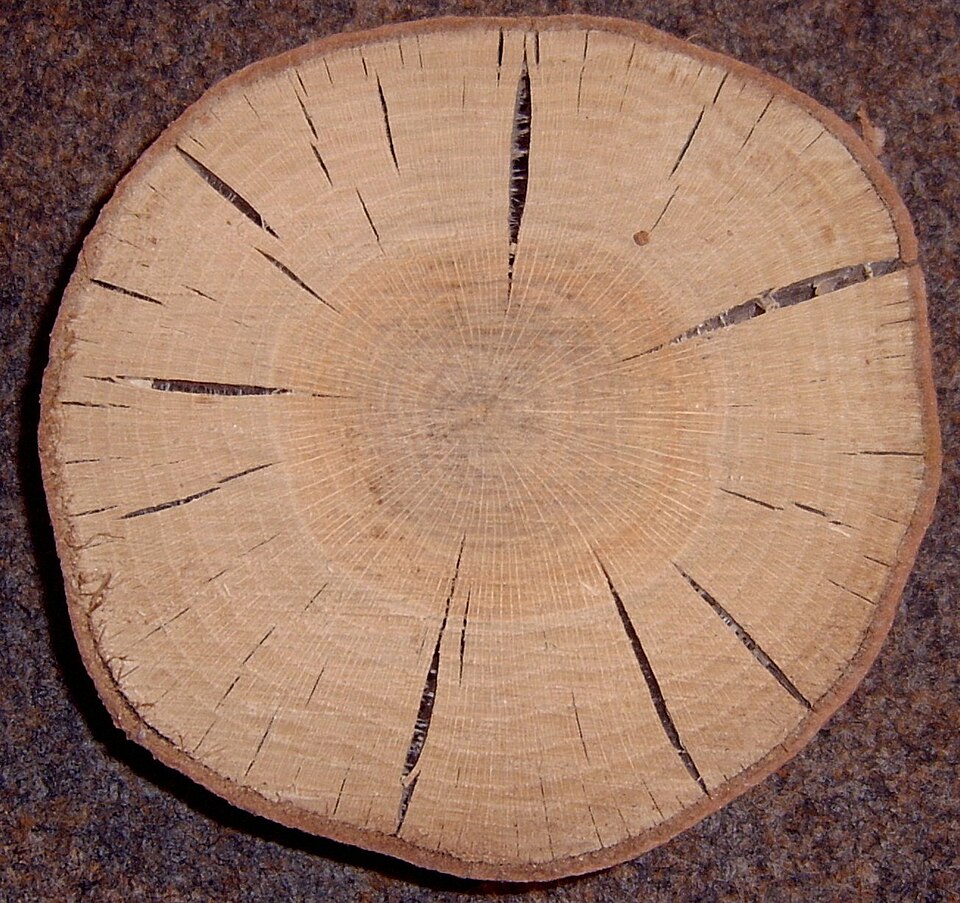
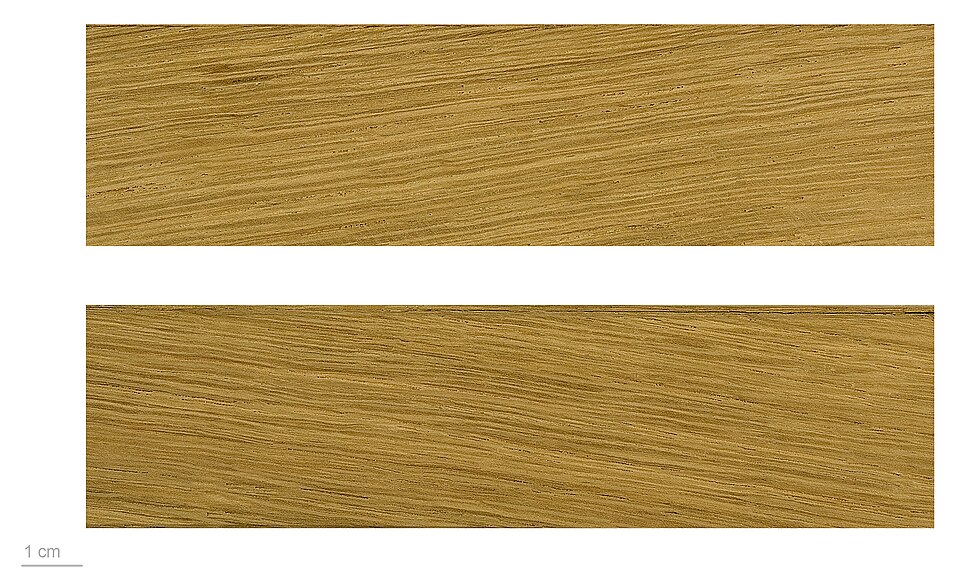
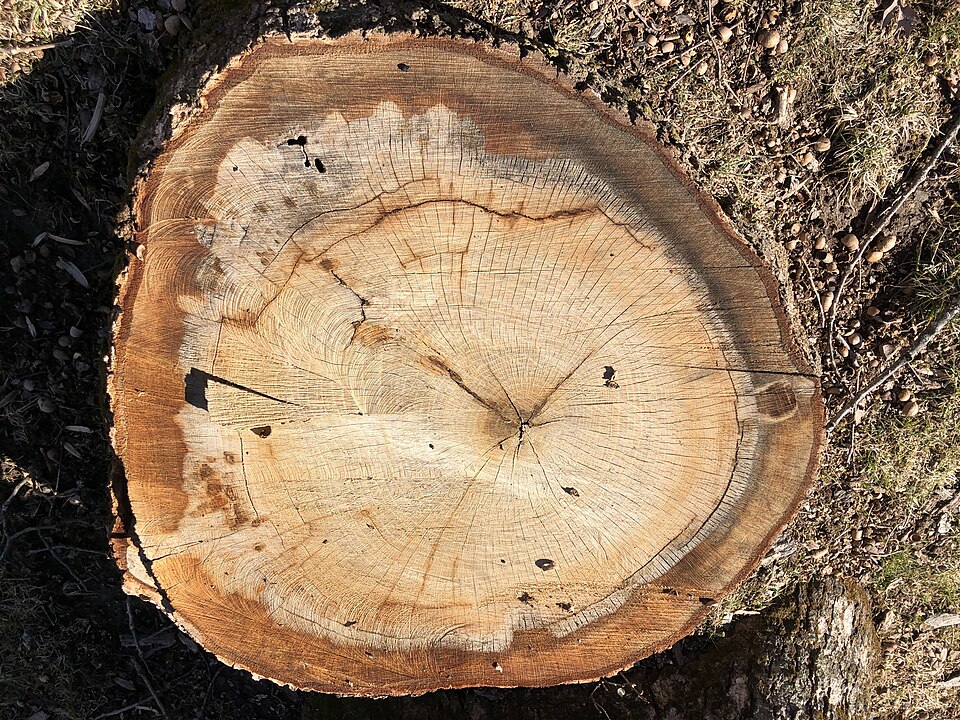
The Wood Database describes the heartwood as light to medium brown, often with an olive cast, and the sapwood as paler and not always sharply separated. The grain is straight with a coarse, uneven texture, and quarter-sawn boards show prominent ray fleck1. The Wood Handbook describes nearly white sapwood about 2 to 5 cm (1 to 2 in.) wide and generally greyish-brown heartwood4. AHEC reports light-to-dark brown heartwood, a sap and heart contrast less distinct than in red oak, and rays longer than those of red oak, which gives a more pronounced figure5. Colour therefore varies by log, and AHEC adds that white oak may be sold as northern or southern but that this may oversimplify differences according to growing location5.
How hard and dense is white oak?
Three published figures sit close together:
| Source | Hardness | Density |
|---|---|---|
| The Wood Database | 1,350 lbf (5,990 N), Janka | 755 kg/m³ average dried weight1 |
| USDA Wood Handbook | Side hardness 1,360 lbf (6,000 N) at 12 % moisture | Specific gravity 0.68 at 12 %4 |
| AHEC | 6,049 N | 769 kg/m³ at 12 %5 |
The Handbook defines hardness as resistance to indentation measured with a modified Janka test, in which an 11.28 mm ball is pressed to half its diameter into the wood4. For comparison, The Wood Database lists red oak at 1,220 lbf2 and English oak at 1,120 lbf3. Our guide to Janka hardness explains why differences of this size rarely decide a purchase.
How much does American white oak move?
The Wood Handbook gives green-to-ovendry shrinkage of 5.6 % radially, 10.5 % tangentially and 16.3 % volumetrically4. The Wood Database adds a tangential-to-radial ratio of 1.9 and says the high shrinkage gives mediocre dimensional stability, especially in flat-sawn boards1. AHEC states the wood must be dried slowly and carefully, and that its high differential radial and tangential shrinkage can make it susceptible to movement in humid conditions5.
Because wood shrinks about twice as much tangentially as radially, the Handbook advises estimating width change with tangential values for plain-sawn boards and radial values for quarter-sawn boards4. NWFA/NOFMA defines quarter-sawn flooring by a ring angle of 45 to 90 degrees to the face and ray fleck wider than 1/16 in. (1.59 mm), and requires at least 50 % of a piece to show those characteristics to be sold as quarter-sawn6. Allow for seasonal change by following the guidance in moisture and acclimatisation.
Why do tyloses matter?
The Wood Handbook notes that white oak heartwood pores are usually plugged with tyloses, which tend to make the wood impenetrable to liquids, so most white oaks suit tight cooperage4. The Wood Database describes tyloses as abundant in the large earlywood pores of the heartwood and notes that red oak lacks them1. AHEC describes the heartwood as not porous, and resistant to decay5. For floors this affects how liquids and some finishes behave at the surface, and it is one of the practical differences from American red oak, whose open pores the Handbook links to unsuitability for tight cooperage4.
How does white oak take stain, finish and fuming?
The Wood Database says white oak glues, stains and finishes well, and warns that it can react with iron, especially when wet, causing staining1. AHEC adds that it can be stained and polished to a very good finish5. Our guide to wood floor finishes compares oils, lacquers and hardwax oils.
Ammonia fuming darkens oak through reactions with its tannins. A peer-reviewed study tested Quercus robur rather than white oak, and found oak reacted intensively with ammonia gas8. The same paper's introduction reports that fuming has historically produced a warm brown and accentuated the ray fleck most notable in quarter-sawn white oak8.
How is it used in flooring?
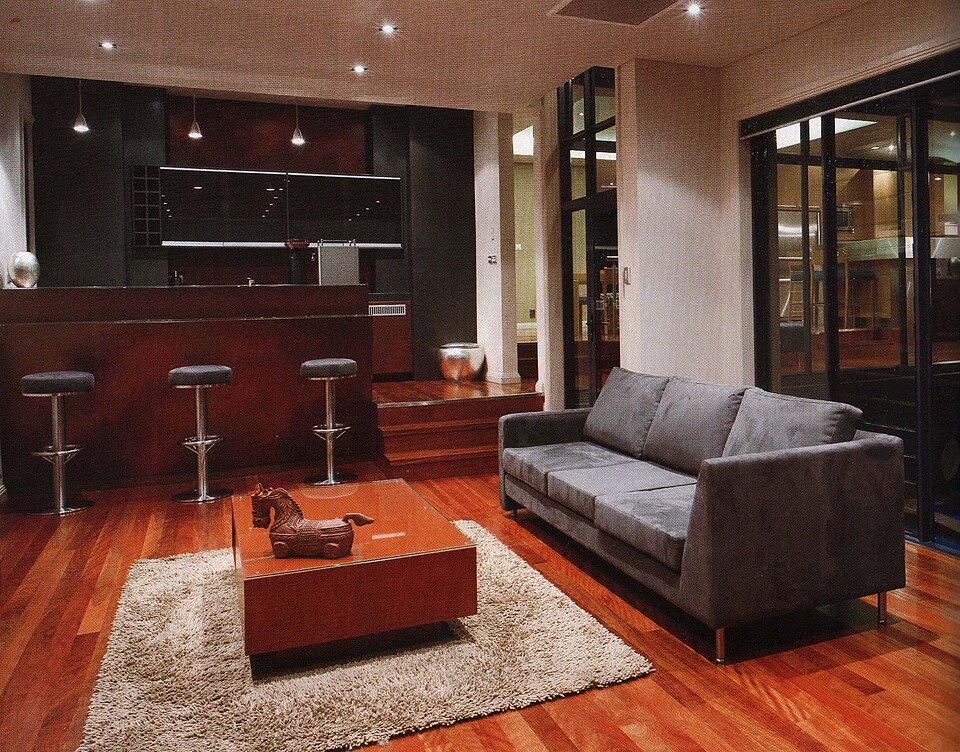
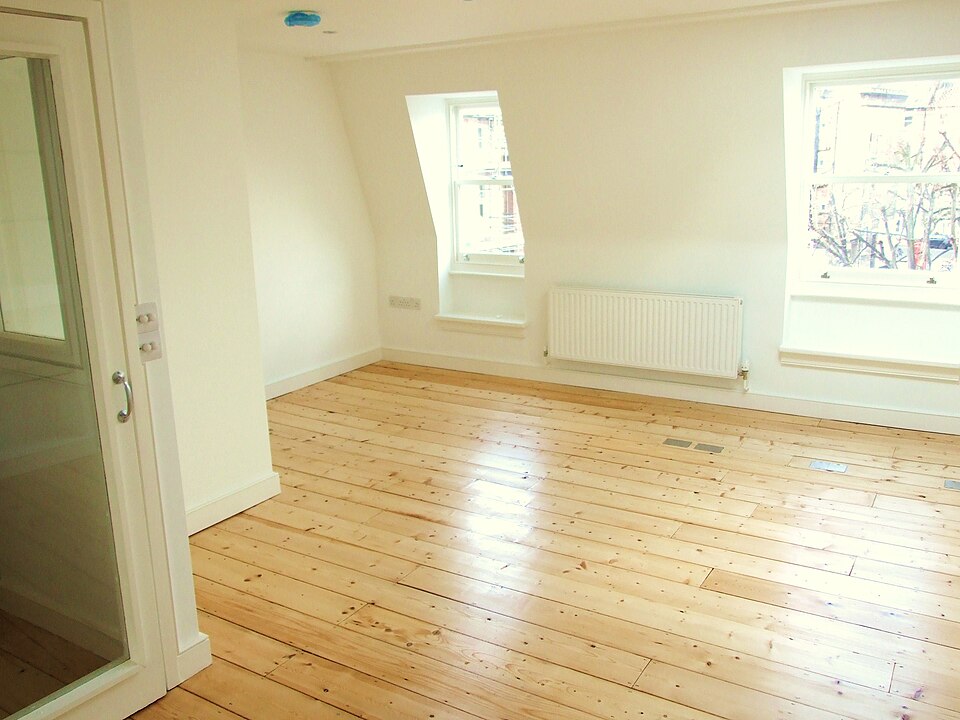
The Wood Handbook lists flooring among the uses of white oak, alongside furniture, doors, millwork, cooperage and boat building4. AHEC lists furniture, flooring, doors, architectural joinery, mouldings and kitchen cabinets as the main uses5. The NWFA/NOFMA standard grades oak flooring as Clear, Select, No. 1 Common and No. 2 Common, and states that appearance alone determines grade, since all grades are equally strong and serviceable6. The same document sets the standard thickness of unfinished solid flooring at 0.750 in. (19.05 mm), with a tolerance of 0.015 in.6. See solid wood flooring for how boards are made and installed.
Is American white oak sustainable?
AHEC's forest inventory figures show U.S. white oak growing stock of 2.26 billion m³ (15.5 % of total U.S. hardwood growing stock), annual growth of 40.1 million m³ against a harvest of 20.1 million m³, and growth exceeding harvest in all major supplying states5. AHEC is a trade body promoting American hardwood, so these are industry-reported figures drawn from U.S. Forest Service inventory data. The Wood Database lists white oak as least concern on the IUCN Red List and unlisted under CITES1.
Oak flooring is also sold by appearance grade, such as Clear, Select and No. 1 Common; see wood flooring grades for what those terms mean.
Frequently asked questions
How hard is American white oak?
Is white oak more stable than red oak?
Why is white oak used for barrels but red oak is not?
Can white oak stain when it meets iron or water?
Is American white oak sourced sustainably?
Sources
- White Oak, The Wood Database. Accessed .
- Red Oak, The Wood Database. Accessed .
- English Oak, The Wood Database. Accessed .
- Wood Handbook: Wood as an Engineering Material (FPL-GTR-282), chapters 2, 4 and 5, USDA Forest Products Laboratory. Accessed .
- A Guide to Sustainable American Hardwoods (2nd edition, 2024), American Hardwood Export Council. Accessed .
- NWFA/NOFMA International Standards for Unfinished Solid Wood Flooring (revised April 2018), National Wood Flooring Association. Accessed .
- Environmental Product Declaration: industry average solid wood flooring, National Wood Flooring Association. Accessed .
- Wood color changes by ammonia fuming, BioResources 7(3), 3767-3778 (Miklečić, Španić, Jirouš-Rajković, 2012). Accessed .
This page compiles published data from the sources listed above. Read our editorial policy. Last updated .