Caring for an end-grain wood block floor
Quick answer
Care for an end-grain floor as you would any wood floor, with frequent dry cleaning, a barely damp mop and the finish maker's products, but be stricter about water because the exposed block ends take up liquid fastest. Keep the room's humidity steady, because the floor swells and shrinks across each block, and follow the block maker's instructions for oiling, joint filling and sanding.
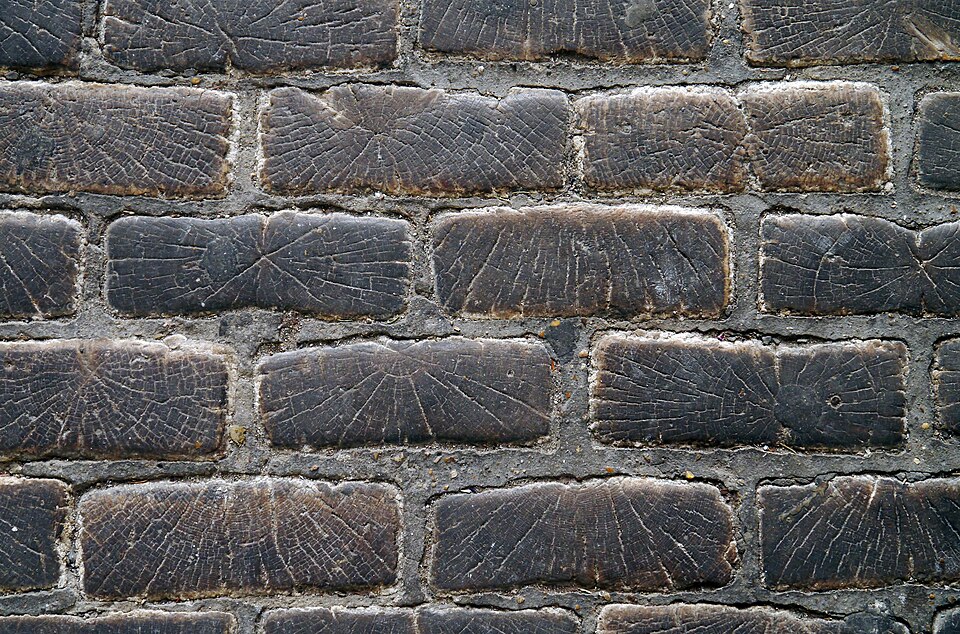
An end-grain floor is cleaned like any other wood floor, with daily dry sweeping and a barely damp mop, but water deserves extra caution because the upturned block ends take up liquid faster than the face of a board2. Keep the room at a steady humidity, because the blocks swell and shrink across their width1. For oiling, filling and sanding, the maker's instructions for your blocks and finish come first. This guide sets out what the published guidance agrees on; for the product itself, see end-grain wood block flooring.
How do I clean an end-grain floor day to day?
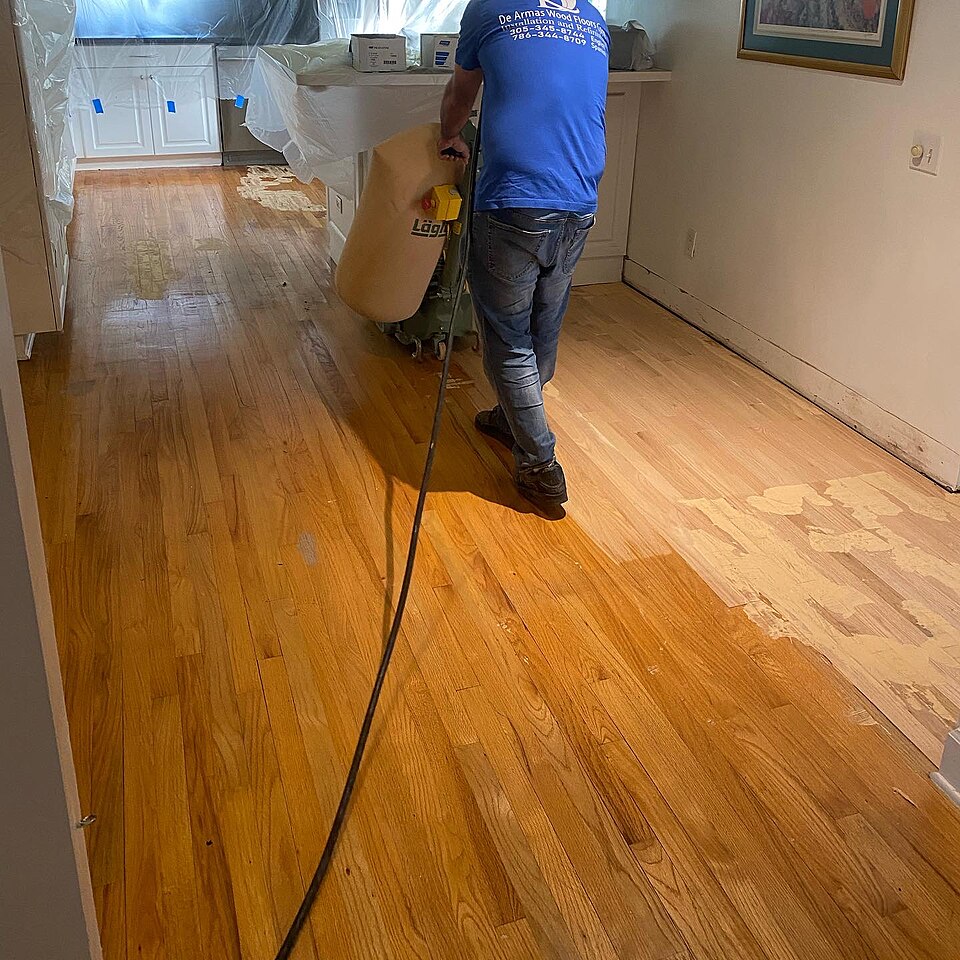
The NWFA's care guidance for wood floors in general applies directly. It asks for daily dry sweeping or dust mopping to remove particles that can be ground into the finish, vacuuming only with a hard-surface setting and no beater bar, and wiping up spills immediately so liquid does not stand1. It recommends a weekly damp mop, slightly moistened and well wrung out so that little moisture stays on the surface1.
Because the grain stands vertically, be stricter than that rule of thumb suggests. Wring the mop harder, work in small areas and dry as you go. Our general cleaning and maintenance guide covers products and routines in more detail.
The NWFA also lists things to avoid on any wood floor1:
- traditional mop and bucket, because standing water results in cracks, splits and cupping;
- steam cleaners, because water vapour penetrates the fibres and causes irreversible damage;
- vinegar, which is acidic and degrades the finish;
- polishes and "rejuvenating" products, unless the finish or flooring maker recommends them.
Why does end grain absorb more liquid and finish?
The USDA Forest Products Laboratory states that liquid water is absorbed most rapidly along the grain, that is, when the end grain is exposed to water2. It gives measured water absorption coefficients for softwoods of 10-16 g m-2 s-1/2 along the grain and 1-7 g m-2 s-1/2 across it. These figures are for softwoods, and the Laboratory does not give a value for your species2.
In an end-grain floor every visible surface is a cut across the grain, so the whole floor behaves like the fast-absorbing direction. In practice that means wiping up spills promptly, and applying any oil or lacquer exactly as the maker directs4.
How often should I re-oil an end-grain floor?
There is no universal interval. The NWFA says many natural oil makers prescribe a routine of oils and soaps used regularly, that the oil may need periodic reapplication, and that each type of oil finish has its own maintenance programme. It adds that failing to follow it gives a finish that will not last as intended1. It also warns never to use traditional wood floor cleaners on oiled floors, because they can damage the oil1.
For a lacquered floor the NWFA says it is time for a maintenance coat when the floor loses its luster, and that cleaners must be those the finish maker recommends so that later recoating adheres1. If you do not know what finish is on the floor, the NWFA suggests asking a flooring professional to identify it1. Our guide to wood floor finishes compares oils and lacquers.
Should I fill the gaps between the blocks?
Gaps are often designed in. The NWFA says many end-grain installations leave a slight gap between blocks to allow for normal swelling, and it is not uncommon to have 1/8 in to 1/4 in (3-5 mm) of expansion built into the system1. The UK supplier agrees that gaps around each block are acceptable and open and close with the seasons4. Debris in expansion voids can restrict that movement, and the NWFA's maintenance advice for sports floors includes removing debris from expansion voids1.
Filling is a separate decision made at finishing. The supplier's method is to sand the floor flat progressively through sandpaper grits, fill with a resin mixed with fine sawdust, fine sand, and finish with a trio or similar machine. Aged and distressed products are only lightly buffed, not fully sanded or filled4. Some modern builds are made with very tight joints to begin with: the maker of the Forêt end-grain oak surfaces states joints under 1 mm and offers optional joint filling in brown or black. Whatever the build, use the filler the manufacturer specifies.
How do I sand and repair an end-grain floor?
Sanding an end-grain floor is a flattening job, and the supplier's guidance describes working progressively through grits before filling and finishing4. The general principles are in our sanding and refinishing guide. Thin end-grain blocks bonded to a backing have a limited top layer, so ask the maker how many times the floor can be sanded before any work starts. Heavy industrial block floors are a different product with their own repair practice, described in industrial wood block flooring.
The supplier's guidelines specify that blocks are bonded to a fully bonded subfloor in a half bond pattern4, so replacing a block is a job for someone who knows the adhesive and build-up. For a deep stain, a lifted block or a bond problem, ask the supplier's installer rather than improvising.
How do humidity and movement affect an end-grain floor?
Wood changes size with the air around it. The Forest Products Laboratory says wood shrinks and swells most in the direction of the growth rings, about half as much across the rings and only slightly along the grain2. The NWFA says end-grain flooring shrinks and swells with the tangential and radial values of the species, so the movement is across each block rather than in thickness, and that it tends to equilibrate relatively fast1. The Laboratory adds that cracks develop in flooring when it takes up moisture and then shrinks as the building is heated3.
| Source | Relative humidity | Temperature |
|---|---|---|
| UK end-grain supplier | 45% to 65% | 15°C to 25°C |
| NWFA, solid wood in general | 30% to 50% | 60-80 °F |
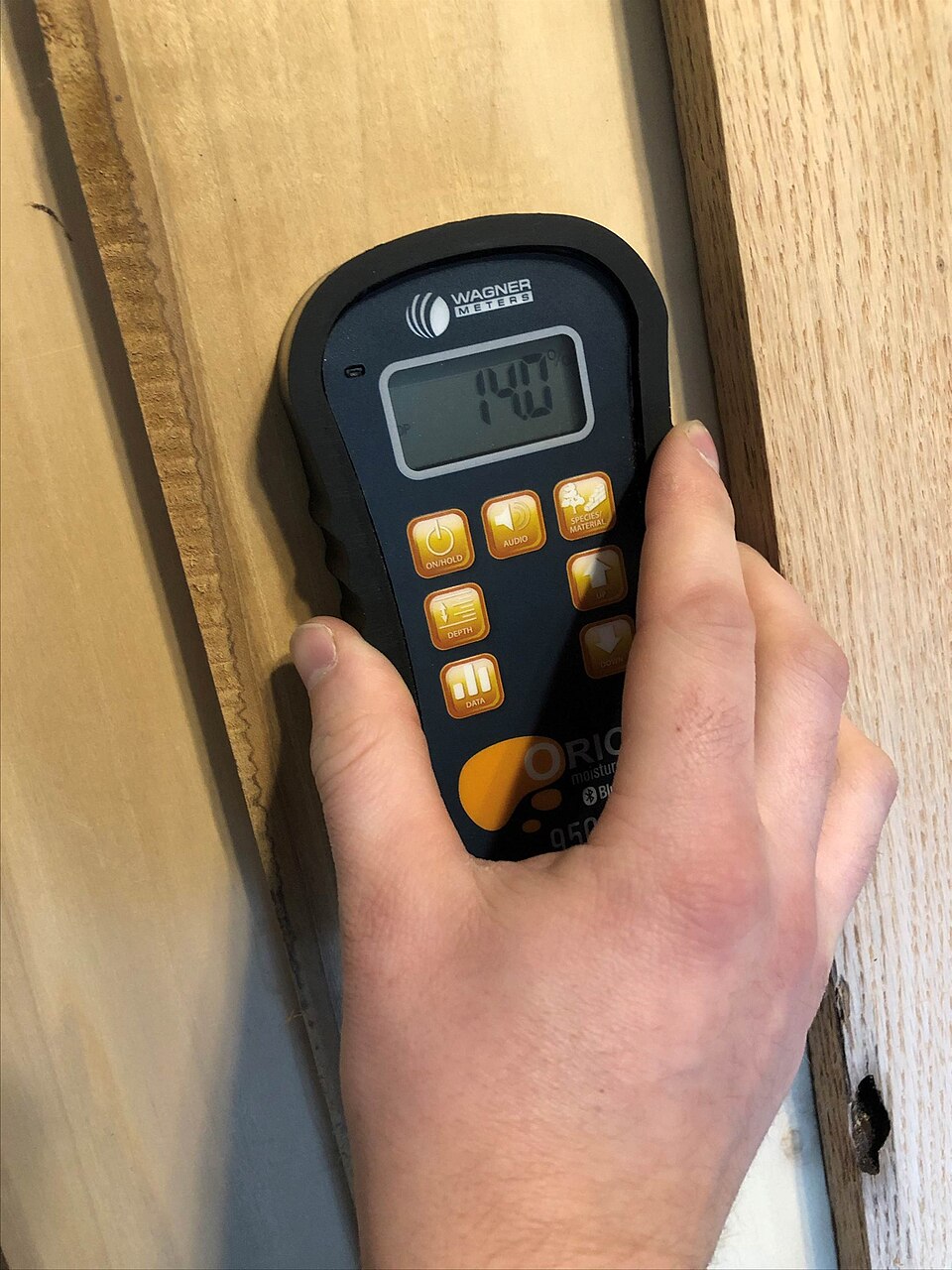
Sources:4 and1. The NWFA advises a humidifier in dry winter months and a dehumidifier in humid summer months to keep the wood from gaining or losing moisture1. The supplier adds that low humidity usually comes from heating at too high a temperature, open fires and wood burners, and that a thermometer and hygrometer help you monitor the room4. If the floor is over underfloor heating, keep within the maker's temperature limit; see our moisture and acclimatisation guide.
When should I call a professional?
Ask the supplier or a flooring professional if:
- the surface finish is unknown, since the NWFA suggests a professional can identify it and recommend a cleaner1;
- blocks lift, sound hollow or have moved away from the adhesive, which the supplier links to humidity and temperature swings4;
- gaps are much wider or narrower than at installation, which is worth investigating, starting with the room's humidity;
- the floor needs sanding, filling or a new finish, because the sequence and materials are set by the block and finish makers4.
Frequently asked questions
Can I wet-mop an end-grain floor?
Why does end grain soak up more liquid?
What humidity should I keep an end-grain floor at?
Do the gaps between blocks need filling?
How often should an oiled floor be re-oiled?
Sources
- Wood Flooring Installation Guidelines (revised 2025), including Protection, Care and Maintenance, National Wood Flooring Association. Accessed .
- Moisture relations and physical properties of wood (Wood Handbook, chapter 4, GTR FPL-190), USDA Forest Products Laboratory. Accessed .
- Drying and control of moisture content and dimensional changes (Wood Handbook, chapter 13), USDA Forest Products Laboratory. Accessed .
- End Grain Flooring Installation Guidelines (January 2024), Wood Floors and Accessories (wfa.uk.net). Accessed .
This page compiles published data from the sources listed above. Read our editorial policy. Last updated .