American red oak
Quick answer
American red oak is the timber of a group of North American oaks, principally Quercus rubra, and a common solid flooring species. It is a medium-hard wood with open, porous growth rings and fairly high shrinkage, and it is slightly softer than American white oak on every published figure we found. Its colour is often, but not always, pinkish to reddish brown.
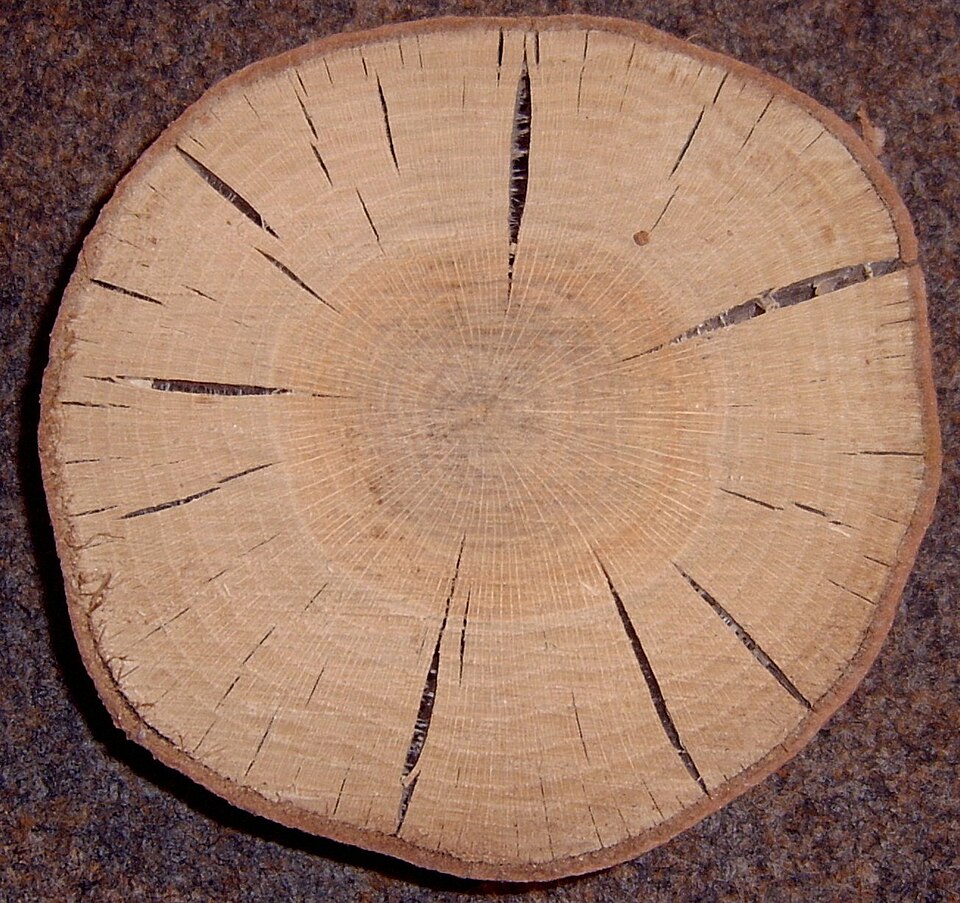
American red oak is the timber of a group of North American oaks, principally Quercus rubra. The Wood Database lists it at 1,220 lbf (5,430 N) on the Janka scale and 700 kg/m³ average dried weight1, so it sits a little below American white oak in hardness. The National Wood Flooring Association names red oak and white oak as the dominant species in U.S. hardwood forests and so the majority of solid hardwood flooring production6.
What is American red oak?
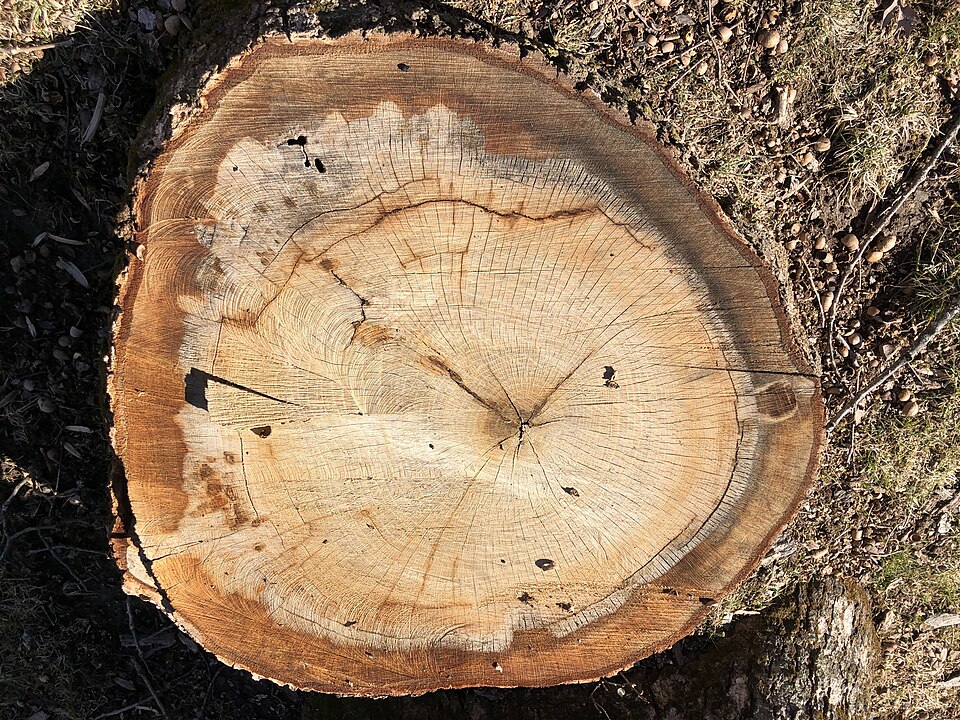
AHEC gives the Latin name as Quercus species, principally Quercus rubra, with northern red oak and southern red oak as other names, and says it may be sold as northern, southern or Appalachian4. The USDA Wood Handbook lists northern red (Q. rubra), scarlet, Shumard, pin, Nuttall, black, southern red, cherrybark, water, laurel and willow oak as the principal species, and notes that sawn lumber of the group cannot be separated by species from wood characteristics alone3. The Wood Database describes Q. rubra as native to the northeastern United States and southeastern Canada, with trees 80 to 115 ft (25 to 35 m) tall1. AHEC adds that red oaks grow almost exclusively in North America, from north to south and from mountains to low land, which gives significant variation between slower-grown northern and faster-grown southern trees4.
What colour and grain does red oak have?
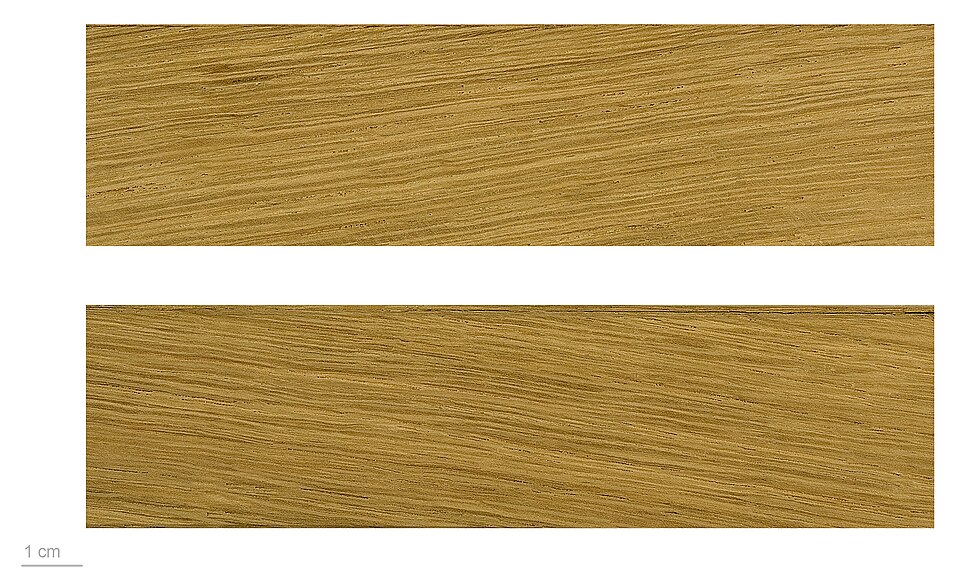
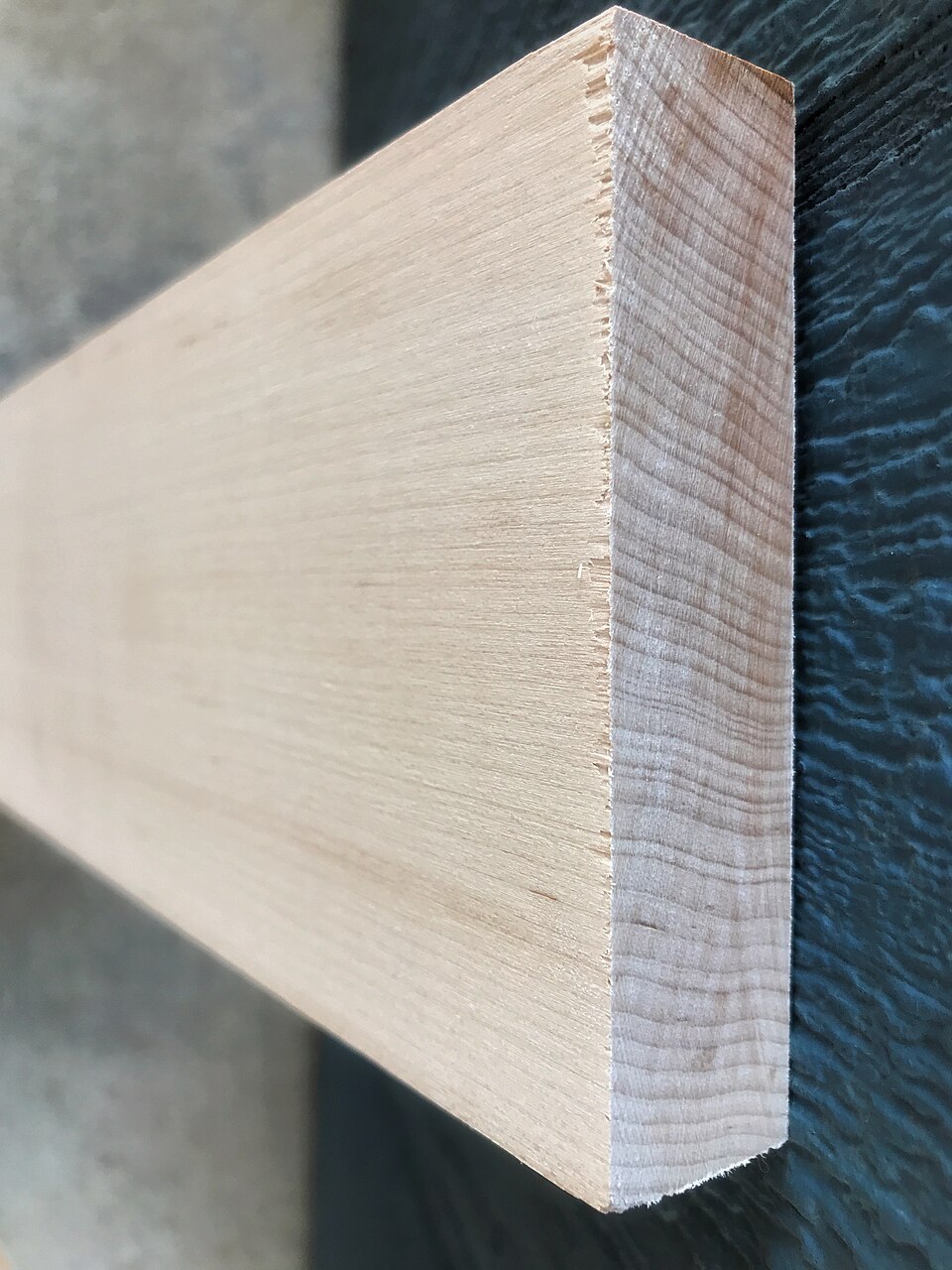
The Wood Database describes light to medium brown heartwood, often with a reddish cast, paler sapwood that blends into the heartwood, and a straight grain with a coarse, uneven texture and large, open pores1. The Wood Handbook gives nearly white sapwood about 2 to 5 cm (1 to 2 in.) wide and brown heartwood with a tinge of red3. AHEC reports light-brown sapwood and heartwood that is often, but not always, pinkish to reddish brown, with a distinct difference between the two, and rays that are smaller than in white oak4. Quarter-sawn boards show prominent ray fleck1.
How hard and dense is red oak?
Published figures are close but not identical:
| Source | Hardness | Density |
|---|---|---|
| The Wood Database | 1,220 lbf (5,430 N), Janka | 700 kg/m³ average dried weight1 |
| USDA Wood Handbook (northern red oak) | Side hardness 1,290 lbf (5,700 N) at 12 % moisture | Specific gravity 0.63 at 12 %3 |
| AHEC | 5,738 N | 705 kg/m³ and specific gravity 0.63 at 12 %4 |
The Wood Database gives specific gravity as 0.56 (basic) and 0.7 (at 12 % moisture)1, which differs from the 0.63 given by the other two sources; check which basis a supplier is quoting. The Wood Handbook defines hardness as resistance to indentation measured with a modified Janka test3, and it adds that rapidly grown second-growth red oak is generally harder and tougher than finer-textured old-growth wood3. Our guide to Janka hardness explains how to read these numbers.
How does red oak compare with white oak?
On both The Wood Database and Wood Handbook figures, red oak is slightly softer and lighter than white oak:
| Property | Red oak | White oak |
|---|---|---|
| Janka hardness, The Wood Database | 1,220 lbf1 | 1,350 lbf2 |
| Side hardness at 12 %, Wood Handbook | 1,290 lbf | 1,360 lbf3 |
| Shrinkage, radial / tangential (green to ovendry) | 4.0 % / 8.6 % | 5.6 % / 10.5 %3 |
The bigger practical difference is cellular. The Wood Handbook says red oak can be separated from white oak by the size and arrangement of pores in the latewood and because it generally lacks tyloses; its open pores make the group unsuitable for tight cooperage unless barrels are lined3. AHEC says the same pores make red oak absorb all treatments4. The Wood Database notes that its porous growth rings can discolour in contact with water, that rot and insect resistance are poor, and that it is less durable than white oak1. See also European oak.
How stable is red oak on a floor?
The Wood Handbook gives northern red oak shrinkage of 4.0 % radially, 8.6 % tangentially and 13.7 % volumetrically, and describes the red oaks as having fairly high shrinkage on drying3. The Wood Database adds a tangential-to-radial ratio of 2.2 and says the fairly high shrinkage gives mediocre dimensional stability, particularly in flat-sawn boards1. AHEC says red oak dries best slowly, has high shrinkage, and, like all oaks, can be susceptible to movement in humid conditions, while also calling it stable when dry4. For practical steps, see moisture and acclimatisation.
How does red oak take stain and finish?
AHEC says red oak glues well, can be stained and polished to a very good finish, and, being porous, absorbs all treatments4. The Wood Database also says it glues, stains and finishes well1. Because open pores take up stains readily, test any colour on an offcut of the same boards first. Compare coatings in our guide to wood floor finishes.
Where is red oak used in flooring?
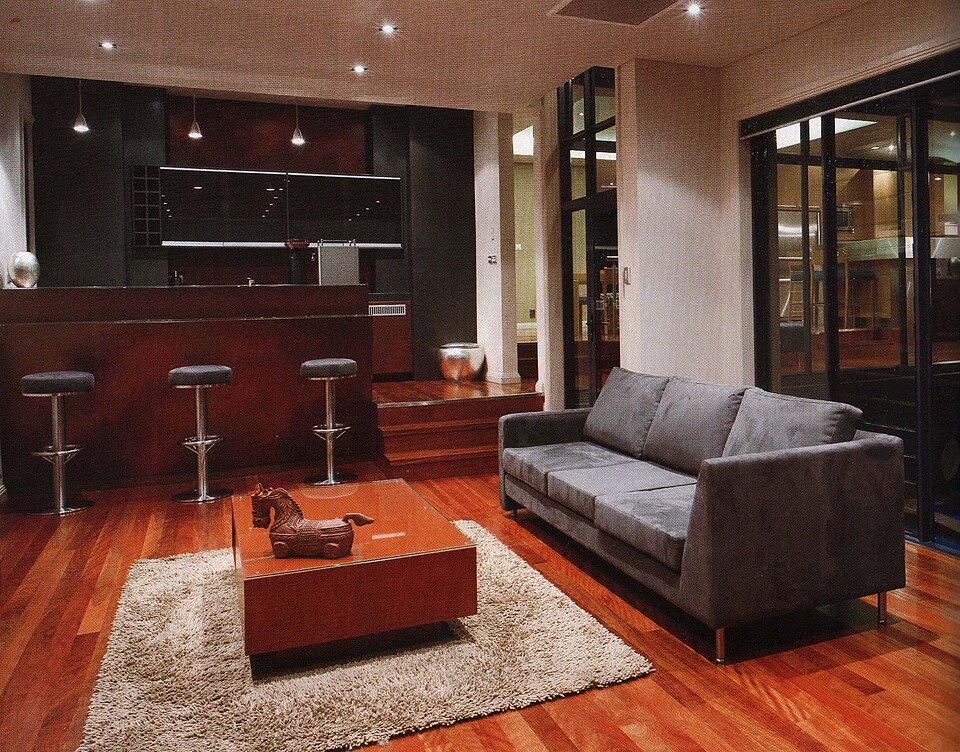
The Wood Handbook says red oak lumber is remanufactured into flooring, furniture, millwork, boxes, pallets and other products3. AHEC lists furniture, flooring, windows, doors, architectural joinery, mouldings and kitchen cabinets as its main uses4. NWFA/NOFMA grades oak flooring as Clear, Select, No. 1 Common and No. 2 Common and states that appearance alone determines grade, since all grades are equally strong and serviceable5. Read more about solid wood flooring, and compare it with the harder hard maple.
Is American red oak sustainable?
AHEC's inventory figures show U.S. red oak growing stock of 2.62 billion m³ (17.9 % of total U.S. hardwood growing stock), growth of 60.6 million m³ a year against a harvest of 31.9 million m³, and growth in balance with or exceeding harvest in all states except Texas4. AHEC is a trade body promoting American hardwood, so these figures are industry-reported from U.S. Forest Service inventory data. The Wood Database lists red oak as least concern on the IUCN Red List and unlisted under CITES1.
Frequently asked questions
How hard is American red oak?
Is red oak harder or softer than white oak?
Is red oak always red?
Why is red oak less suited to damp conditions than white oak?
Is American red oak sourced sustainably?
Sources
- Red Oak, The Wood Database. Accessed .
- White Oak, The Wood Database. Accessed .
- Wood Handbook: Wood as an Engineering Material (FPL-GTR-282), chapters 2, 4 and 5, USDA Forest Products Laboratory. Accessed .
- A Guide to Sustainable American Hardwoods (2nd edition, 2024), American Hardwood Export Council. Accessed .
- NWFA/NOFMA International Standards for Unfinished Solid Wood Flooring (revised April 2018), National Wood Flooring Association. Accessed .
- Environmental Product Declaration: industry average solid wood flooring, National Wood Flooring Association. Accessed .
This page compiles published data from the sources listed above. Read our editorial policy. Last updated .