Herringbone vs chevron flooring
Quick answer
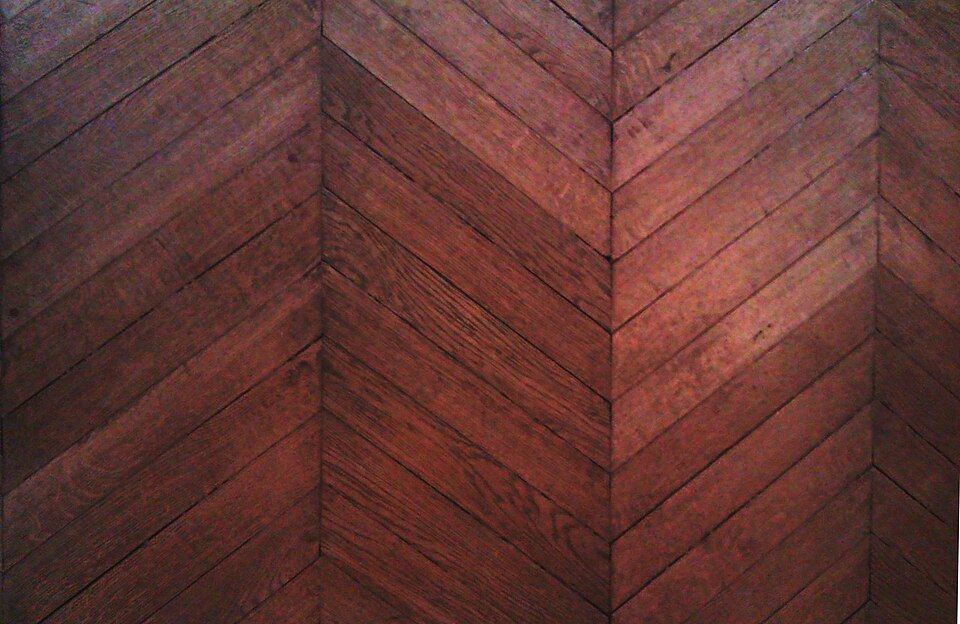
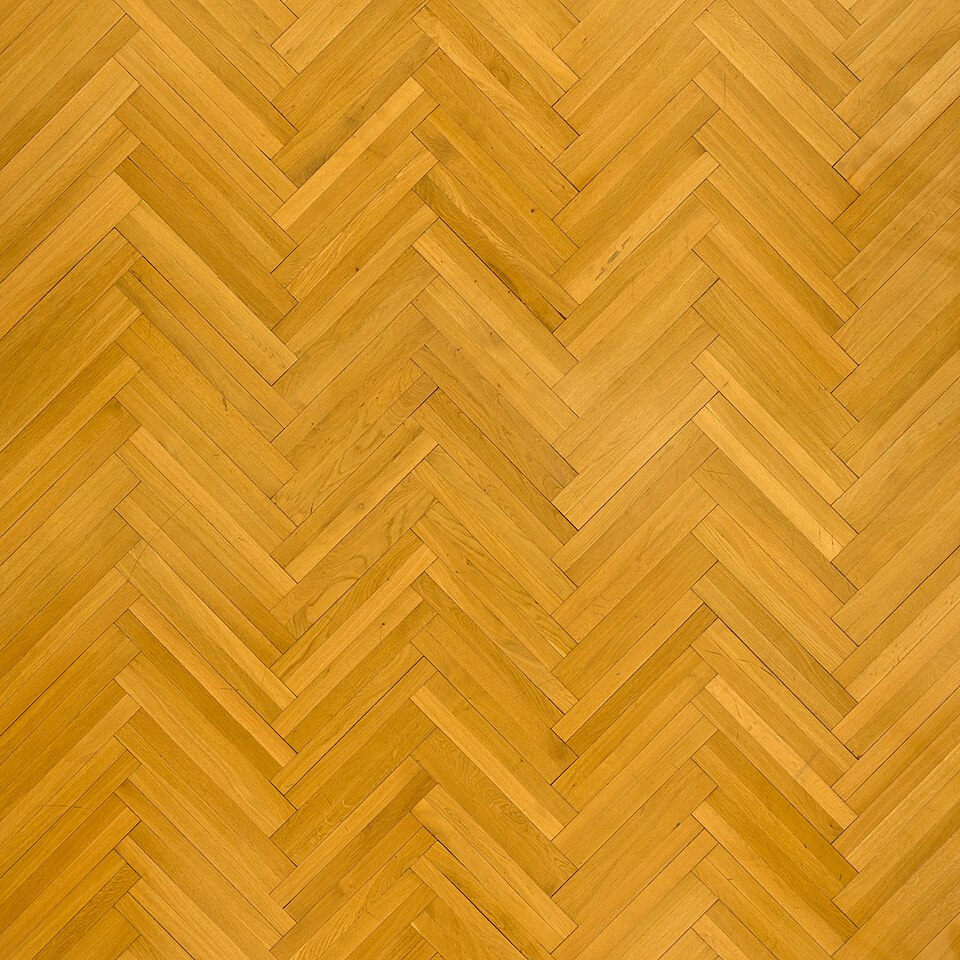
The fundamental distinction between herringbone and chevron parquet lies in how the board ends are cut and meet: herringbone uses rectangular boards laid end-to-side at 90° angles to form a staggered broken zig-zag (bâtons rompus), while chevron uses boards with ends mitred at 45° or 60° angles that meet point-to-point along a continuous straight central axis (point de Hongrie)13. Chevron requires higher cutting precision and typically incurs 10% to 15% timber waste during installation, compared with 5% to 8% for classic herringbone.
Both herringbone and chevron represent iconic geometric parquet layouts with centuries of European architectural heritage. While casual observers frequently conflate the two, their board geometry, junction angles, manufacturing tolerances, fitting labour and cutting waste rates differ substantially. Understanding these technical contrasts ensures you specify the right floor for your room dimensions and budget.
How do board shapes and junctions differ?
The geometric distinction between the two patterns begins with how each individual board is cut at its ends:
- Herringbone flooring: Milled as true rectangles with square 90° ends. Boards are fitted end-to-side: the short end of one board butts against the long side edge of the adjoining board1. This creates a classic staggered, broken zig-zag known in French architectural tradition as bâtons rompus (broken sticks)1.
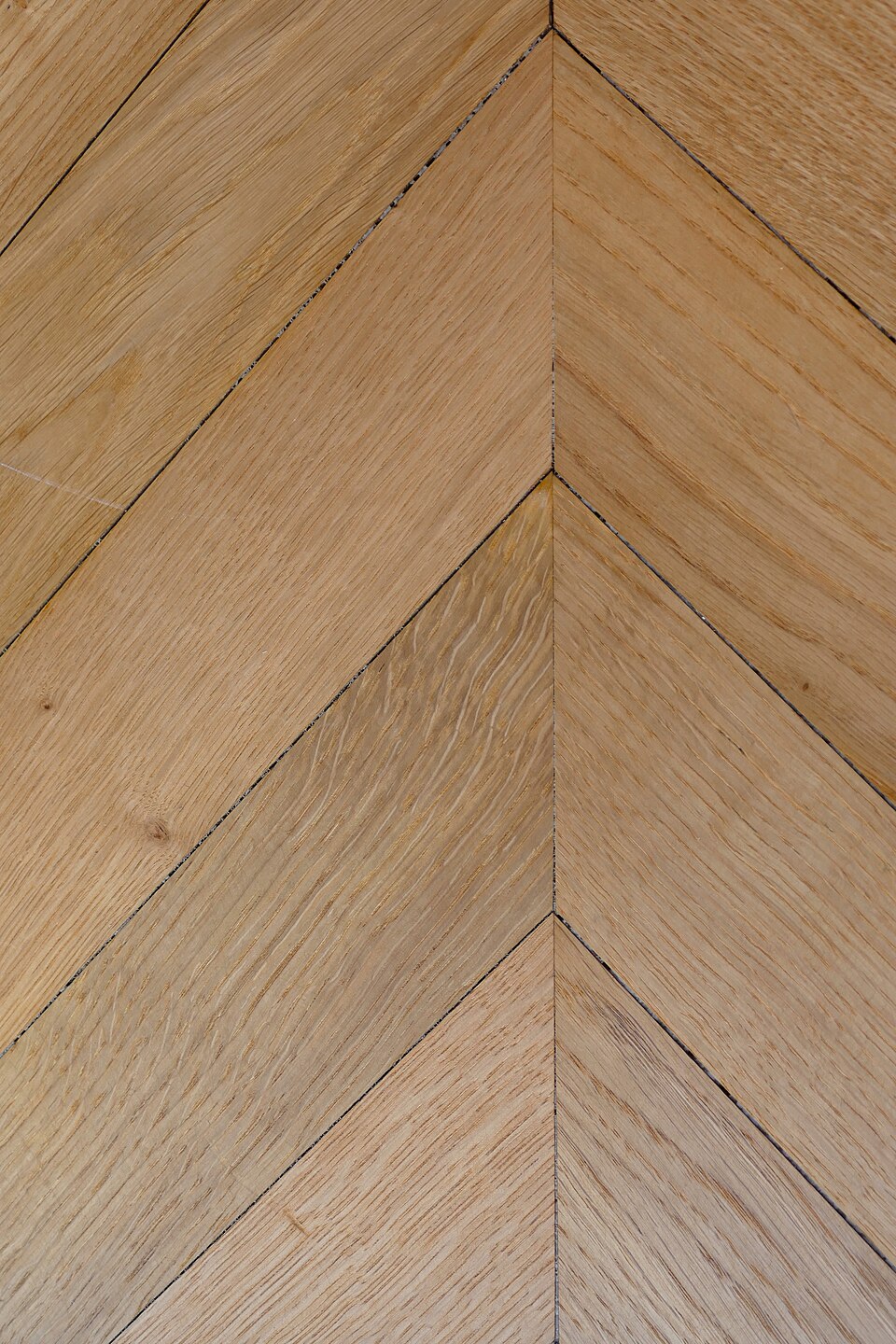
- Chevron flooring: Milled with angled, mitred ends cut at 45° or 60° (sometimes called Hungarian point or point de Hongrie)3. Matching left-handed and right-handed planks meet head-to-head along a straight central line, creating a series of perfect, continuous arrowheads or V-shaped chevrons3.
| Technical parameter | Herringbone (Bâtons rompus) | Chevron (Point de Hongrie) |
|---|---|---|
| Board shape | True rectangle (90° square ends)1 | Parallelogram with mitred ends (45° or 60°)3 |
| Junction geometry | End-to-side at 90°1 | Point-to-point along a continuous straight seam3 |
| Planks per pattern | Identical rectangular blocks (or left/right grooved) | Dedicated left-hand and right-hand angled pairs3 |
| Visual effect | Textured, woven, staggered zig-zag | Clean, directional, linear arrowheads |
| Typical cutting waste | 5% to 8% above net area1 | 10% to 15% above net area1 |
| Fitting complexity | High (requires central control line)1 | Very high (requires strict laser alignment of mitres)1 |
What are the visual and spatial effects of each pattern?
Because their directional lines interact differently with natural daylight and room proportions, herringbone and chevron create distinct spatial illusions:
Visual rhythm of herringbone
Herringbone produces a dense, woven texture underfoot. Because individual rectangular blocks run in two perpendicular directions, light hitting the floor from windows catches alternating grain reflections, accentuating the natural texture of European oak or European walnut. Herringbone is visually forgiving in irregular or non-square rooms because there is no single continuous straight joint running the full length of the space.
Visual rhythm of chevron
Chevron is dynamic and directional. The continuous central lines formed by the meeting mitres draw the eye forward, making hallways, narrow living rooms and open-plan apartments appear longer and more expansive. However, because the straight seams are visually prominent, any deviation in wall straightness or subfloor levelling becomes immediately apparent along perimeter borders.
How do installation methods and waste rates compare?
Installing patterned parquet demands significantly greater technical skill and time than laying straight plank flooring, as outlined in the National Wood Flooring Association (NWFA) installation guidelines1:
- Central datum lines: Both patterns require striking an exact central control line through the room1. If the starting row wanders by even 1 millimetre, the error multiplies across subsequent courses, resulting in visible gaps at the tips.
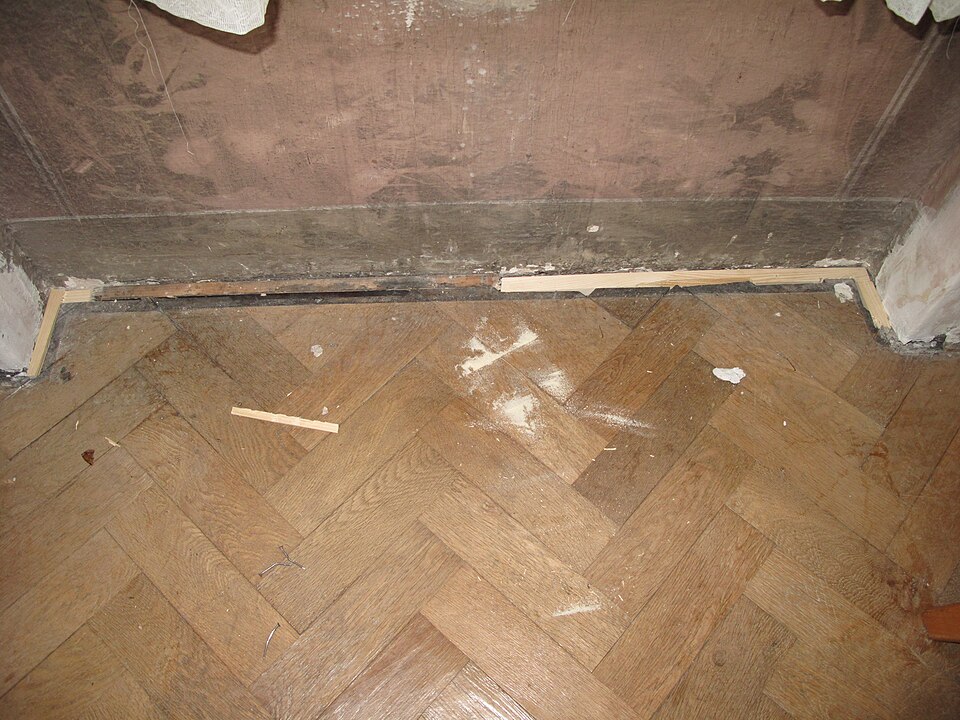
- Cutting perimeter mitres: Where the pattern meets walls or perimeter border frames, every single board must be individually measured and angled to fit1.
- Timber waste calculation: With herringbone, offcuts from the left side of a course can frequently be squared and reused at the start of another course, keeping cutting waste between 5% and 8%1. With chevron, because boards are cut into dedicated left- and right-hand parallelograms, triangular end trimmings cannot easily be repurposed, increasing typical material waste to 10% or even 15%1.
When budgeting for a chevron floor, order at least 12% to 15% extra material above the measured room area to accommodate angle cuts and sorting1.
Solid versus engineered construction in pattern floors
Historically, both herringbone and chevron were fitted as solid wood blocks nailed into timber subfloors or glued with traditional pitch adhesives. In contemporary architecture, multi-layer engineered wood flooring manufactured in accordance with EN 13489 has largely become the standard specification2.
Multi-layer construction provides several key advantages:
- Resistance to relative humidity swings: Parquet patterns feature hundreds of individual timber joints. Cross-laminated plywood or softwood backing cores restrict the seasonal cross-grain swelling and shrinkage of solid timber, preventing unsightly gap lines in winter or cupping in summer2.
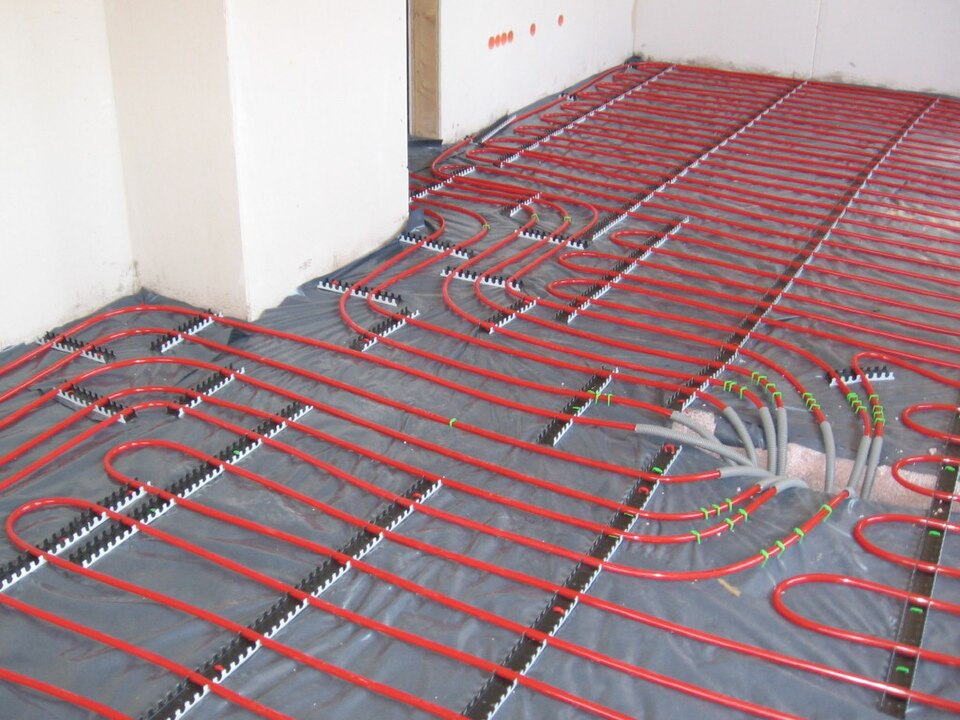
- Underfloor heating compatibility: Engineered parquet transfers heat efficiently and withstands temperature cycles when fitted over wet or electric screeds. Learn more about thermal thresholds in our underfloor heating guide.
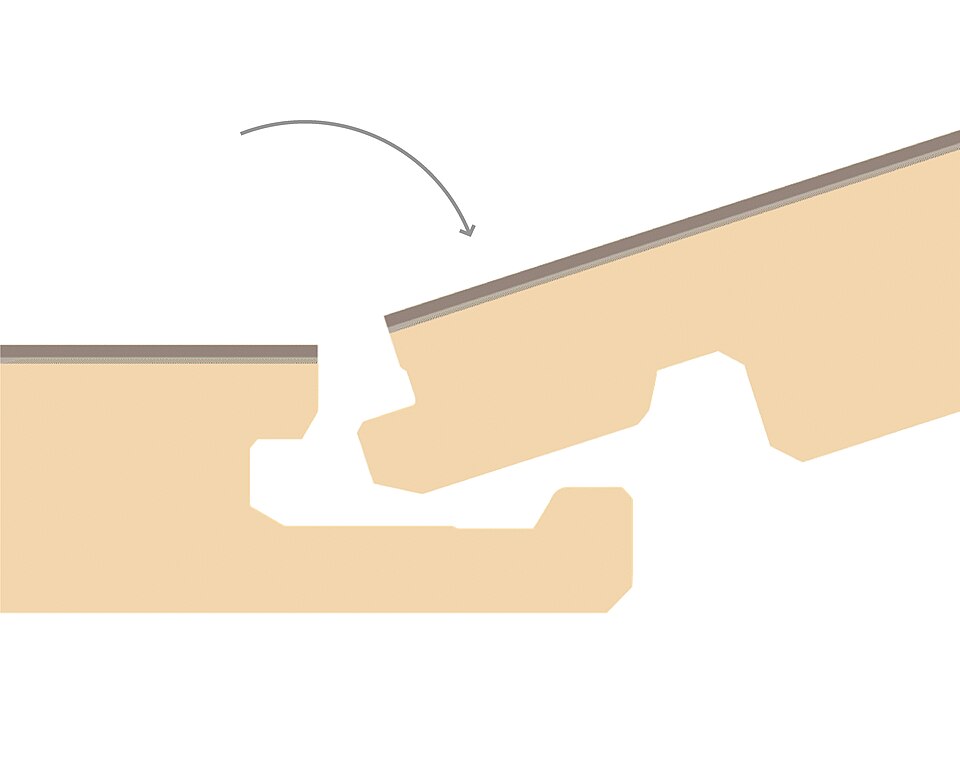
- Precision tongue-and-groove milling: Pre-milled matching left and right tongues and grooves ensure tight joint closure and flat seams across the entire floor plane2.
For high-end residential interiors, the Hongrie engineered chevron collection from Paris maker OscarOno illustrates this format in flatgrain select European oak, constructed as a 12 mm profile with a 4 mm wear layer, 150 or 190 mm widths, and lacquered in twelve colours4. Swiss manufacturer Bauwerk also produces specialised format elements like Formpark Rombico, engineered specifically for 45° chevron laying3.
How do costs compare between herringbone and chevron?
When comparing quotes from flooring suppliers and professional fitters, chevron typically carries a premium of 15% to 30% over herringbone:
- Manufacturing cost: Milling precise 45° or 60° end angles with matching micro-bevels and left/right tongue-and-groove profiles requires additional CNC machining steps and produces higher factory offcuts3.
- Material quantity: Higher site waste allowances (10–15% vs 5–8%) mean ordering more square metres of timber for the same room footprint1.
- Labour time: Fitting chevron requires laser-checking every point junction and carefully mitring edge boards into borders, increasing installation hours.
Both patterns represent high-value architectural investments that outlast standard straight planks when fitted and maintained according to professional installation methods.
Frequently asked questions
What is the visual difference between herringbone and chevron?
Is chevron flooring more expensive than herringbone?
Can herringbone and chevron boards be interchanged?
Are herringbone and chevron floors available as engineered boards?
Sources
- Wood Flooring Installation Guidelines (revised 2025), National Wood Flooring Association. Accessed .
- EN 13489:2023 Wood flooring and parquet - Multi-layer parquet elements, Genorma (CEN standards catalogue). Accessed .
- Formpark Rombico: chevron parquet pattern, Bauwerk Parkett. Accessed .
- Hongrie collection, OscarOno Paris. Accessed .
This page compiles published data from the sources listed above. Read our editorial policy. Last updated .