Wood floor finishes
Quick answer
Wood floor finishes fall into two families: penetrating oils and hardwax oils, which keep the natural surface and are easy to spot-repair, and film-forming lacquers, which resist wear and dirt better but need sanding to renew. Factory UV-cured finishes harden instantly and let you walk on the floor at once. Colour treatments such as fuming, smoking and staining change the wood itself and are chosen separately from the protective finish.
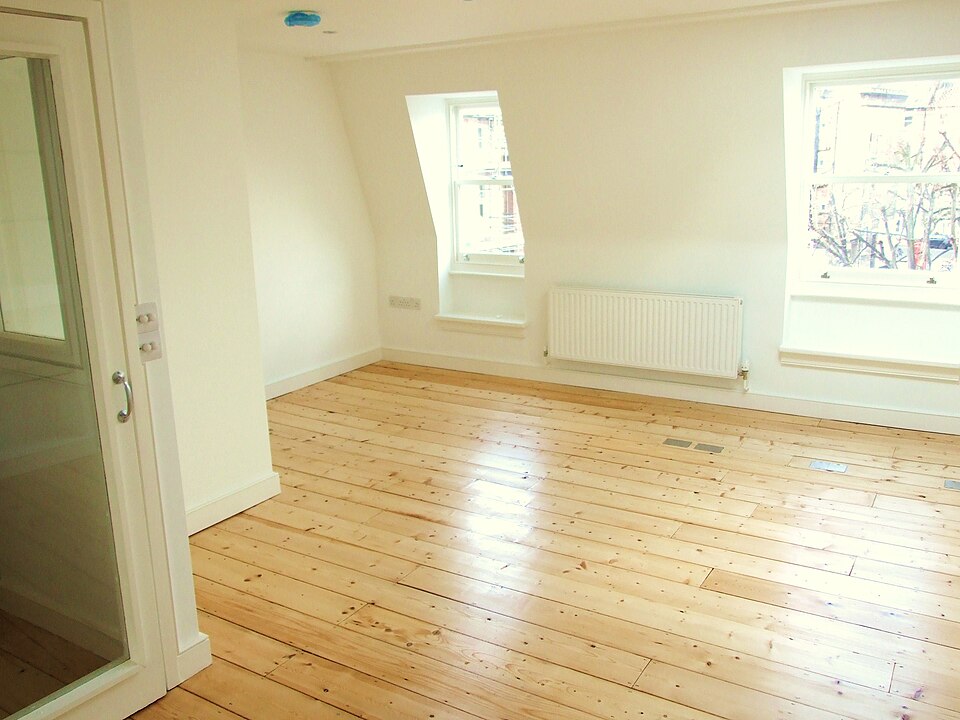
Wood floor finishes split into two families: penetrating finishes (oils and hardwax oils) and film-forming finishes (lacquer or varnish). NWFA groups natural oil finishes, penetrating oils and hard wax oils together as finishes that penetrate the pores of the wood and harden there2. Film-forming finishes are generally easier to clean and better at keeping wood clean than oils, which leave the surface texture intact1. Which one suits you depends on how much wear the floor sees, how you want it to look, and how you plan to repair it.
What are the main types of wood floor finish?
The table summarises the common options. It records what each source says about its own product family, not a ranking.
| Finish | How it works | Strengths reported | Trade-offs reported |
|---|---|---|---|
| Hardwax oil | Osmo says plant oils penetrate while the hard wax stays on the surface10. Junckers' hardwax oil is a drying oil in solvents with added wax6 | Matt to ultramatt look6; can be spot-treated on worn areas without treating the whole floor5 | Wear acts directly on the wood, so oil is more maintenance-heavy than lacquer4; cannot be overcoated with lacquer6 |
| Water-based lacquer | A film on the surface; NWFA calls water-based finishes normally clear, very durable and quick drying2 | Bona says waterborne lacquers are more durable, citing Taber wear testing4; easier to clean than oil1 | Spot repairs are harder to hide5; water-based products suit rooms with stable humidity7 |
| Oil-based or moisture-cured lacquer | NWFA describes oil-based finishes as amber and very durable, and moisture-cured finishes as more moisture-resistant than other surface finishes2 | Moisture resistance (moisture-cured)2 | Amber tone2 |
| Factory UV-cured finish | Cured instantly using ultraviolet light; usually water-based; can be applied on site or at the factory2 | Walk on the floor immediately after installation2 | Less customisation than site finishing, which offers the widest range of colours and finishes2 |
| Aluminium oxide (factory only) | Applied at the factory2 | Described by NWFA as extremely durable2 | Factory-applied only, so it is not an option for site-finished floors2 |
| Wax | Low-luster, amber, forms a penetrating seal2 | None listed in the source | Requires a more frequent maintenance schedule2 |
How does hardwax oil compare with lacquer in daily use?
Bona's view is that oil is an impregnation treatment valued for its matt, natural appearance, while hard-wax oil forms a film on top and is more durable than oil but still cannot match a lacquer's wear resistance4. Osmo describes its product differently: the plant oils protect from the inside and the hard wax stays on the surface10. The two makers disagree on whether hardwax oil counts as a surface film, so check the data sheet of the specific product.
Practical differences from the makers' documents:
- Curing. Bona says normal traffic can resume the day after a hard-wax oil is applied and the finish is close to its final hardness after a week4. Junckers gives recoating after about 6 hours and full cure after 6 days for its hardwax oil6.
- Coats. Bona recommends one coat of primer and two coats of lacquer, and three coats in total for water and chemical resistance; it advises against exceeding 10 coats because a very thick film can lose adhesion to the wood4. Junckers specifies one primer coat plus two coats of its water-based MT500 lacquer on sanded floors7.
- Solvents. Bona says rollable hard-wax oils contain about 50% solvents, while waterborne lacquers contain lower solvent levels than many traditional solvent-based products4.
- Slip resistance. Junckers says lacquer has consistent slip resistance and is more suitable for activity and sports floors, while oiled floors may not suit them because slip resistance depends largely on the wood's smoothness5.
- Appearance over time. Junckers notes heavy traffic can burnish an oiled floor and raise the sheen in walking lanes, while lacquer keeps a more even look5.
Is water-based lacquer different from solvent-based lacquer?
NWFA lists both families as very durable: water-based finishes are normally clear and dry quickly, oil-based ones are amber, and moisture-cured ones resist moisture more than other surface finishes2. Junckers adds a condition for water-based lacquer: such products have a certain gluing effect and are recommended only in rooms where relative humidity does not swing by more than 30% over the year7. That links finish choice to the climate control covered in our moisture and acclimatisation guide.
Sheen matters visually. NWFA says the less sheen, the less you will notice small scratches and other normal wear2, and the Wood Handbook says high-gloss and transparent finishes accentuate planer marks, raised grain and joints in the wood1.
What are factory UV-cured finishes?
Factory-finished floors arrive with colour and finish already applied, so you can walk on them straight after installation, whereas site-finished floors need drying time during which nobody can walk on them2. UV curing hardens the coating instantly under ultraviolet light, and aluminium oxide finishes are applied in the factory only2. A UK supplier lists extra matt, matt and satin UV-cured oils as the end of its finishing line11.
Factory finishes can still need a touch-up. Junckers recommends refreshing its factory-oiled floors with Maintenance Oil before use to hide minor scratches from handling during installation9.
What do fuming, smoking and staining do to the wood?
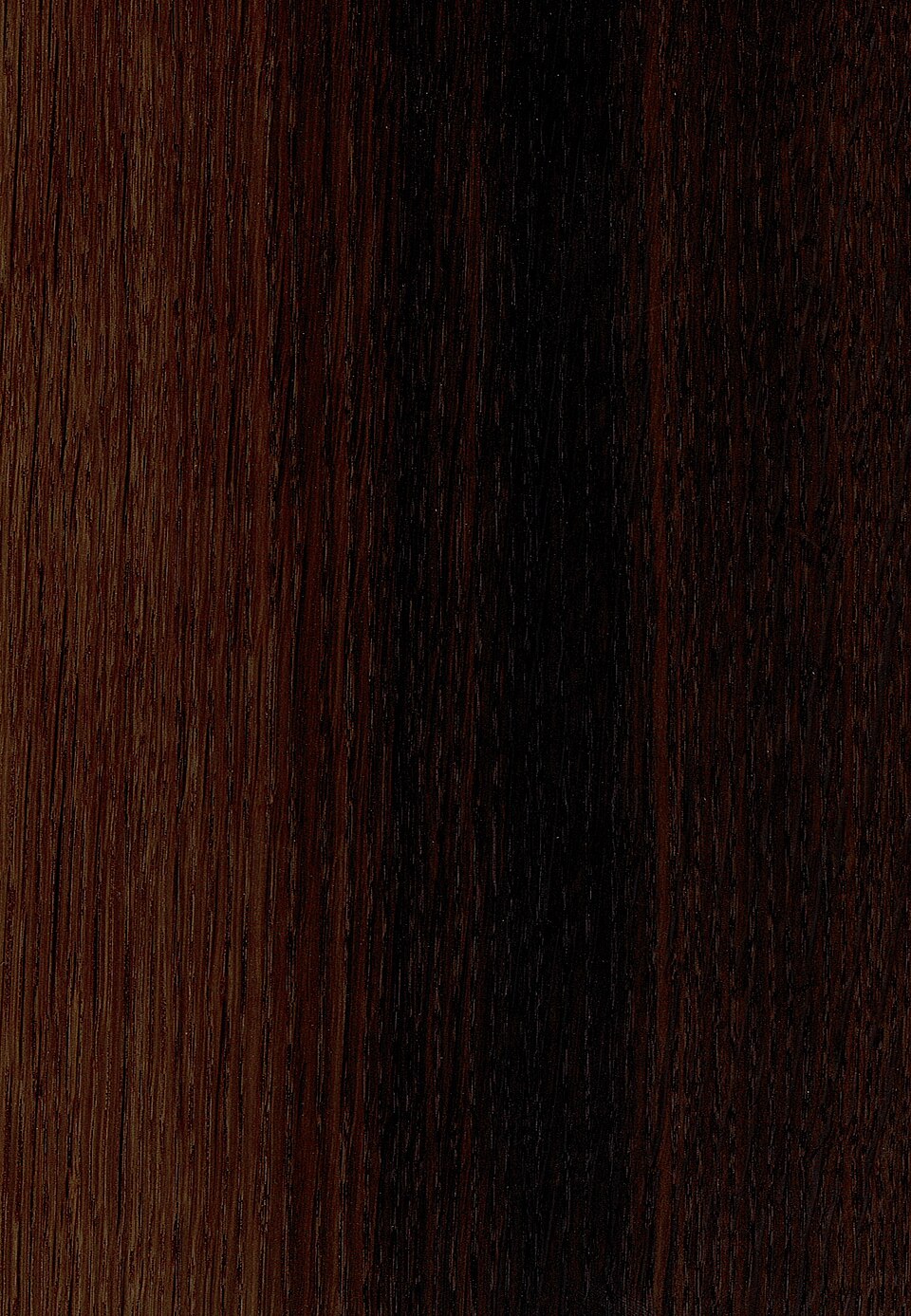
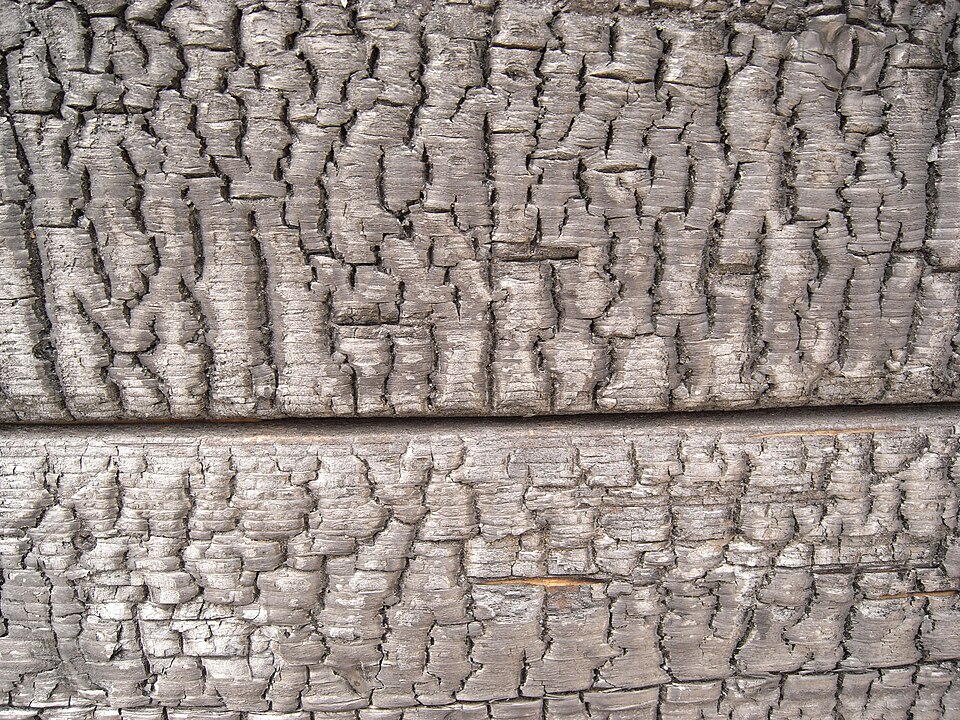
Colour treatments change the timber's tone rather than protecting it, so they are combined with an oil or lacquer. Our pages on smoked and fumed oak and charred wood (shou sugi ban) go into two of these treatments in detail.
- Smoking. A UK supplier describes smoking as a surface process that exposes the wood to ammonia fumes in enclosed environments and penetrates the veneer surface by 0.5 to 2 mm11.
- Fuming. The same supplier says fuming exposes raw oak to pure ammonia gas in an airtight chamber for up to 30 days, then leaves it for a further 7 days, and that its fumed European oak penetrates the entire veneer layer11.
- Colour variation. The result varies because the colour comes from a reaction with the oak's natural tannins; for a more consistent colour the supplier recommends a stained or bespoke oil option instead12.
- Staining. Stains accentuate grain by absorbing differently into earlywood, latewood, knots and vessels, and can colour earlywood more than latewood, reversing the usual colour gradation1.
All wood changes colour as it ages: in general, dark wood gets lighter and light wood gets darker, and rugs can leave sharp lines on newly installed floors if colour is still changing1. Bona notes that yellowing is part of the wood's character and hard to prevent, and that limiting sunlight helps4. Because the supplier states a penetration depth of 0.5 to 2 mm for smoked colour11, ask the maker how much sanding the colour will tolerate before you plan a refinish; see sanding and refinishing.
Which finish suits which room?
Makers tie finish choice to traffic. Junckers pairs its MT200 lacquer with low-traffic areas and private homes, MT500 with medium traffic such as hallways and offices, and HT700 with heavy traffic such as retail and restaurants8. Osmo recommends an extra layer of protection (its Wood Protector) before its oil in moisture-prone rooms such as kitchens and bathrooms10. For wide boards, patterns or engineered wood, follow the manufacturer's approved finish, because it affects warranty and later recoating.
How does the finish affect repairs and renewal?
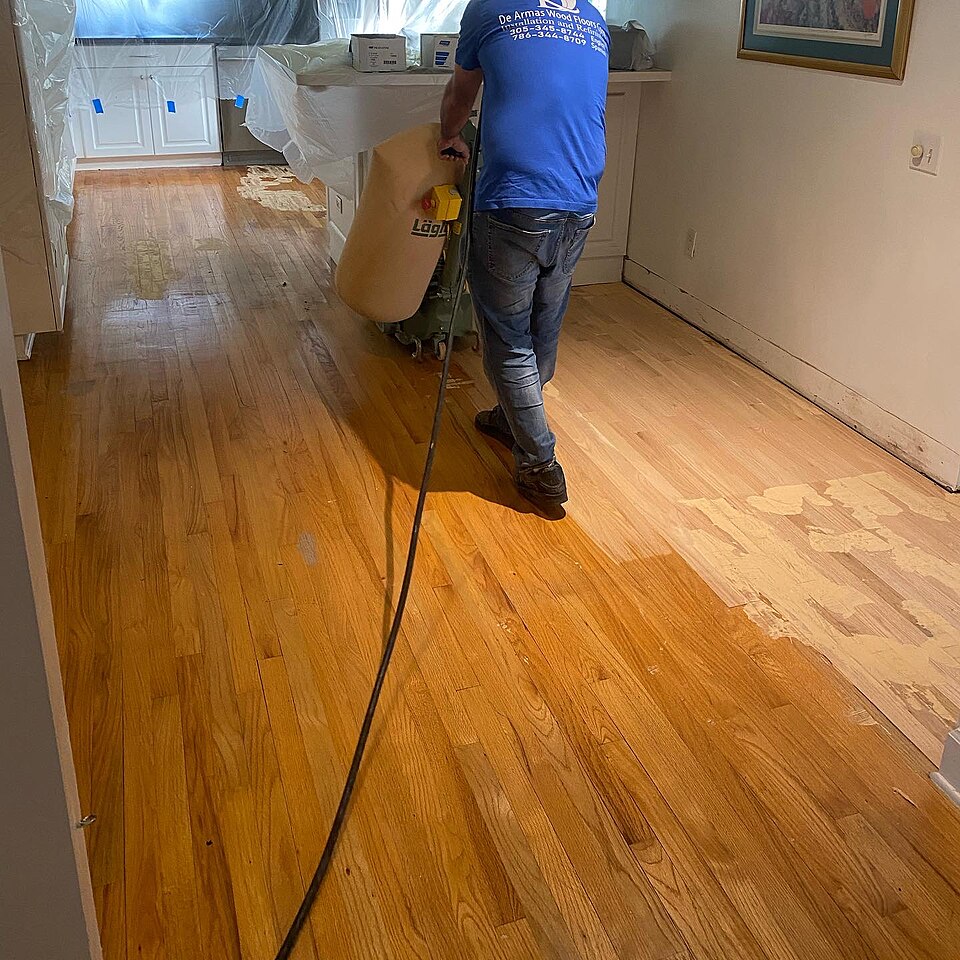
Both oil and lacquer can be sanded and re-treated, but the routes differ. Oil can be overcoated with lacquer if the owner later wants it, while the reverse needs a full sand to bare wood5. Junckers states that floors maintained with wax or polish must be sanded back to bare wood before resealing8. Using the wrong cleaner can cause adhesion problems when the floor is next recoated, which is why NWFA tells owners to use only cleaners the finish maker recommends3. Routine care is covered in cleaning and maintenance.
Frequently asked questions
Is hardwax oil or lacquer better for a family home?
Can I put lacquer over an oiled floor, or oil over lacquer?
Do UV-cured finishes need time to dry?
Does fumed or smoked oak stay the same colour?
Does the finish change how hard a floor is?
Sources
- Wood Handbook: Wood as an Engineering Material (FPL-GTR-282), Chapter 16, Finishing Wood, USDA Forest Products Laboratory. Accessed .
- Wood Floor Finishes, National Wood Flooring Association (NWFA). Accessed .
- Wood Flooring Installation Guidelines, revised 2025, National Wood Flooring Association (NWFA). Accessed .
- Frequently Asked Questions (professional), Bona. Accessed .
- Choosing Between Lacquer And An Oil - Finished Floors, Junckers. Accessed .
- Hardwax Floor Oil, product information F 3.4, Junckers. Accessed .
- MT500 Floor Lacquer, product information F 5.1, Junckers. Accessed .
- Cleaning and maintenance, lacquered floors, G 4.0, Junckers. Accessed .
- Cleaning and maintenance, oiled hardwood floors, G 2.0, Junckers. Accessed .
- Hardwax oil protects and seals wood floors, Osmo UK. Accessed .
- Construction, grading, textures and smoking/fuming, Wood Floors & Accessories Ltd. Accessed .
- Treatments, Wood Floors & Accessories Ltd. Accessed .
This page compiles published data from the sources listed above. Read our editorial policy. Last updated .