Reclaimed wood flooring
Quick answer
Reclaimed wood flooring is made from timber taken from an earlier use, such as old buildings, and milled into floorboards. The NWFA says there is no grading standard for it, so appearance is agreed between buyer and supplier. Hidden nails, old paint and brittle wood are the main checks.
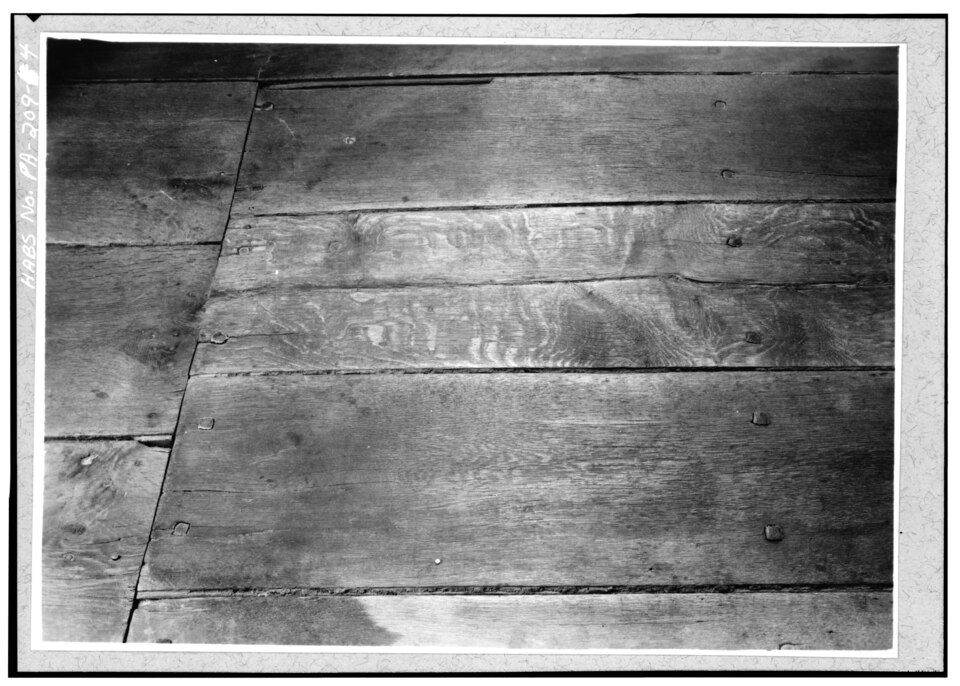
Reclaimed wood flooring is made from timber that has already had a first life, often in an old building, and is remilled into floorboards or parquet. There is no grading standard for it, so its appearance is agreed between buyer and supplier rather than read from a grade2. The checks that matter most are hidden metal, old paint, moisture content and brittleness.
What counts as reclaimed wood flooring?
The National Wood Flooring Association (NWFA) separates three related categories in its installation guidelines1:
- Post-consumer recycled or antique reclaimed wood: wood or wood fibre reclaimed from an end user after being used for its original purpose. End users may be individuals, households or industrial users.
- Pre-consumer recycled wood: wood or wood fibre created as a by-product of a secondary manufacturing process, also called post-industrial recycled wood.
- Salvaged wood: wood from logs salvaged from sources such as orchards, urban forests (street trees) and waterways, where sunken logs have been raised from rivers, reservoirs and lake bottoms.
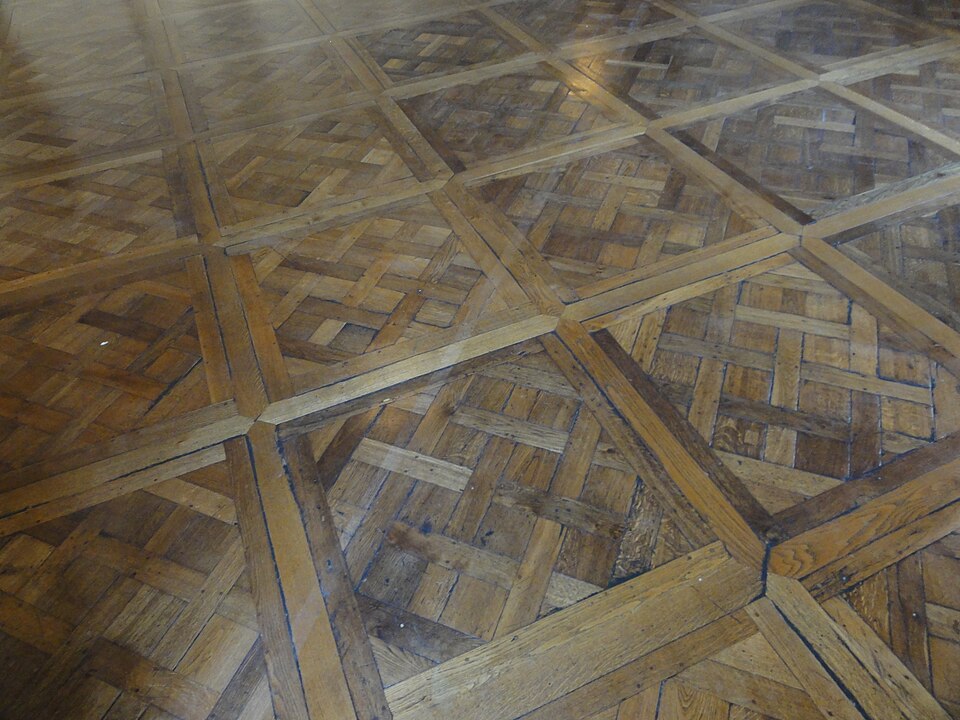
Reclaimed timber can be milled into solid boards, engineered boards, parquet or end-grain blocks, and the NWFA's acclimation guidance applies according to which of these it becomes1. See our pages on solid wood flooring and engineered wood flooring for those constructions.
Where does reclaimed flooring come from?
A good worked example is a study by the USDA Forest Products Laboratory. About 6,000 board feet of hemlock lumber, ranging from 3 in by 8 in to 3 in by 12 in, was salvaged from building deconstruction and remilled into four products: log cabin siding, V-groove paneling, beadboard and tongue and groove flooring. The study found the general quality of the products high and little loss after processing, though checks, ringshake and face-nail holes were found in some pieces3.
The same study reports a low yield of about 33% of the lumber into value-added products, constant across lumber sizes and product types, and the authors thought better on-site trimming could raise it3. It was one study of one species, so do not read the figure as an industry average, but it shows that remilling salvaged timber can involve heavy material loss.
What are the checks for nails and metal?
Hidden fasteners are the best-documented problem. In the Forest Products Laboratory study, inspection found that on-site de-nailing was only partly complete, with about 90% of members fully free of nails. More importantly, many pieces had broken-off nail shanks that were difficult to see. An inexpensive hand-held metal detector was used to locate the metal, and by the time the lumber reached the millwork facility it had been scanned several times, because ensuring no metal remains is critical for avoiding moulder damage and the cost of sharpening or replacing profile knives3.
The report also recorded how much wood had to be removed. A 1-1/2 in cut was the minimum needed to remove most nail penetration holes, and a heavier cut of 1-3/4 in to 2 in was needed to remove ferrous metal stains3. Those figures apply to large hemlock joists and beams being resawn, not thin boards, but they show how much wood embedded nails can take out of use. When you buy, ask a supplier how its stock was de-nailed and what it uses to scan for metal before milling.
What about old paint and other contamination?
Lead-based paint is the contaminant with the clearest published treatment. A 2005 Forest Products Laboratory report reviewed existing regulations and standards for lead-based paint on buildings, particularly on lumber and timber, including mitigation and disposal of waste, and concluded there is no regulatory or policy guidance at the federal level that permits, prohibits or qualifies salvaging and reusing building materials coated with it4. That is a United States federal statement from 2005, not current legal advice, and local rules may differ. We did not find a trustworthy published source on other contaminants such as oils or preservatives, so we do not make claims about them. Ask for the supplier's testing and handling records, and treat any painted salvage with caution.
How is reclaimed flooring graded?
It is not, in the formal sense. An NWFA technical article states that there is no grading standard for reclaimed wood. It adds that colour variations, knots, nail holes, stains and even milling variations from one board to the next are likely to be present with any reclaimed material, and that customer expectations must be laid out and clearly identified before selling or installing any reclaimed wood floor2.
In practice, this means grade names from one supplier do not match another's. Ask for physical samples from the batch you will receive, and for written descriptions of what features are accepted. The mill-certification grades used for newly milled flooring1 are not described for reclaimed wood; our flooring standards guide covers the standards that do exist.
How is reclaimed flooring dried and installed?
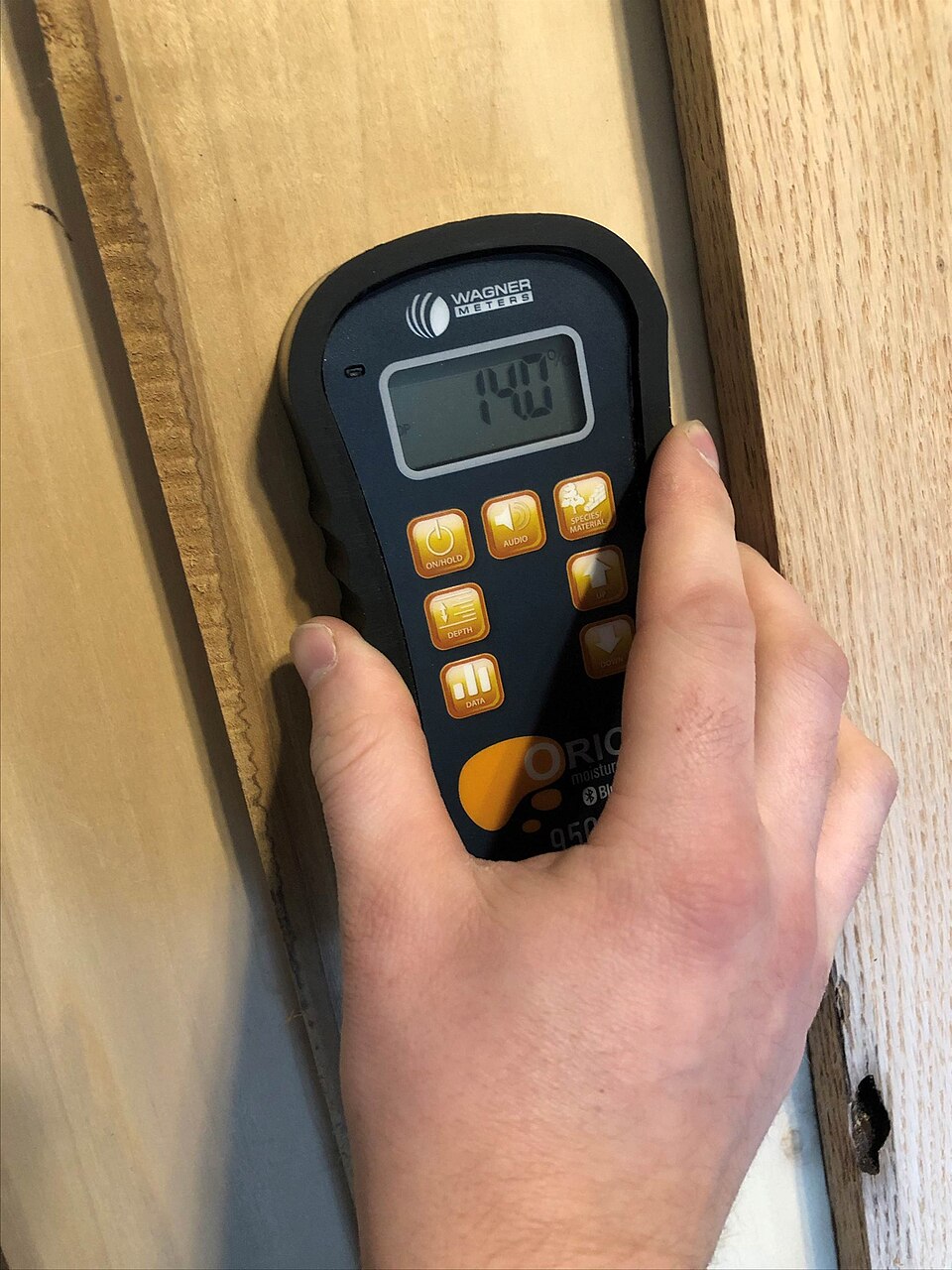
The NWFA says reclaimed lumber milled into solid flooring must be dried to a moisture content that coincides with the home and environment in which it is installed. On delivery, installers should record temperature and humidity and the moisture content of multiple boards from a variety of bundles, and reclaimed flooring is acclimated as set out for its type, whether solid, engineered, parquet or end grain1. Our moisture and acclimatisation guide explains how to measure and manage it.
The NWFA technical article gives further cautions2:
- Some reclaimed floors may be so hard and brittle that they cannot be nailed without splitting, so whether a floor can be nailed or glued is up to its manufacturer. The user should also be told that reclaimed wood potentially will splinter.
- Target moisture content should be checked with the manufacturer for the facility and product, and studies have shown that mould growth can occur on wood at moisture contents above 15 percent.
- After installation, the floor may need light sanding and abrading, and a common recommendation is to go over it with a buffer using a Tampico brush.
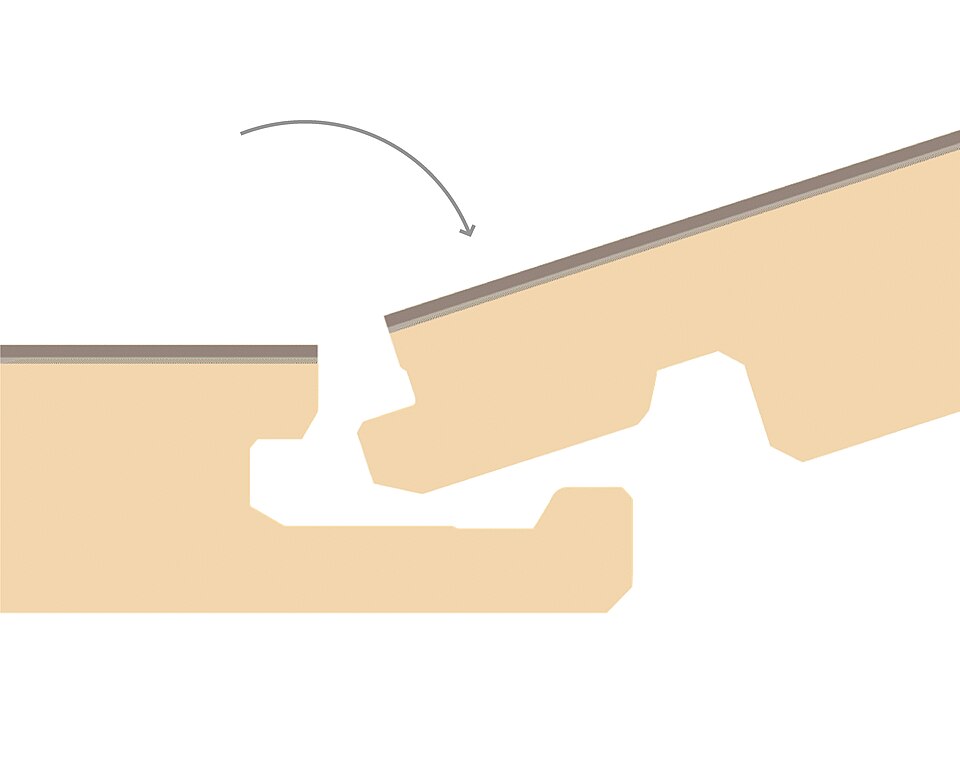
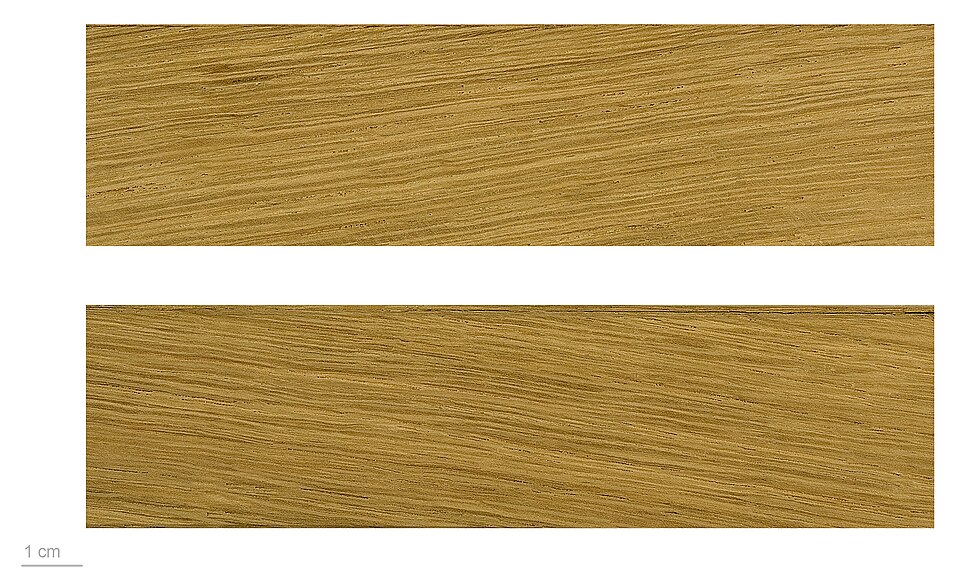
For installation choices see our installation methods guide. If your boards are oak, see European oak for how the species behaves.
Frequently asked questions
Is there a grading standard for reclaimed wood flooring?
Does reclaimed flooring contain nails?
Can old paint on reclaimed wood be a problem?
Can reclaimed boards be nailed down?
Sources
- Wood Flooring Installation Guidelines (revised 2025), National Wood Flooring Association. Accessed .
- If Wood Could Talk: Installing Reclaimed Flooring (Brett Miller, NWFA), Hardwood Floors Magazine. Accessed .
- Feasibility of Producing Value-Added Wood Products from Reclaimed Hemlock Lumber (FPL-RP-645), USDA Forest Service, Forest Products Laboratory. Accessed .
- Regulatory and policy issues for reuse and remanufacture of wood materials coated with lead-based paint (FPL-GTR-164), USDA Forest Service, Forest Products Laboratory. Accessed .
This page compiles published data from the sources listed above. Read our editorial policy. Last updated .