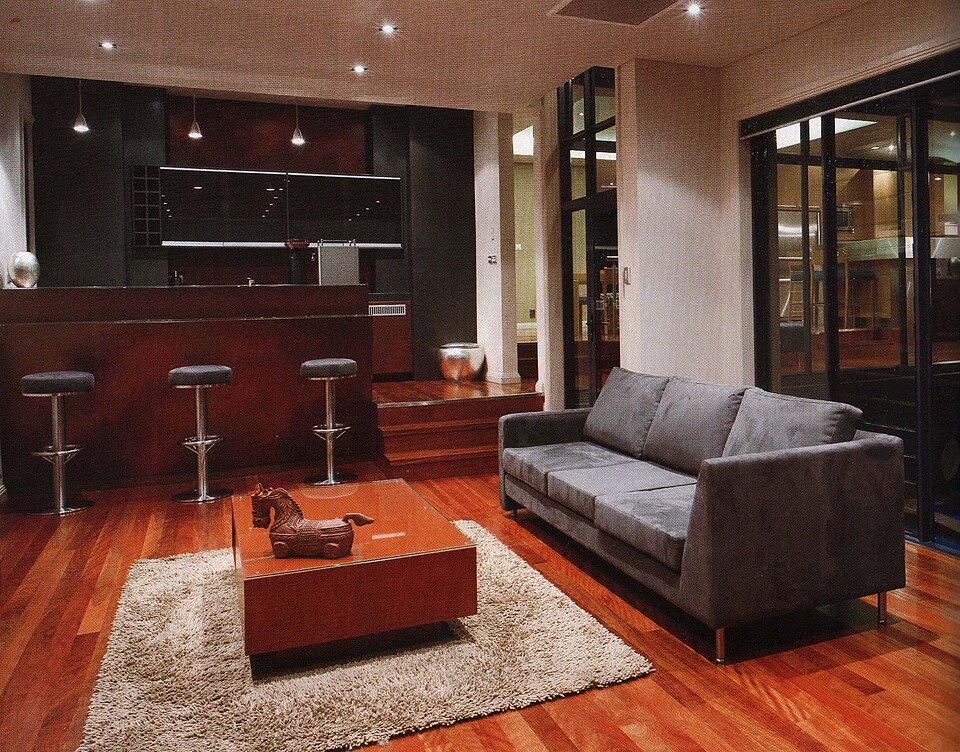
Wood flooring standards
Quick answer
In Europe, product standards from CEN define each type of wood floor: EN 13226 for solid parquet elements, EN 13629 for solid boards, EN 13489 for multi-layer parquet, with EN 14342 covering characteristics, conformity and marking, and EN 1534 the indentation test. In the US, NWFA publishes installation guidelines, and in France the NF DTU 51 series covers installation. Descriptions here follow each publisher's own scope text.
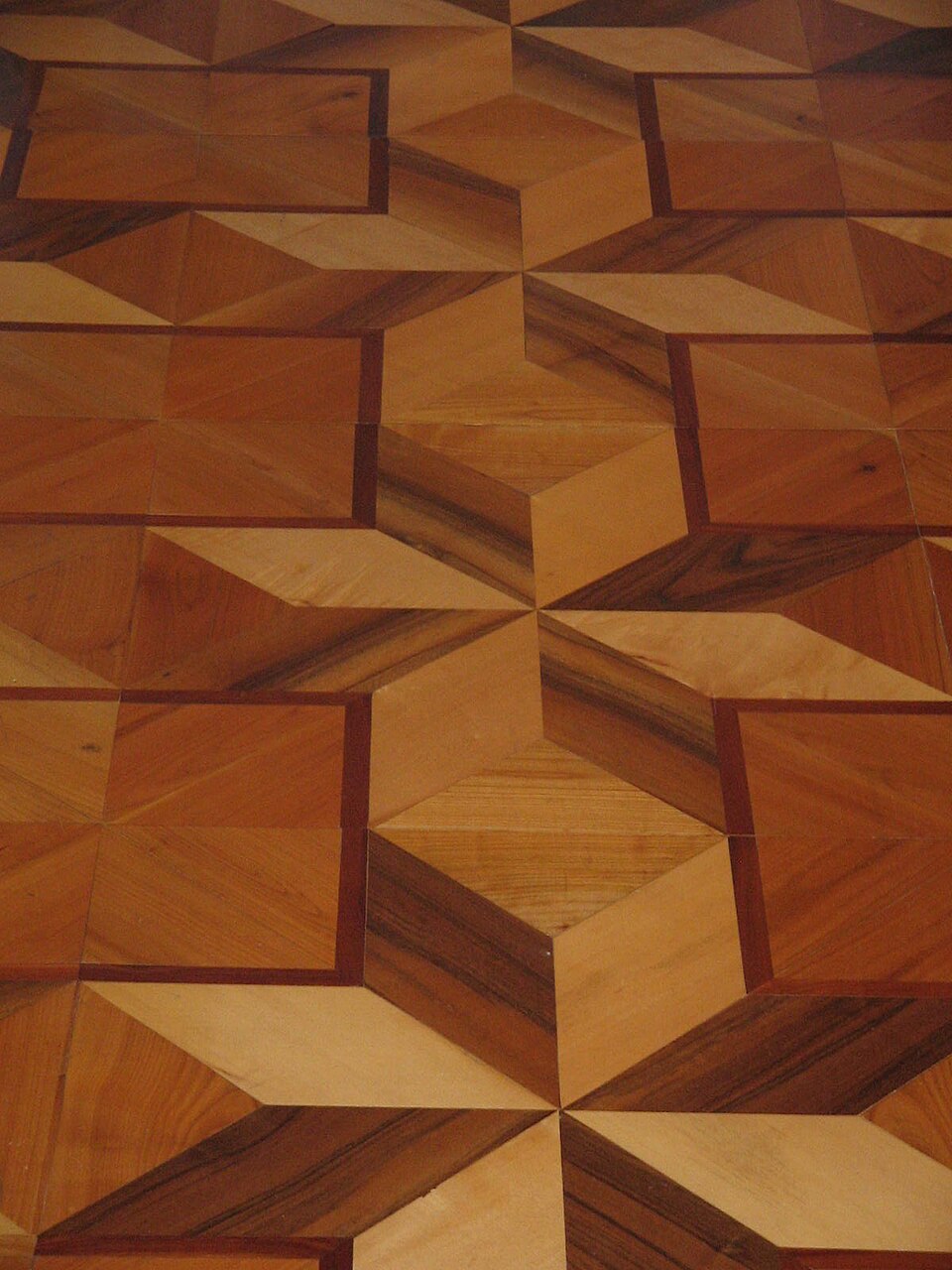
Wood flooring standards are the shared definitions and test methods that tell a buyer what a floor is and how it was measured. In Europe they come mainly from CEN: EN 13226 for solid parquet elements, EN 13629 for solid boards, EN 13489 for multi-layer parquet, EN 14342 for characteristics, conformity and marking, and EN 1534 for indentation resistance. In the United States, NWFA publishes installation guidelines, and France publishes installation rules as NF DTU documents. This guide describes each in plain English, using only what the publishers' own listings state.
Which standard covers which kind of floor?
The product standards split by construction.
| Standard | Scope as the publisher states it | Edition seen |
|---|---|---|
| EN 13226 | Characteristics of solid parquet elements with grooves and/or tongues for internal use as flooring, with or without surface treatment; also applicable to elements of parquet panels1 | 2025, edition 3, replaces 20091 |
| EN 13629 | Characteristics of individual hardwood boards and pre-assembled hardwood boards for internal flooring, with or without surface coating; does not cover solid parquet elements2 | 2020, replaces 20122 |
| EN 13489 | Characteristics, requirements and test methods of multi-layer parquet elements for internal use as flooring3 | 2023, edition 3, replaces 20173 |
| EN 14342 | Characteristics, requirements and test methods for judging wood flooring as internal flooring, plus conformity evaluation and marking4 | 2013, replaces 2005+A1:20084 |
| EN 13756 | A terminology standard giving terms and definitions in French, English and German6 | September 20186 |
| EN 1534 | A method for determining the resistance to indentation of wood flooring9 | 20209 |
Editions change, and catalogues date the same edition differently: EN 14342:2013 is dated July 2013 by AFNOR and August 2013 by SIS54. Confirm the current edition with a national standards body before you specify one.
Which one applies depends on construction. A herringbone parquet can be solid or engineered according to NWFA11, so ask which standard the product declares. Our solid wood and engineered wood pages cover those formats.
What does EN 14342 add?
EN 14342 is the umbrella document. Its scope lists the product standards it relates to: solid parquet elements (EN 13226), lamparquet (EN 13227), solid wood overlay elements (EN 13228), mosaic parquet (EN 13488), multi-layer parquet (EN 13489), solid pre-assembled hardwood board (EN 13629), solid softwood floor boards (EN 13990), wood veneer floor coverings (EN 14354) and wood parquet vertical finger, wide finger and module brick (EN 14761)4. It states that those product standards provide the definitions and dimensional tolerances, and that EN 14342 itself does not specify dimensional limits4.
It also provides for evaluation of conformity and marking requirements, and it covers floors with or without paint, varnish, lacquer, wax or oil4. It does not apply to bamboo flooring, laminate flooring, or products made from plants such as aloe, cork or coconut4.
AFNOR's catalogue entry for the 2013 edition says Annex ZA serves as the basis for CE marking and describes the standard as harmonised under Directive 89/106/EEC on construction products5. That wording reflects the catalogue entry; check the current European construction products rules for how CE marking applies today.
How do the standards define "parquet" and "multi-layer"?
Standards use their own vocabulary rather than the trade words "solid" and "engineered". ISO 5323:2019 defines these terms7:
| Term | ISO 5323 definition |
|---|---|
| Parquet | Wood flooring system with a top layer of solid wood of at least 2,5 mm thickness, with or without additional layers |
| Solid parquet | System with one layer of solid wood of at least 2,5 mm thickness |
| Multi-layer parquet | Multi-layer system with a solid wood top layer of at least 2,5 mm, where wood, wood-based and/or lignified material make up at least 75% of the assembly's mass |
| Wood floor covering | Wood flooring system with a solid wood top layer of more than 0,3 mm and less than 2,5 mm before installation |
| Wood block paving | Square-edged wood blocks installed individually so that an end grain surface serves as a wear area |
These thresholds matter in practice. A product whose top layer is between 0,3 and 2,5 mm is a wood floor covering rather than parquet in the ISO vocabulary7, and one maker states its veneer floors cannot be re-sanded8. Our sanding guide covers that effect. EN 13756 is the CEN terminology standard, and its contents list includes top layers, coatings and surface treatments, installation, pattern and geometrical characteristics6.
What do the hardness and classification standards say?
EN 1534 specifies a method for determining resistance to indentation of wood flooring; BSI lists the 2020 edition as current from January 20209. It is a different test from the Janka test used in North America, explained in our Janka hardness guide.
You will also see flooring marketed with numbered "use classes". The ISO classification, EN ISO 10874, is a classification system for resilient, textile and laminate floor coverings, and AFNOR's page does not mention wood10. For a wood floor, treat a class number as a manufacturer claim and ask which test supports it. France's parquet standard does turn wear-layer thickness and species hardness into a class, as set out in our guide to usage classes 21 to 34; fire and slip ratings are covered in fire and slip ratings.
What are NWFA guidelines?
The National Wood Flooring Association (NWFA) is the US trade body. Its Wood Flooring Installation Guidelines, revised in 2025, are a technical publication developed by the NWFA Technical Publications Committee with industry authorities, outlining the industry-accepted methods and procedures for installations; they are directed at the North American market and may not reflect the most accepted practices in other regions11. They cover jobsite conditions, acclimation, moisture testing, substrates, radiant heat, layout, installation methods and care11. They also point to ASTM test methods, for example ASTM F2170 and F1869 for concrete moisture testing and ASTM D4442 for oven-dry moisture content11. Our installation methods and underfloor heating guides draw on them.
What is the DTU 51 series in France?
France's DTU (Documents Techniques Unifiés) cover installation methods. Batirama's list of current DTUs gives NF DTU 51.1 as "Pose des parquets à clouer" (nailed parquet), 51.2 as "Pose des parquets à coller" (glued parquet) and 51.11 as "Pose flottante des parquets contrecollés et revêtements à placage bois" (floating installation of multilayer parquet and wood-veneer coverings)15.
- NF DTU 51.1. AFNOR lists part 1-1, the contract bill of technical specifications, as published in December 2010 and current12.
- NF DTU 51.2. AFNOR lists part 1-2, the general criteria for selection of materials, in a March 2023 edition13. The building federation's article says the standard dates from 2009, was reworked in 2020 to add multi-layer and solid parquet on underfloor heating and reversible floors, wet rooms and the humidity of concrete substrates, and was revised again in March 2023 with a new chapter on minimum periods after installation and an annex on maintaining service conditions until handover14.
- Pending updates. The same September 2023 article says some of these provisions would be carried into NF DTU 51.1 and 51.11, which it described as being finalised14. Check AFNOR for the current editions.
How does underfloor heating tie in?
Heating-system standards sit alongside flooring ones. Weitzer says its parquet is suitable for systems that conform to the DIN EN 1264 series on water-based surface-embedded heating and cooling systems, and cites a 29°C maximum floor surface temperature from DIN EN 1264 and an Austrian standard for living areas16. See underfloor heating for the limits makers apply.
How should you use standards when buying?
Ask which product standard applies, which edition, and which test methods stand behind any numbers on the data sheet. This guide records what publishers state about scope; it does not reproduce the standards' requirements, which are in the documents themselves.
Frequently asked questions
What is the difference between EN 13226, EN 13629 and EN 13489?
What does EN 14342 do?
Is there a European use class scheme for wood floors?
Which standard covers hardness testing in Europe?
Is NWFA's guideline a legal standard?
Sources
- SS-EN 13226:2025 Wood flooring - Solid parquet elements with grooves and/or tongues, Swedish Institute for Standards (SIS), listing the CEN standard. Accessed .
- SS-EN 13629:2020 Wood flooring - Solid individual and pre-assembled hardwood boards, Swedish Institute for Standards (SIS), listing the CEN standard. Accessed .
- SS-EN 13489:2023 Wood-flooring and parquet - Multi-layer parquet elements, Swedish Institute for Standards (SIS), listing the CEN standard. Accessed .
- SS-EN 14342:2013 Wood flooring - Characteristics, evaluation of conformity and marking, Swedish Institute for Standards (SIS), listing the CEN standard. Accessed .
- NF EN 14342 (July 2013) Wood flooring and parquet - Characteristics, evaluation of conformity and marking, AFNOR. Accessed .
- NF EN 13756 (September 2018) Wood flooring and parquet - Terminology, AFNOR. Accessed .
- ISO 5323:2019 Wood flooring and parquet - Vocabulary (preview), ISO (preview hosted by iTeh Standards). Accessed .
- Construction of engineered wood floors, Kährs. Accessed .
- BS EN 1534:2020 Wood flooring and parquet. Determination of resistance to indentation. Test method, BSI. Accessed .
- NF EN ISO 10874 Resilient, textile and laminate floor coverings - Classification (ISO 10874:2009), AFNOR. Accessed .
- Wood Flooring Installation Guidelines, revised 2025, National Wood Flooring Association (NWFA). Accessed .
- NF DTU 51.1 P1-1 Parquet - Parquet to be nailed - Part 1-1: contract bill of technical specifications, AFNOR. Accessed .
- NF DTU 51.2 P1-2 Building works - Parquet installed by gluing - Part 1-2: General criteria for selection of materials (CGM), AFNOR. Accessed .
- Le NF DTU 51.2 « Parquets collés » évolue, UMB-FFB (Fédération Française du Bâtiment). Accessed .
- La liste des DTU (Documents Techniques Unifiés) à jour, Batirama. Accessed .
- Information Sheet MB 020: Parquet on subfloor heating (07-2025), Weitzer Parkett. Accessed .
This page compiles published data from the sources listed above. Read our editorial policy. Last updated .