Industrial wood block flooring
Quick answer
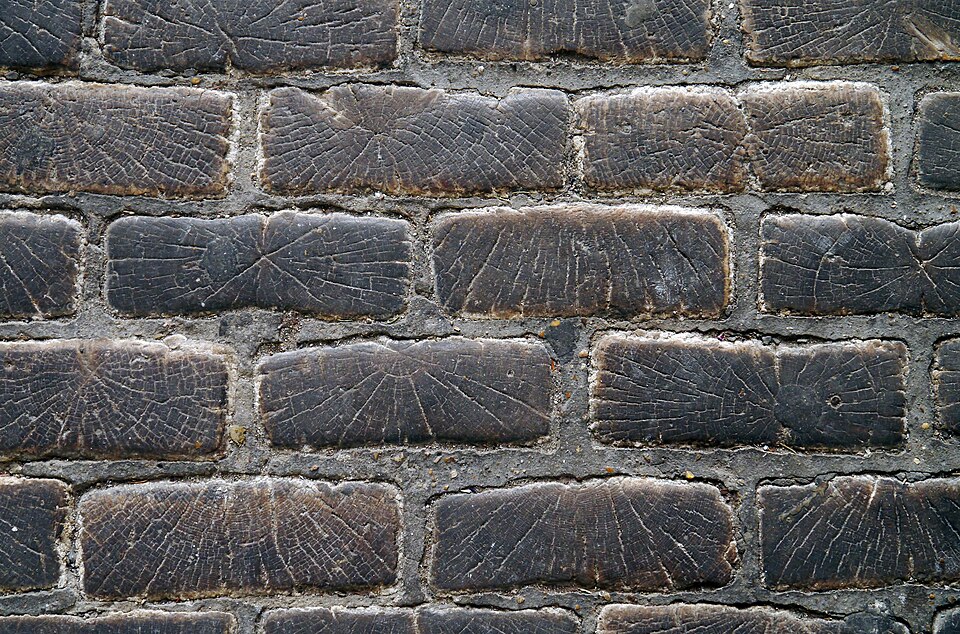
Industrial wood block flooring consists of solid timber blocks oriented with their end grain facing upwards to absorb severe mechanical impacts, rolling vehicle traffic and heavy machinery loads. Standardised in Germany under DIN 68702 as Holzpflaster GE, individual block heights range from 50 mm to 100 mm, commonly milled from pine, spruce or oak12. It provides exceptional shock absorption, acoustic damping and long-term durability in workshops, foundries and industrial facilities.
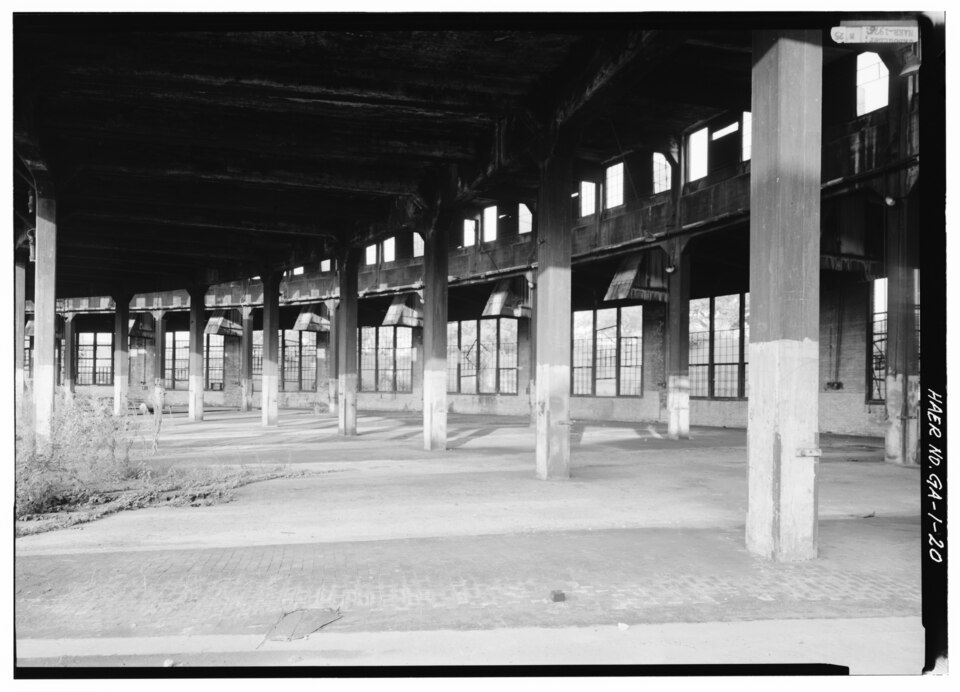
Industrial wood block flooring—historically referred to as timber paving, wood block paving, or Holzpflaster in German engineering—is an ultra-heavy-duty floor covering engineered for severe mechanical environments. Unlike standard solid wood flooring or flatgrain mosaic parquet where timber boards are sawn longitudinally along the grain, industrial wood blocks are cut transversely so that the open end grain faces vertically toward the traffic surface14.
How is industrial wood block flooring standardised?
In European construction and technical specification, wood block paving is regulated under standard DIN 68702 (Holzpflaster aus Holzwerkstoffen und Vollholz), published by DIN Media1. The standard defines precise physical dimensions, allowable species, moisture limits and fabrication criteria across three distinct operational classes:
- Holzpflaster RE (Repräsentativ): Decorative and representative spaces such as museums, public foyers and architectural interiors where visual finish and refined aesthetics dominate.
- Holzpflaster WE (Werkräume): Technical rooms, vocational schools, craft training centres and light workshops subjected to moderate mechanical loads3.
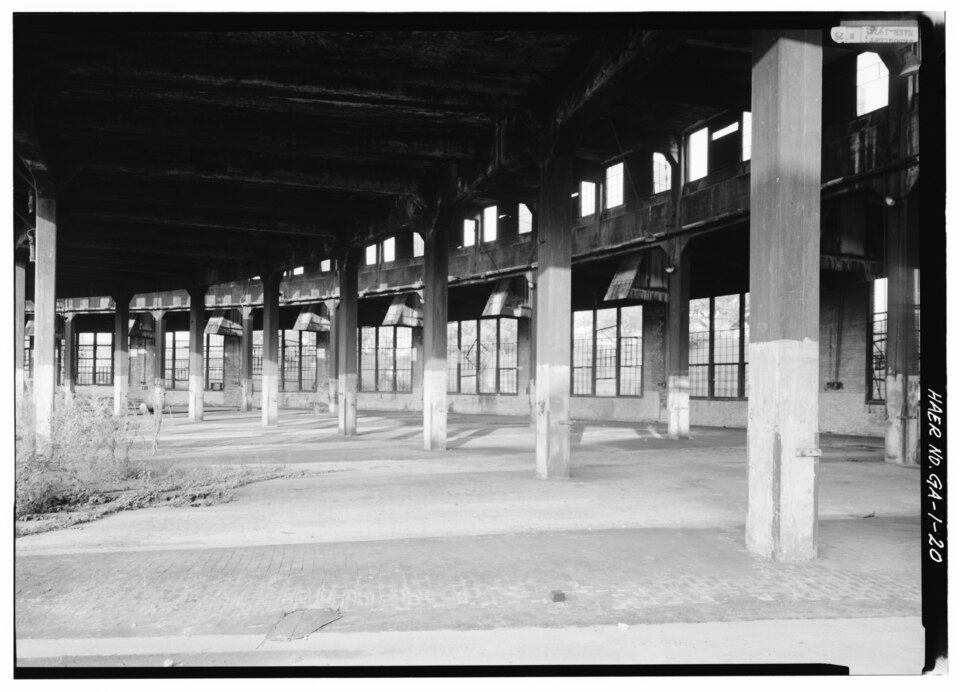
- Holzpflaster GE (Gewerblich / Industrie): Heavy-duty industrial and commercial facilities subject to heavy wheeled vehicle traffic, forklift routes, rolling loads, and severe tensile and shear forces2.
The industrial grade GE requires substantial cross-sections and rigorous sorting to guarantee dimensional stability and load distribution across large factory floors2.
What are the technical dimensions and timber species?
According to technical documentation compiled by BauNetz Wissen, DIN 68702 establishes strict dimensional rules for industrial wood blocks (type GE)2:
- Block height: Ranges between 50 mm and 100 mm2. This massive depth provides structural resistance against point impacts and rolling loads, while offering decades of wear allowance.
- Block width: Milled between 60 mm and 80 mm2. Within any single installation room or contiguous floor bay, all blocks must share the exact same width to maintain straight laying joints2.
- Block length: Varies unsorted between 60 mm and 140 mm2. Staggering lengths across rows prevents continuous cross-joints, creating an interlocked masonry-like pattern.
The standard species selected for industrial floors are Scots pine (Pinus sylvestris), Norway spruce (Picea abies) and European oak (Quercus robur / petraea)2. Pine and spruce offer cost-effective shock absorption and resilience, while dense oak blocks are chosen for the most arduous mechanical conditions or where chemical resistance is required.
| DIN 68702 Class | Application area | Block height (mm) | Typical species | Mechanical exposure |
|---|---|---|---|---|
| GE (Industrial) | Factories, foundries, forklift aisles2 | 50–100 mm2 | Pine, spruce, oak2 | Extreme rolling and impact loads |
| WE (Workshop) | Training workshops, joinery shops3 | 30–50 mm3 | Pine, spruce, larch3 | Medium foot traffic, light machinery |
| RE (Representative) | Galleries, public halls, offices | 22–30 mm | Oak, ash, beech | Decorative foot traffic |
Why does end-grain orientation resist extreme loads?
Wood is naturally an anisotropic biological material whose cellular tracheids and vessels run vertically along the tree trunk4. When wood blocks are installed end-grain up:
- Compressive strength along the fibers: Wood exhibits its highest compressive resistance parallel to the grain4. Point loads from machinery legs, pallets and steel-wheeled trolleys press directly down on the fiber ends rather than compressing wood fibers across their vulnerable tangential or radial faces.
- Self-healing impact behaviour: Dropped metal components or heavy engineering tools dent the wood ends locally rather than splitting or shattering the surface. The crushed tracheids form a compressed cushion, protecting both the dropped tool and the surrounding floor structure2.
- Vibration and acoustic damping: Unlike rigid concrete or tiled factory floors, a deep matrix of individual solid wood blocks absorbs heavy mechanical vibrations, significantly reducing acoustic reverberation in industrial machine shops.
- Worker ergonomics: In facilities where personnel stand for eight-hour production shifts, the natural elasticity and thermal warmth of end-grain wood blocks drastically reduce joint fatigue and leg strain compared with bare concrete.
How is industrial wood block flooring installed?
Proper subfloor preparation is essential for industrial block installations. Under DIN standards, blocks must be bonded directly to a solid, crack-free structural concrete slab or cementitious screed capable of supporting anticipated dynamic vehicle loadings2.
Blocks are supplied at a specified delivery moisture content between 10% and 14%2. Because end-grain surfaces absorb humidity more rapidly than side-grain lumber, industrial blocks are often factory-impregnated or coated with bitumen-based or solvent-free polyurethane sealants to retard ambient moisture uptake2.
Installation proceeds in rows with tightly abutted blocks bedded into synthetic resin adhesives or hot bitumen mastic. Continuous perimeter expansion margins of 20 mm to 50 mm are left along all exterior walls and around structural columns to accommodate seasonal hygroscopic expansion. Once laid, the surface can be lightly sanded and saturated with penetrating industrial oils, paraffin wax or bitumen emulsions depending on whether the facility requires oil resistance, spark suppression or clean dry dust extraction. For comprehensive details on fitting methods, see our guide on installation methods.
Frequently asked questions
What standard governs industrial wood block flooring?
Why is end grain used for heavy industrial floors?
How thick are industrial wood blocks?
What species are typically used for industrial wood blocks?
How is moisture managed in industrial block floors?
Sources
- DIN 68702:2009-10 Holzpflaster (Wood paving), DIN Media. Accessed .
- Holzpflaster GE: Für den gewerblichen und industriellen Bereich, BauNetz Wissen. Accessed .
- Holzpflaster WE: Für Werkstätten, BauNetz Wissen. Accessed .
- The Truth Behind Wood Identification: Endgrain Anatomy, The Wood Database. Accessed .
This page compiles published data from the sources listed above. Read our editorial policy. Last updated .