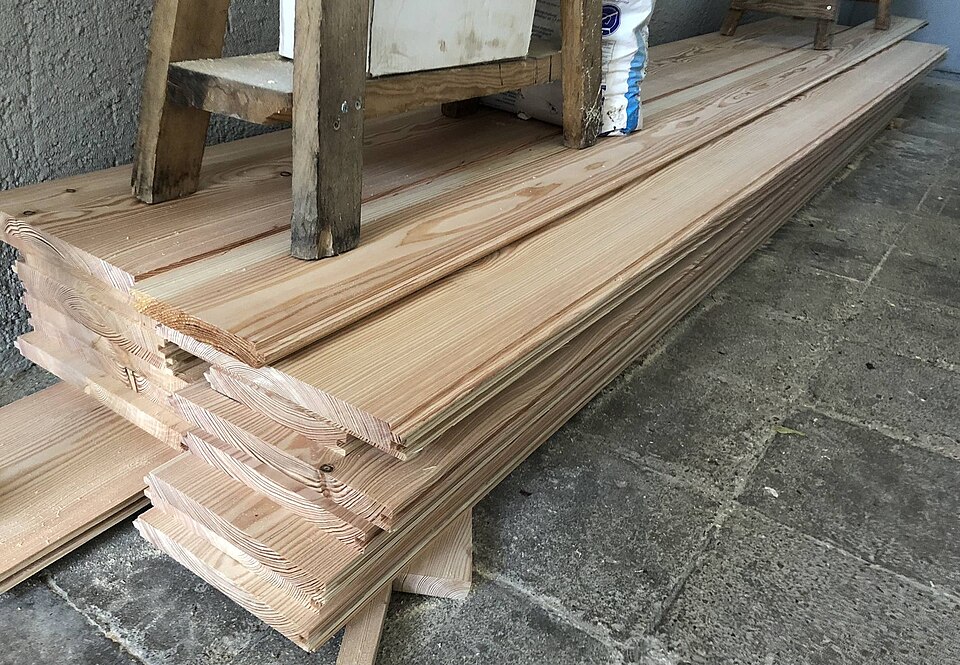
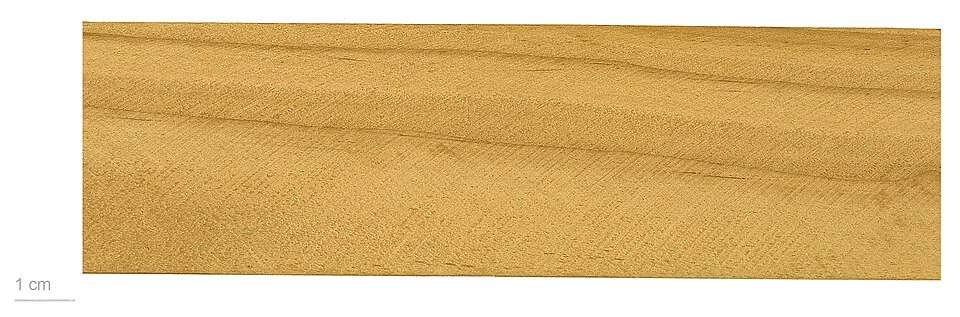
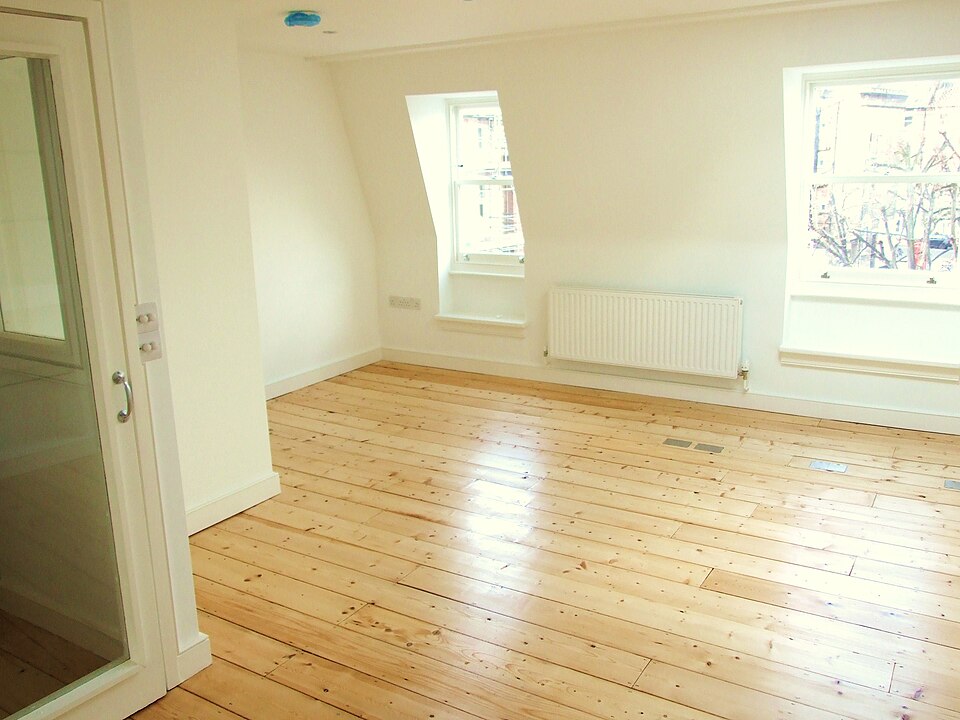
Scots pine
Quick answer
Scots pine (Pinus sylvestris) is a widespread European softwood with pale sapwood and reddish-brown heartwood. The Wood Database lists it at 540 lbf (2,420 N) on the Janka scale, giving a softer surface than European oak at 1,120 lbf14. It is a classic traditional choice for painted, oiled or lye-treated floorboards across northern and central Europe.
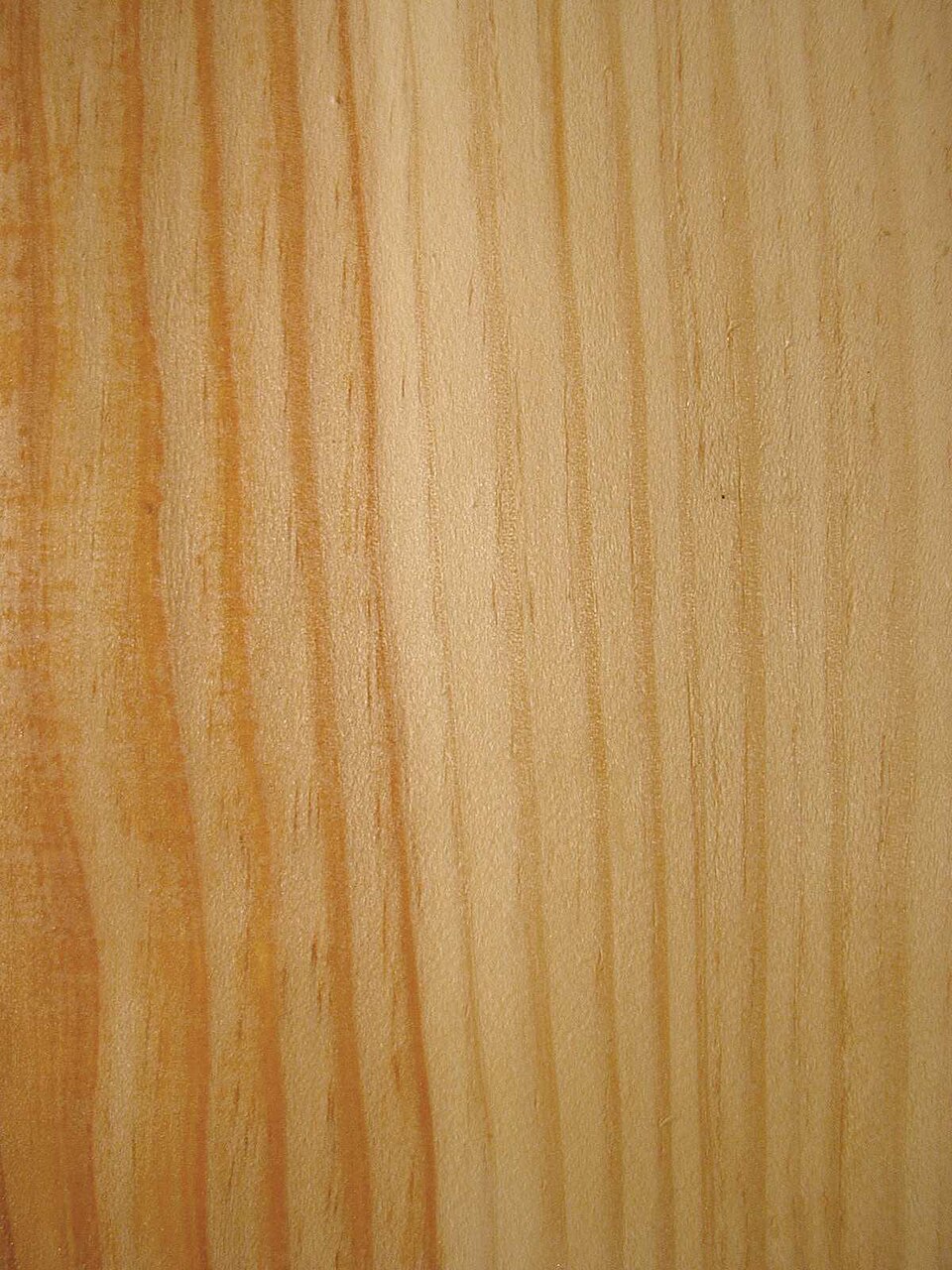
Scots pine (Pinus sylvestris) is one of the most historically significant timber species in Europe, providing wide floorboards for centuries in domestic interiors, cottages and public buildings across Scandinavia, Great Britain and central Europe. For anyone installing or restoring solid wood flooring, Scots pine represents a warm, characterful softwood with clear distinctions between pale earlywood and dense latewood bands.
What are the key physical properties of Scots pine?
The Wood Database records an average dried weight of 550 kg/m³ (34 lbs/ft³) for Scots pine, corresponding to a basic specific gravity of 0.39 and 0.55 at 12% moisture content1. The species exhibits modest shrinkage values for a European conifer: radial shrinkage averages 5.2%, tangential shrinkage reaches 8.3%, and volumetric shrinkage measures 13.6%, yielding a tangential-to-radial (T/R) shrinkage ratio of 1.61. This moderate ratio means that plain-sawn pine boards move reasonably evenly across their width during seasonal shifts in ambient relative humidity.
In mechanical testing, Scots pine shows a bending strength (modulus of rupture) of 83.3 MPa (12,080 lbf/in²), an elastic modulus of 10.08 GPa (1,461,000 lbf/in²), and a parallel-to-grain crushing strength of 41.5 MPa (6,020 lbf/in²)1. These structural values make it well-suited for self-supporting structural subfloors and joisted board applications, even though its surface resistance to point impact is lower than that of commercial hardwoods.
How hard is Scots pine on the Janka scale?
The Wood Database rates Scots pine at 540 lbf (2,420 N) on the side-grain Janka scale1. By comparison, European larch measures 740 lbf (3,290 N), Douglas fir rates similarly among softwoods, while European oak measures 1,120 lbf (4,980 N)54.
This 540 lbf rating places Scots pine firmly in the category of softer residential floor coverings. Under heavy impact—such as high-heeled shoes, pet claws or dropped utensils—pine floorboards will dent rather than shatter. Many homeowners embrace this natural patination as part of the authentic aged appearance of an antique softwood floor, but in heavy commercial or high-traffic settings, Scots pine requires regular maintenance or surface treatments to prevent premature fiber wear.
| Species | Wood type | Janka hardness (lbf) | Average dried weight (kg/m³) |
|---|---|---|---|
| Scots pine (Pinus sylvestris) | Softwood | 540 lbf1 | 550 kg/m³1 |
| European larch (Larix decidua) | Softwood | 740 lbf5 | 575 kg/m³5 |
| English oak (Quercus robur) | Hardwood | 1,120 lbf4 | 675 kg/m³4 |
Why does wood density vary within Scots pine trees?
Technical research published by Swedish Wood highlights how the internal cellular anatomy of Pinus sylvestris controls its mechanical strength3. In each annual growth ring, Scots pine produces two distinct zones:
- Earlywood (springwood): Formed rapidly during the initial spring flush, earlywood consists of wide cells with thin cell walls. Its basic density averages approximately 300 kg/m³3.
- Latewood (summerwood): Formed later in the growing season, latewood cells are 20% to 25% longer with significantly thickened cell walls. The basic density of latewood reaches approximately 900 kg/m³—nearly three times heavier than earlywood3.
Because of this anatomical structure, Scots pine timber grown in conditions that foster dense latewood bands exhibits superior hardness, higher modulus of elasticity and enhanced resistance to rolling abrasion3. Conversely, fast-grown plantation timber with wide, spongy earlywood rings will show lower surface wear resistance under foot traffic.
Where is Scots pine sourced and distributed?
According to EUFORGEN, the European Forest Genetic Resources Programme, Scots pine is one of the most widely distributed conifers in the world, with a native range extending across western Europe through the boreal forests of Scandinavia and eastward into Siberia2. It thrives from sea level in northern regions to elevations above 2,000 metres in southern mountain ranges2.
In commercial flooring production, significant volumes of slow-grown Scots pine originate from Sweden, Finland and the Baltic states, where cold winters and short growing seasons produce tight, dense growth rings. The timber is readily available certified under FSC and PEFC forest management schemes. The Wood Database notes that Scots pine is classified by the IUCN as a species of least concern and is not restricted by CITES regulations1.
How should Scots pine floors be finished and maintained?
Scots pine contains resin canals distributed throughout its heartwood and sapwood, which produce a mild, pleasant scent during cutting and machining1. When finishing Scots pine floorboards, proper surface preparation is necessary:
- Resin crystallisation: Timber dried at lower temperatures may still contain mobile terpenes. Modern kiln drying crystallises these resins, preventing exudation through finishes.
- Lye and soap treatments: In Scandinavian interior architecture, pine planks are frequently treated with soft lye to bleach out natural tannins and prevent yellowing, followed by repeated applications of white floor soap or breathable hardwax oils1.
- Film-forming finishes: Penetrating oils or flexible water-borne polyurethane sealers help protect the softer softwood fibers against dirt penetration while allowing seasonal wood movement1.
For advice on matching finishes to domestic foot traffic, consult our comprehensive guide to wood floor finishes and review practical cleaning and maintenance practices.
Frequently asked questions
How hard is Scots pine compared with oak and larch?
What causes density variations in Scots pine timber?
Does Scots pine flooring exude resin?
Where does Scots pine naturally grow?
Can Scots pine floors be sanded and refinished?
Sources
- Scots Pine, The Wood Database. Accessed .
- Pinus sylvestris, EUFORGEN (European Forest Genetic Resources Programme). Accessed .
- Properties of softwood, Swedish Wood. Accessed .
- English Oak, The Wood Database. Accessed .
- European Larch, The Wood Database. Accessed .
This page compiles published data from the sources listed above. Read our editorial policy. Last updated .