Dinesen
Quick answer
Dinesen is a family-run Danish company founded in 1898 as Jels Savværk in South Jutland, where it still produces its floor planks. Its range covers solid plank floors in Douglas, oak, HeartOak, ash and pine, plus engineered floors and pattern floors.
Dinesen is a family-run Danish company that makes floor planks from European-grown timber. This profile reports what the company publishes about its history, range and methods, and does not compare it with other makers.
What is Dinesen's history?
Dinesen says it was founded in 1898 by Hans Peter Dinesen under the name Jels Savværk, with a production facility and shop in the town of Jels in South Jutland, Denmark. The company later added the family name and continued as Dinesen Floors1. It states that its planks are still produced in Jels1, and the contact page refers to its headquarters in Denmark8.
On production, the company says its facility now exceeds 15,000 square metres. The planks pass through at least ten pairs of hands and a dedicated quality-control area, where knots are repaired or replaced if necessary3.
What does Dinesen make?
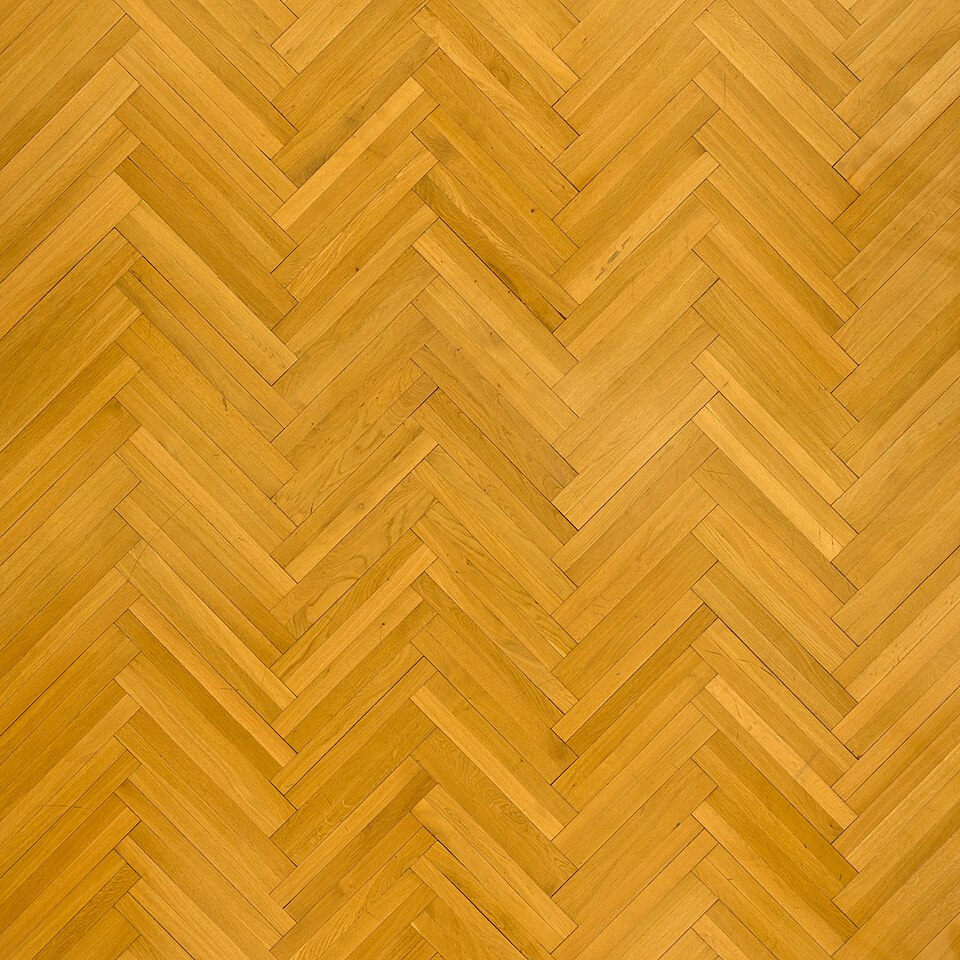
The plank floors page lists seven options: Douglas, Oak, Dinesen HeartOak (solid oak planks with oak butterfly joints), Pine, Ash, Oak Pattern and Douglas Pattern6. Oak Pattern is laid in Squares, Bond, Mosaic, Chevron or Herringbone layouts, while Douglas Pattern comes in herringbone, mosaic or bond6. The site menu also lists engineered floors, wall and ceiling cladding, a Stock Collection and Textures4.
For background on the constructions, see our pages on solid wood flooring and wide plank flooring. For the patterns, see herringbone flooring.
Where does the timber come from?
Dinesen says its trees come from family-owned European forests, primarily the Black Forest in Germany and France2. It states that foresters there practise a close-to-nature approach called Dauerwald, and that felling is selective, with each tree picked individually rather than clear-cut2. Its sustainability page says the Douglas firs it works with in the Black Forest are up to 60 metres tall and 1 metre in diameter5.
How are the planks produced?
Production begins with cutting trunks into planks, followed by air-drying and then kiln-drying in the company's own drying rooms. The drying rooms are heated with bio-fuel, and excess heat is recycled3.
What does it say about certifications?
On the public Tests & Certifications page, the headings are Concrete Tests, Supervision and Certificates, and no certification schemes are named7. If a certificate such as FSC® or PEFC matters for your project, ask the company for documentation. See also the separate profile of Junckers.
Frequently asked questions
When was Dinesen founded?
Where does Dinesen source its timber?
How are Dinesen planks dried?
Which patterns does Dinesen offer?
Does Dinesen publish certification details?
Sources
- Heritage, Dinesen. Accessed .
- Forest and wood, Dinesen. Accessed .
- Production, Dinesen. Accessed .
- Dinesen home page, Dinesen. Accessed .
- Sustainability, Dinesen. Accessed .
- Solid plank floors, Dinesen. Accessed .
- Tests and certifications, Dinesen. Accessed .
- Contact, Dinesen. Accessed .
This page compiles published data from the sources listed above. Read our editorial policy. Last updated .