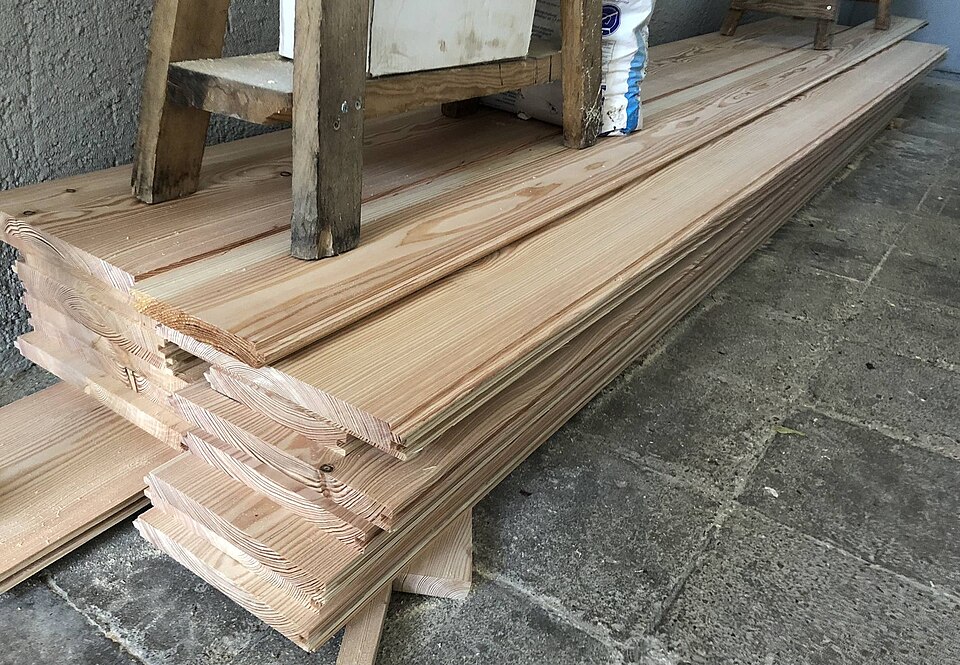
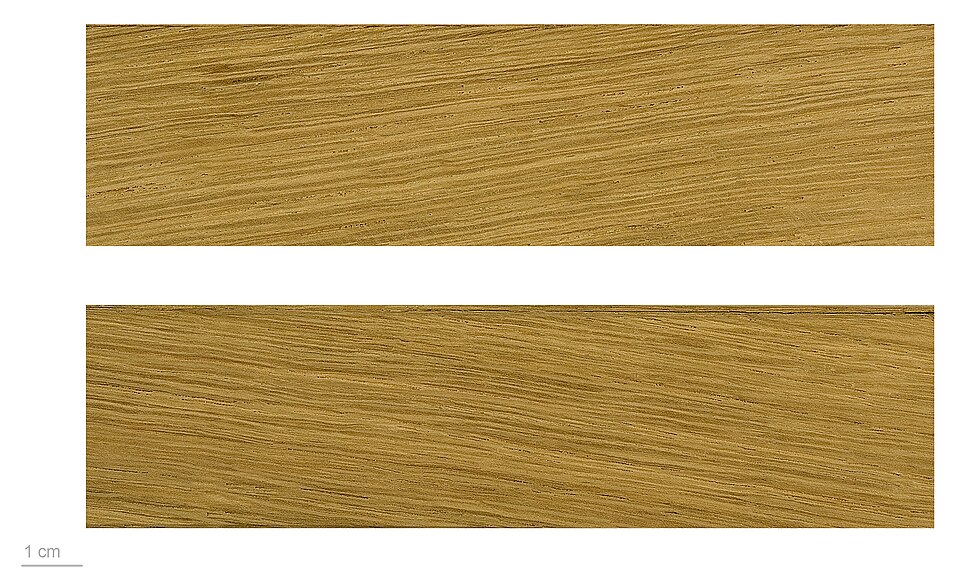
Wide plank wood flooring
Quick answer
In US industry guidance, wide plank flooring is any solid or engineered plank wider than 5 in; a UK supplier uses 180 mm and above. Wide boards move more with humidity than narrow ones of the same species and cut, so installation guidance favours glue-assisted fixing and a controlled indoor climate.
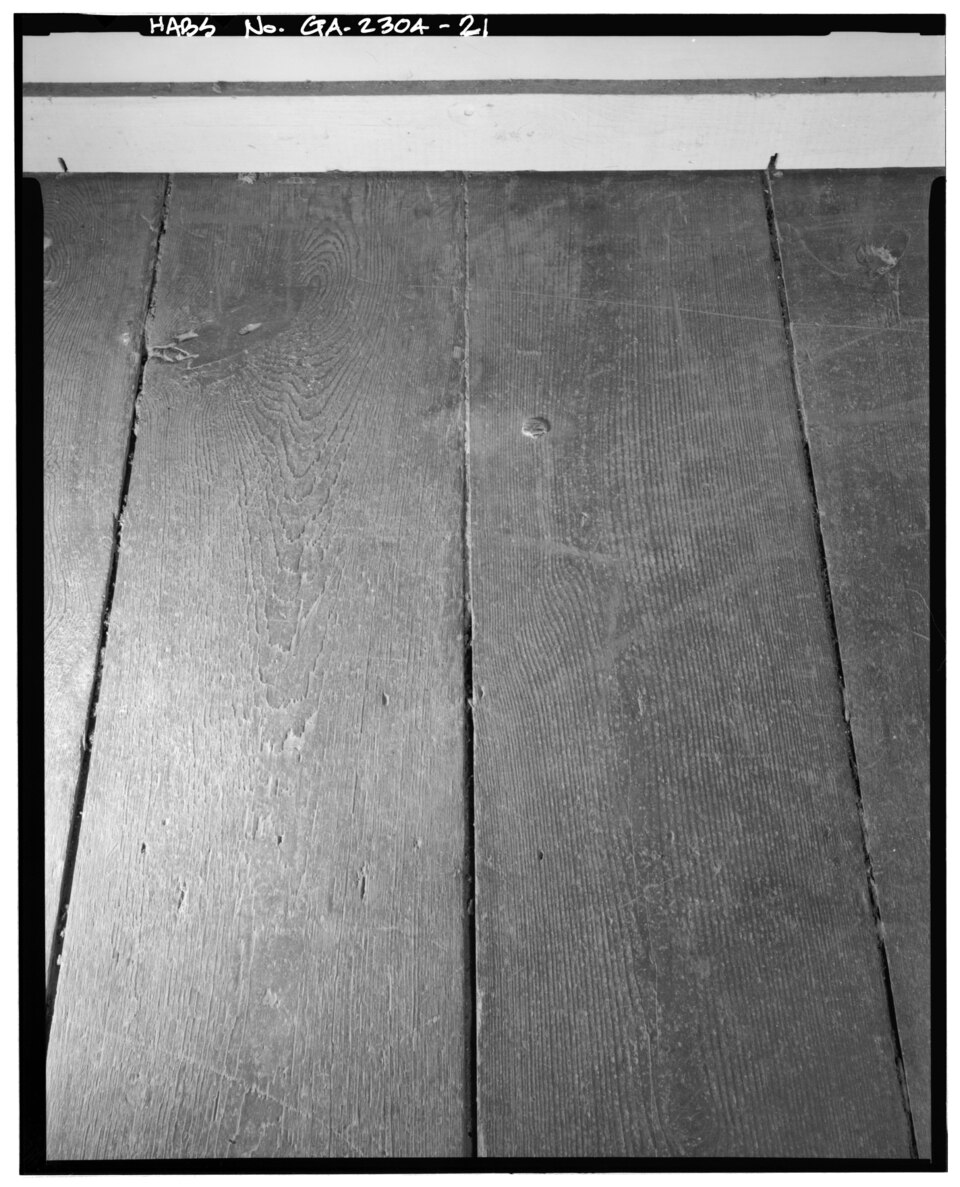
Wide plank flooring is solid or engineered wood flooring in widths greater than 5 in, according to the National Wood Flooring Association (NWFA)1. UK suppliers draw the line in metric: one describes wide boards as 180 mm and above3. Because wood moves in proportion to its width, wide planks ask more of the subfloor, the fixing method and the indoor climate than narrow boards do1.
What counts as wide plank?
The NWFA classifies flooring by face width: strip flooring is under 3 in, plank flooring is 3 in or more and up to 5 in, and wide plank flooring is more than 5 in1. Its industry-average environmental study uses the same three bands and applies them to solid flooring2. The glossary in its guidelines gives the same definition: solid or engineered wood flooring manufactured in linear widths measuring more than 5 in1.
Outside the United States the boundary moves. One UK supplier, Wood Floors and Accessories, describes wider boards as 180 mm and above3. For comparison, 5 in is 127 mm, so the UK description starts at a noticeably wider board. When a retailer says "wide plank", ask for the actual width.
How wide and thick can planks be?
Solid planks can be very wide. Dinesen's Douglas Classic range is listed in thicknesses of 28 mm and 35 mm, widths from 200 mm to 450 mm and lengths from 1 to 15 m, and the company says its Douglas is produced up to 15 metres long, 45 centimetres wide and 35 millimetres thick4. That is one manufacturer's top range and not a norm. The same page notes that its "Curated Widths" planks are delivered in varying widths4.
For the softwoods most associated with wide boards, see our species profiles of Douglas fir and European larch.
Engineered boards can also be wide. The NWFA says the finished thickness of engineered flooring ranges from 3/8 in to 3/4 in1, and our engineered wood flooring page explains the layers. Whatever the construction, the manufacturer's data sheet, not the width alone, should decide where the board can be used.
Why does plank width matter for movement?
The NWFA explains that wood is hygroscopic and anisotropic: it takes on and throws off moisture and shrinks and swells differently in each direction. Wood changes dimension in proportion to the width of the plank, so narrow boards expand and contract less than wider boards of the same species and cut1. Two other factors act with width:
- Saw cut. Quartersawn and riftsawn flooring is more dimensionally stable in width than plainsawn or end-grain flooring1.
- Construction. Engineered flooring is in general more dimensionally stable than solid, though not all engineered flooring is recommended for radiant heating1.
The practical consequence is that a wide board is more sensitive to a poorly controlled climate. For solid wood, the NWFA defines appropriate conditions as 30% to 50% relative humidity and 60 to 80 degrees Fahrenheit as a general rule, with regional exceptions1. Our moisture and acclimatisation guide explains how to measure and manage this.
How is wide plank flooring installed?
NWFA guidance has several rules specific to wide plank1:
- Glue-assisted fixing. Because fewer fasteners are used per square foot of flooring width, solid and engineered wide plank flooring (over 5 in) should be installed with the glue-assisted nail-down method when site conditions allow, unless the manufacturer recommends otherwise. The adhesive should be a wood flooring adhesive with elastomeric qualities, to allow normal movement.
- Not directly over screeds. Any solid or engineered wide plank floor should not be fixed directly to screeds or sleepers. Wide plank over flat-laid screeds or sleepers needs a wood panel subfloor of at least 23/32 in laid over them.
- Racking. Racking means laying the floor out before fixing. NWFA says to work from several bundles or packages, and in its guidance on floating floors it advises staggering end joints row to row by at least twice the width of the plank, so a 5 in plank needs a 10 in stagger.
Our installation methods guide compares glue-down, nail-down and floating methods in more detail, and the manufacturer's written instructions override general guidance.
Can wide plank flooring go over underfloor heating?
It can be harder. Among the factors the NWFA lists for radiant heat, it says the width of the plank matters because narrow boards expand and contract less. It also says that wood made for moisture content above 9%, or for conditions above 50% relative humidity, should not be used with radiant heating unless the manufacturer recommends it, and that a supplemental humidity control system is often necessary to keep the space between 30% and 50% relative humidity1. The UK supplier above says its engineered range works with wet and electric underfloor heating, depending on board specification, and that glue-down is often preferred where heating is in use3. Our underfloor heating guide lists what to check with the board and heating system suppliers.
Which species suit wide planks?
Species matters because it sets how much a board moves. The NWFA lists tangential shrinkage values and describes hickory, beech and maple as less suitable over radiant heat, and naming American chestnut, black cherry and black walnut among species known for inherent dimensional stability1. Compare candidates such as European oak with the solid wood flooring guidance before specifying a wide board.
Frequently asked questions
How wide is wide plank flooring?
Do wide planks move more than narrow ones?
How should wide plank flooring be fixed?
Sources
- Wood Flooring Installation Guidelines (revised 2025), National Wood Flooring Association. Accessed .
- Environmental Product Declaration: Solid Wood Flooring (industry average), National Wood Flooring Association / ASTM International. Accessed .
- Engineered wood flooring for homeowners, Wood Floors and Accessories (wfa.uk.net). Accessed .
- Douglas plank floors, Dinesen. Accessed .
This page compiles published data from the sources listed above. Read our editorial policy. Last updated .