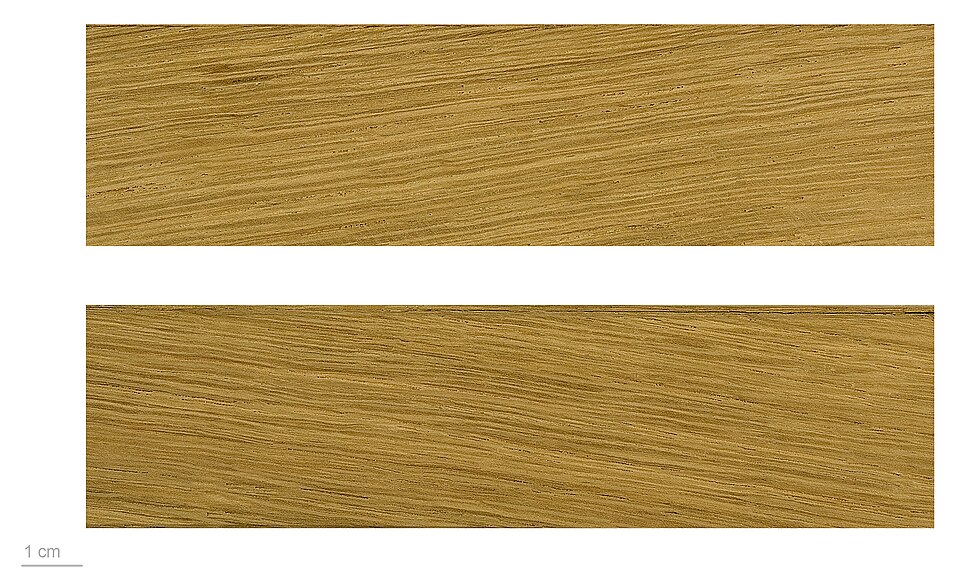
Engineered wood flooring
Quick answer
Engineered wood flooring is real wood made from several bonded layers, with a wood wear layer on top that sets the appearance. Finished thickness runs from 3/8 in to 3/4 in in NWFA guidance, and the wear layer thickness decides how often it can be refinished. In Europe it falls under EN 13489.
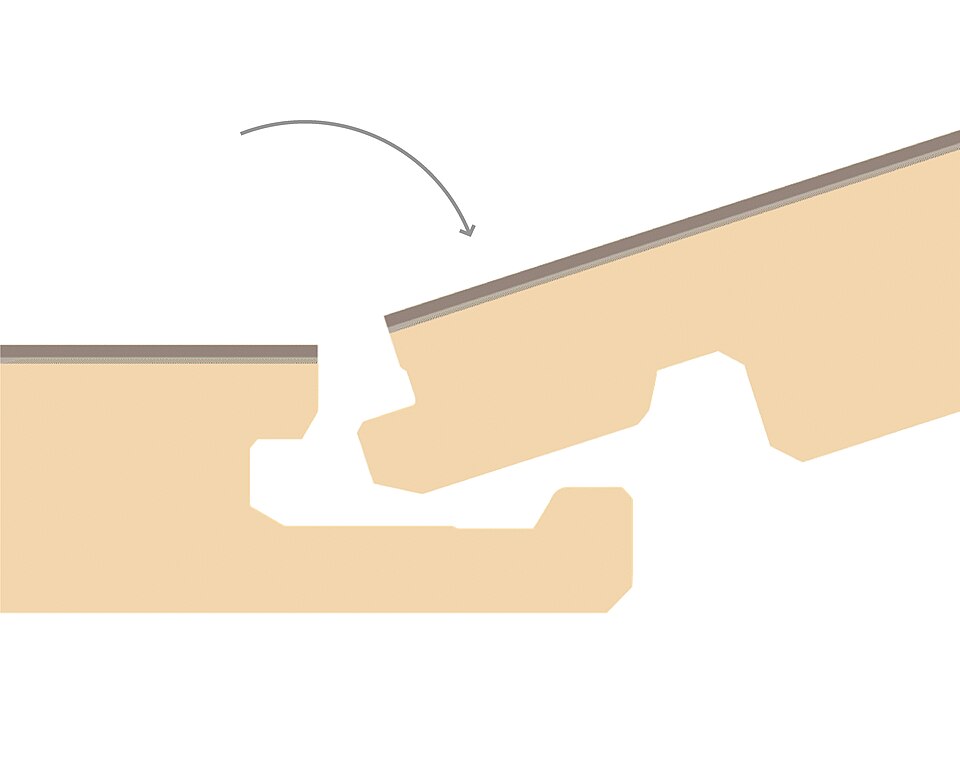
Engineered wood flooring is real wood flooring built from several bonded layers instead of one piece, with a wood wear layer on top that decides how the floor looks2. NWFA guidance gives a finished thickness of 3/8 in to 3/4 in2. Compared with solid wood flooring, it trades some refinishing life for dimensional stability and a wider choice of installation locations.
How is engineered wood flooring built?
The NWFA's guidelines describe engineered flooring as made from several layers of wood veneers or lumber core bonded together with adhesives, rather than a solid piece from top to bottom2. The top layer, often called the lamina or lamella, is the species you choose to see. The middle layers are the core and may be the same species as the wear layer or an entirely different one, and the bottom layer is the backing2.
Its definition is broad: engineered wood flooring is "real wood from top to bottom", normally made using multiple wood veneers or slats glued at opposing directions1. This is separate from composite engineered flooring, which has real wood on the wearable surface only, over a backing and core that "may be made up of any type of composite material"1. When comparing products, check which of the two you are being offered.
What is the wear layer and how is it made?
The NWFA states that, whatever the thickness of the engineered product, the top layer determines the final appearance, and that this wear layer will be the species you select2. It can be produced in three ways2:
- Sawn veneer: cut like normal solid flooring and available in any of the standard cuts (plainsawn, quartersawn, riftsawn, livesawn). Only the thickness of the cut differs by product.
- Sliced veneer: sliced from lumber, a process with thickness limitations that can stress the wood fibres.
- Rotary-peeled veneer: a log spun against a blade, giving a purely tangential grain pattern that repeats on larger sheets.
The NWFA gives no minimum wear layer thickness, so check each product's data sheet. As a reference point, Kährs states that for re-sanding you should "choose a construction with a thicker top layer"4.
What are the core types?
The core is where products differ most, and the NWFA notes that construction varies by manufacturer and by product2. Two manufacturers show the range:
| Example | Construction | Source |
|---|---|---|
| Kährs 3-layer | Surface layer, pine/spruce core and stabilising backing; total thickness 13-18 mm | 4 |
| Kährs 2-layer | High-quality surface layer on a pine/spruce backing | 4 |
| Kährs veneer | Wood surface, HDF core and stable backing; 7 mm or 10 mm profile | 4 |
| Wood Floors and Accessories stability range | Quality birch plywood as the core | 5 |
These are examples from two companies' own pages, not an industry-wide specification. Judge a floor by its published layer thicknesses and the standard it is made to rather than by the word "engineered" alone.
For the timber used in those plywood cores, see our birch profile.
How often can engineered flooring be refinished?
The NWFA says engineered flooring can be sanded and refinished but "cannot be done as many times as solid wood flooring"3. The wear layer sets the limit. The UK supplier Wood Floors and Accessories says its boards can be sanded and refinished multiple times depending on wear layer thickness, with thicker layers allowing multiple refinishes over the floor's lifetime and thinner ones suiting lower-traffic areas5. Kährs says its 3-layer and 2-layer floors can be re-sanded multiple times, while its thin veneer constructions cannot be re-sanded4. Read our sanding and refinishing guide before you commit to a thin wear layer.
Is engineered wood more stable than solid wood?
The NWFA says so in general. In its radiant-heat guidance, it states that engineered flooring is in general more dimensionally stable than solid wood, but that not all engineered flooring is recommended for use over radiant heating. It adds that engineered products with less-stable wear layer species, such as hickory, beech and maple, are not normally best suited over radiant heat unless the manufacturer suggests otherwise2.
Not every maker agrees. Junckers, which sells solid floors, says engineered floors "are not more stable" than its own and notes that many engineered manufacturers guarantee their floors only within a narrower humidity range7. That is a competitor's marketing position, so treat the NWFA statement as the general rule and the specific product warranty as the deciding document. For heated floors, our underfloor heating guide lists what to ask.
Where can engineered flooring be installed?
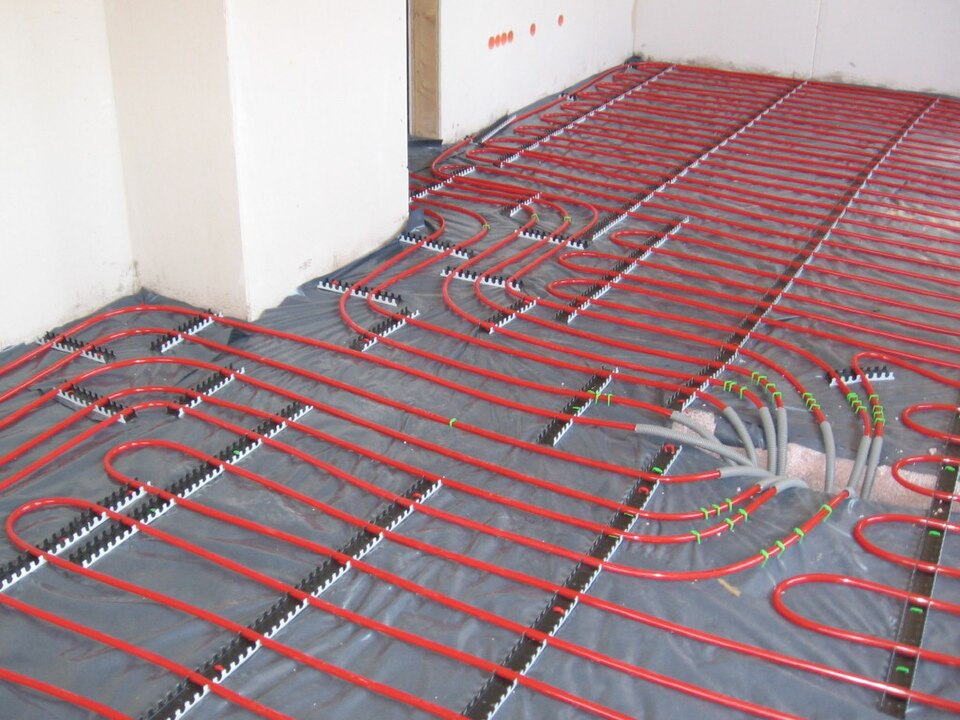
NWFA guidelines say that, in general, because of its construction, engineered wood flooring can be installed above, on or below grade2. The NWFA's consumer site goes further and calls engineered floors ideal for basement installations, while noting that they expand and contract less than solid wood3. For underfloor heating, Wood Floors and Accessories says its range works with wet and electric systems depending on board specification and that glue-down installation is often preferred with heating5. Our installation methods guide compares glue-down, nail-down and floating fixing.
Which standard covers engineered flooring?
In Europe, multi-layer parquet elements are covered by EN 13489. The 2023 edition specifies characteristics, requirements and test methods for multi-layer parquet elements for internal use as flooring, and it replaced the 2017 edition, which is now withdrawn6. If a manufacturer cites EN 13489, ask which edition and what it states for wear layer thickness. Our flooring standards guide explains how the European product standards relate to each other.
Frequently asked questions
Is engineered wood flooring real wood?
How many times can engineered flooring be sanded?
Can engineered wood flooring be used in a basement?
Is engineered flooring suitable for underfloor heating?
Sources
- NWFA Announces Official Definition of Real Wood Flooring, National Wood Flooring Association. Accessed .
- Wood Flooring Installation Guidelines (revised 2025), National Wood Flooring Association. Accessed .
- Types of Wood Floors, National Wood Flooring Association (woodfloors.org). Accessed .
- Construction of engineered wood floors, Kährs. Accessed .
- Engineered wood flooring for homeowners, Wood Floors and Accessories (wfa.uk.net). Accessed .
- EN 13489:2023 Wood-flooring and parquet - Multi-layer parquet elements, Genorma (CEN standards catalogue). Accessed .
- Solid versus engineered floors FAQ, Junckers. Accessed .
This page compiles published data from the sources listed above. Read our editorial policy. Last updated .