European oak
Quick answer
European oak is the timber of two closely related species, Quercus robur and Q. petraea, and it is among the important parquet woods in forest-science guidance. It is a medium-hard, fairly dense wood whose tannins give it durability but also make it react with iron and respond strongly to fuming. How it behaves on a floor depends mainly on how it is sawn, dried and acclimatised.
European oak is the timber of two closely related species, Quercus robur (pedunculate or English oak) and Quercus petraea (sessile oak), which CIRAD's oak datasheet treats together3. On the Janka scale The Wood Database gives English oak 1,120 lbf (4,980 N)1, which makes it a medium-hard floor timber rather than an especially hard one. Its character as a flooring wood comes less from hardness than from its tannins, its moderate-to-high shrinkage and how carefully it has been dried.
What is European oak, and where does it grow?
Both species are native to Europe. EUFORGEN describes pedunculate oak as native to Europe and parts of western Asia, and as a tree of fertile, well-watered soils in lowland forests4. Sessile oak is described as native to most of Europe and often found in upland areas on well-drained soils5. The Wood Database gives the range of English oak as most of Europe, to Asia Minor and North Africa1.
The two species are close: EUFORGEN reports that natural hybrids occur frequently where they overlap5, and forest-science guidance from waldwissen.net says the timbers cannot be reliably separated by their wood features alone, although sessile oak tends towards a milder wood6. Local trade names include chêne (France), Eiche (Germany), quercia (Italy) and roble (Spain)3.
How hard and how dense is European oak?
The Wood Database lists an average dried weight of 675 kg/m³ and a specific gravity of 0.53 (basic) and 0.67 (at 12 % moisture content) for English oak1. CIRAD gives a higher specific gravity of 0.74 at 12 % moisture content for mature wood of both species, and notes that properties can vary significantly with origin and growing conditions3. Both sources are given here because they differ.
For hardness, The Wood Database figure is 1,120 lbf (4,980 N)1. CIRAD instead reports the Monnin scale, with an average of 4.23. If you are comparing species, American white oak is listed by The Wood Database at 1,350 lbf (5,990 N)2. Our guide to Janka hardness explains how to read these numbers and why they say little about how a floor looks after years of wear.
How does European oak move with humidity?
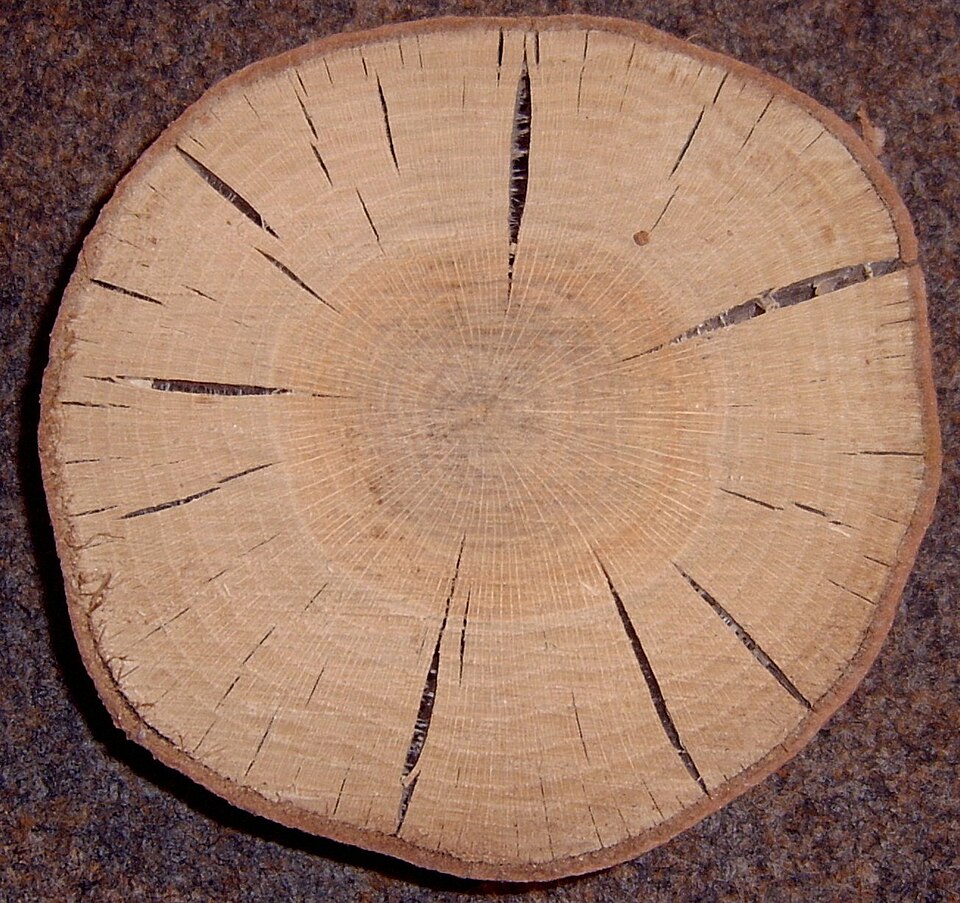
All timber changes size as it gains or loses moisture below its fibre saturation point. The USDA Forest Products Laboratory notes that wood shrinks most along the growth rings (tangentially), about half as much across them (radially), and only slightly along the grain, and that the result can include gaps in flooring8. The same chapter advises using tangential values to estimate the width change of plain-sawn boards and radial values for quarter-sawn boards8.
Two published sets of figures for European oak differ slightly:
| Source | Radial | Tangential | Other |
|---|---|---|---|
| The Wood Database (Q. robur) | 4.7 % | 8.4 % | volumetric 13.0 %, T/R ratio 1.81 |
| CIRAD (both species) | 4.5 % | 9.7 % | T/R ratio 2.2, fibre saturation point 31 %3 |
Waldwissen.net adds that the tangential-to-radial ratio of oak is less favourable than that of beech, ash, spruce or pine, and that narrower annual rings give better shrinkage behaviour6. CIRAD rates oak as slow to dry, with a high risk of distortion and checking, so the quality of kiln drying matters3. In practice that means conditioning boards to the room before fitting, which we cover in moisture and acclimatisation. Our page on engineered wood covers how layered construction changes this.
What does European oak look like?
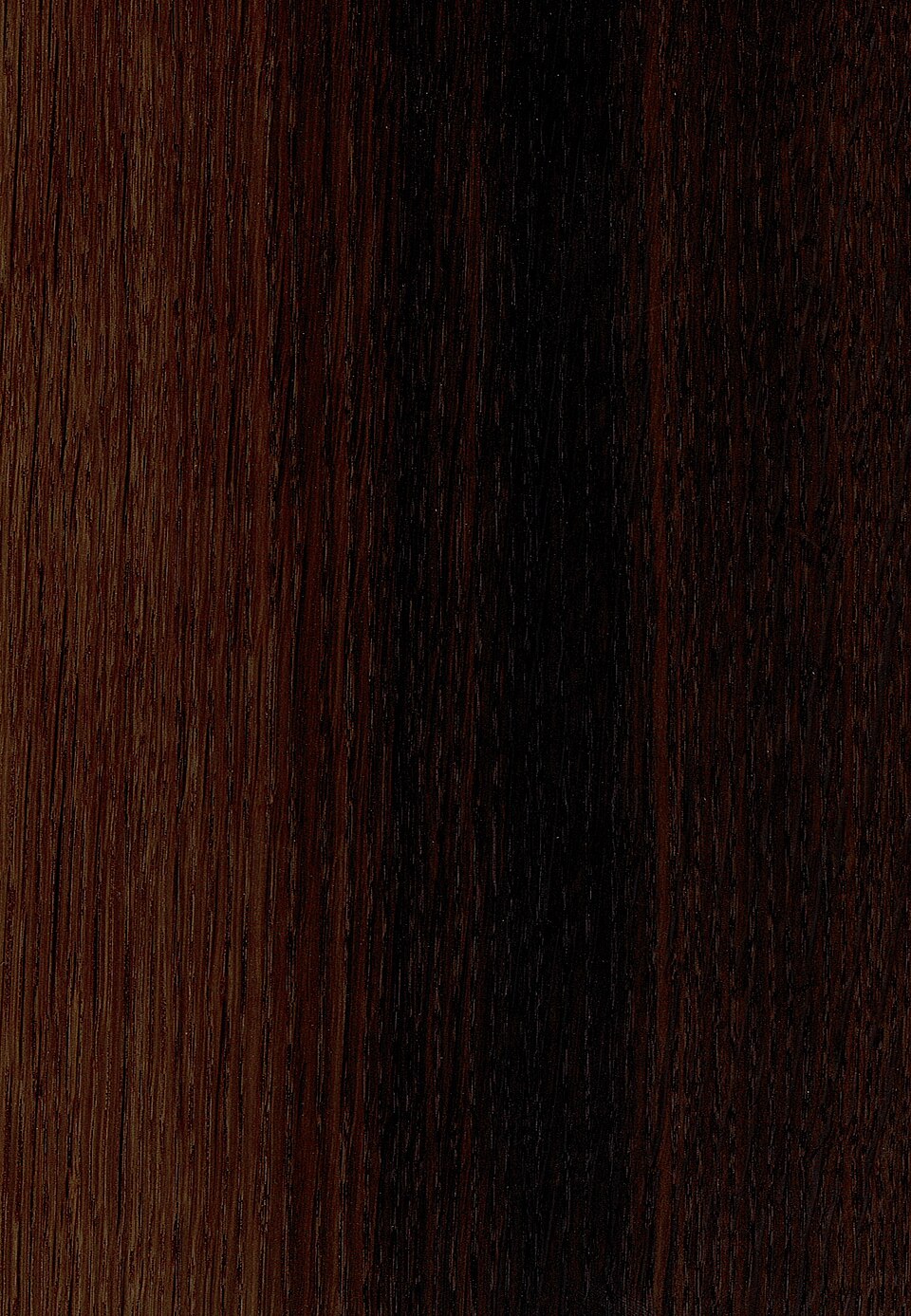
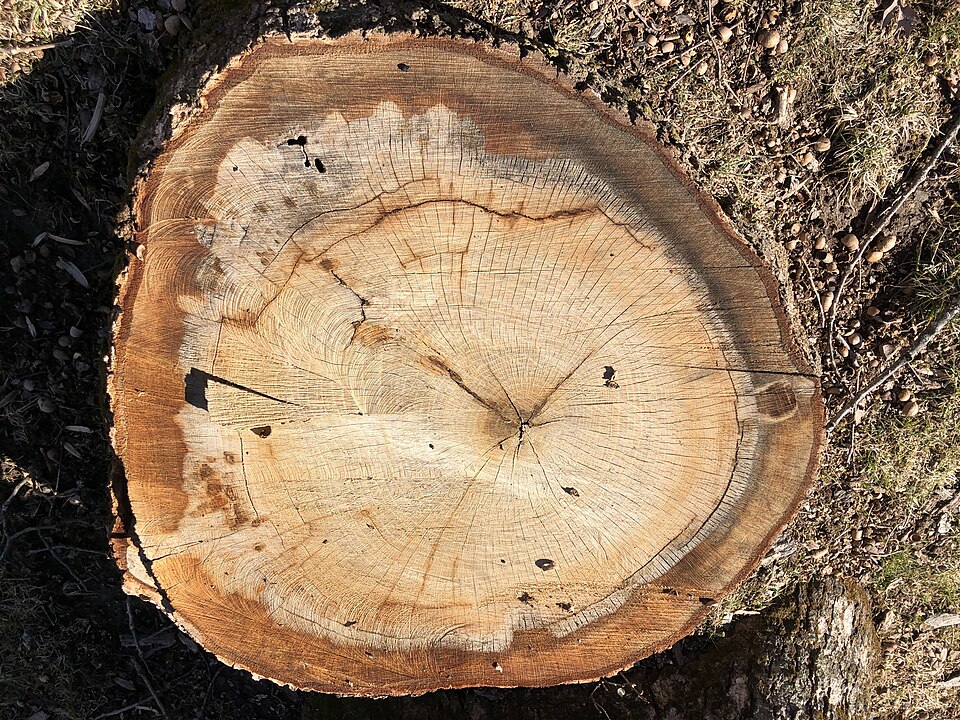
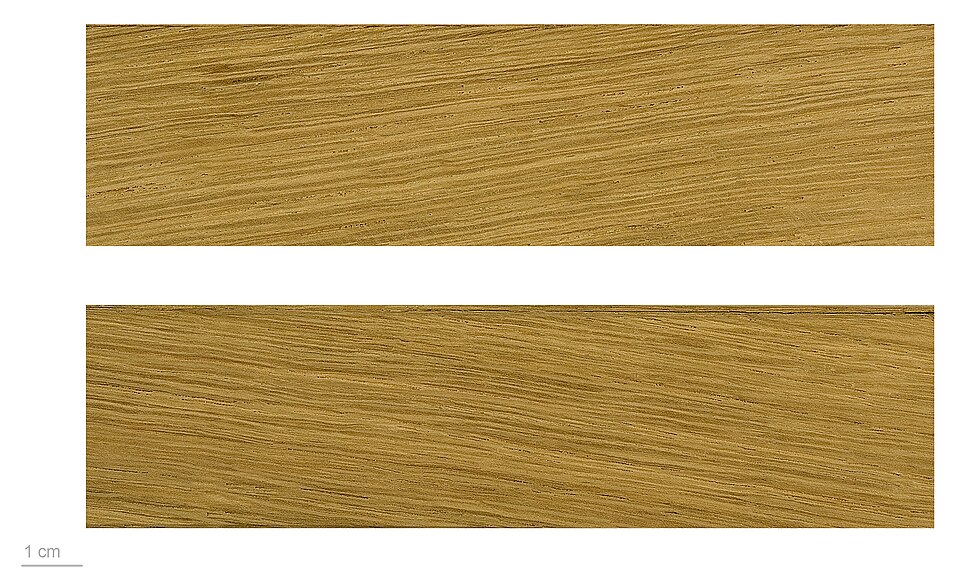
The Wood Database describes the heartwood as light to medium brown, often with an olive cast, and the sapwood as nearly white to light brown and not sharply separated from the heartwood. Quarter-sawn faces show prominent ray fleck; the grain is straight with a coarse, uneven texture, and may be irregular or interlocked1. CIRAD, by contrast, describes the sapwood as clearly demarcated and the colour as light brown to straw, darkening with light, with texture ranging from fine to coarse depending on origin3. Treat the sapwood contrast as something that varies by log and supplier.
Why do tannins matter for oak floors?
CIRAD links oak's natural durability to water-soluble tannins, and warns that tannins can cause smudges if the wood is not well dried, is machined in an unprotected area, or has no protective finish. It also advises care with gluing, because the wood is dense, slightly acid, rich in tannins and prone to staining3. Waldwissen.net notes that fresh oak contains on average 6 % tannin in the wood, and that iron reacting with these compounds produces blue-grey to black discolouration6. The Wood Database makes the same point about wet oak and iron1. Keep steel wool, damp fixings and spilt water away from bare oak, and see our guide to floor finishes for how coatings change that risk.
The same chemistry underlies ammonia fuming. A peer-reviewed study fumed heartwood samples of Quercus robur, maple, spruce and larch for up to 16 days; oak reacted intensively in a very short time, had the highest initial tannin content, and lost the most tannin during fuming7. The authors also note that fuming is frequently used on furniture and flooring7.
Where is European oak used in floors?
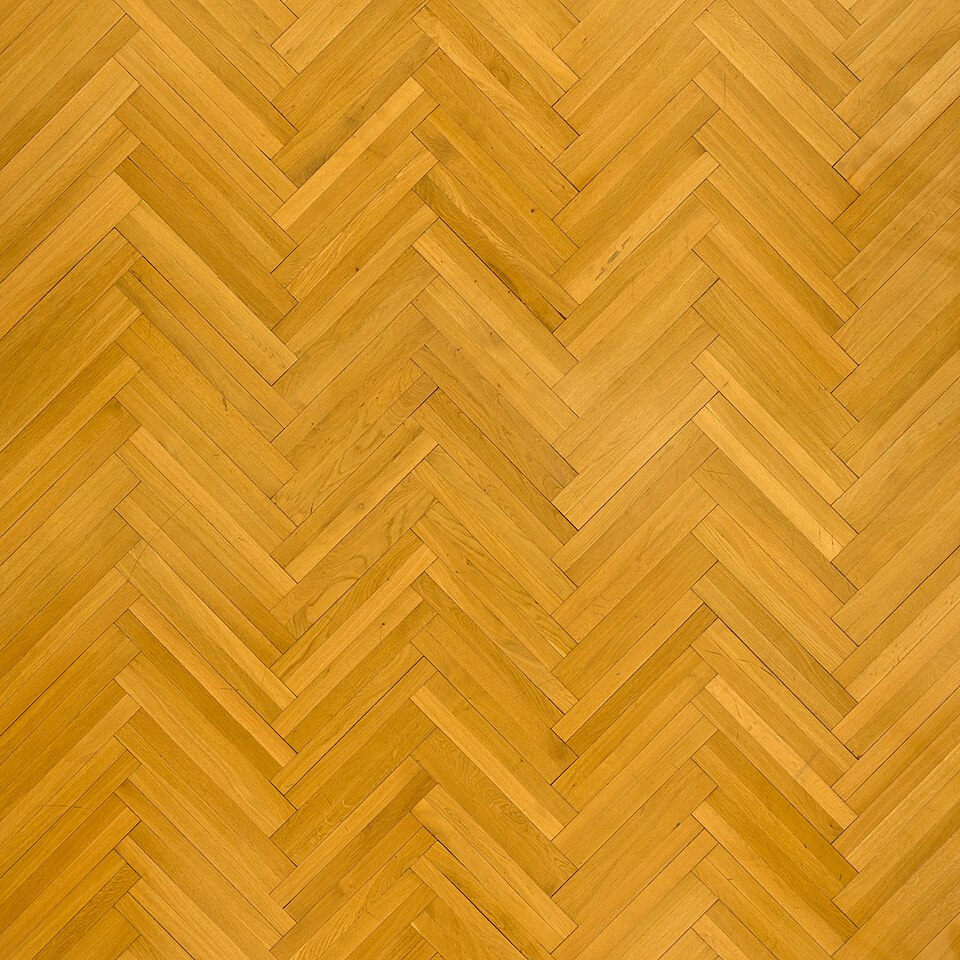
CIRAD lists flooring among the end uses of oak, alongside cabinetwork, cooperage, joinery and stairs3. Waldwissen.net calls oak one of the most important parquet woods and well suited to parquet and plank floors6. Oak is cut into several formats, including herringbone and other patterns, wide boards and end-grain blocks.
End grain shows oak differently: the Cube collection from OscarOno Paris sets square blocks of European oak side by side in an open, even grid, built as 10 mm birch plywood with a 6 mm oak top layer and offered in Natural, Smoke and Black (shou sugi ban) finishes10. Our page on end-grain flooring explains how that format differs from plank construction.
How does it compare with American oak?
American white oak is a different group of species with similar looks. AHEC states that structural testing carried out in Europe found American white oak to have greater inherent fibre strength than European oak9; strength is a separate property from surface hardness. For floors, the practical differences are in colour, grain character and supply rather than in a clear gap in performance. Read more on American white oak and American red oak.
For other European timbers often set beside oak, see our profiles of sweet chestnut and bog oak, the subfossil oak recovered from bogs and riverbeds.
Is European oak sustainable?
The Wood Database reports an IUCN rating of least concern for English oak and no listing in the CITES Appendices1; CIRAD likewise records that oak is not listed in the CITES Appendices (2023)3. EUFORGEN gives no formal Red List category but says fragmented, marginal or small populations could be at risk, that genetic resources in Europe are generally not endangered, and that introducing exotic genotypes into plantations is a threat to genetic diversity45. Ask your supplier for chain-of-custody documentation if certification matters to your project.
Frequently asked questions
How hard is European oak?
Is European oak the same as English oak?
Why does oak turn black where it touches iron?
Can European oak be fumed?
Sources
- English Oak, The Wood Database. Accessed .
- White Oak, The Wood Database. Accessed .
- Oak (Quercus petraea, Quercus robur), Tropix datasheet 2023, copy hosted by ecochoice.co.uk, CIRAD (Tropix-web). Accessed .
- Quercus robur, EUFORGEN (European Forest Genetic Resources Programme). Accessed .
- Quercus petraea, EUFORGEN (European Forest Genetic Resources Programme). Accessed .
- Nutzung der Eiche, waldwissen.net. Accessed .
- Wood color changes by ammonia fuming, BioResources 7(3), 3767-3778 (Miklečić, Španić, Jirouš-Rajković, 2012). Accessed .
- Chapter 4: Moisture relations and physical properties of wood, Wood Handbook (FPL-GTR-282), USDA Forest Products Laboratory. Accessed .
- A Guide to Sustainable American Hardwoods (2nd edition, 2024), American Hardwood Export Council. Accessed .
- Cube collection, OscarOno Paris. Accessed .
This page compiles published data from the sources listed above. Read our editorial policy. Last updated .