Sweet chestnut
Quick answer
Sweet chestnut is the timber of Castanea sativa, a European hardwood whose heartwood closely resembles oak but is softer and lighter. It is durable and fairly stable, yet rich in tannin, prone to splitting and sometimes damaged by ring shake, so it needs care in grading, fixing and finishing. Sources disagree on a few figures, and both versions are given below.
Sweet chestnut is the timber of Castanea sativa, a hardwood whose heartwood closely resembles oak but is softer and lighter. The Wood Database gives it 680 lbf (3,010 N) on the Janka scale1, against 1,120 lbf (4,980 N) for English oak2. It is durable and has small movement, but it is rich in tannin, splits easily (unlike interlocking elm) and can suffer from ring shake, so it needs more care in grading, fixing and finishing than the European oak it resembles.
What is sweet chestnut, and where does it grow?
The Wood Database lists the common names sweet chestnut, Spanish chestnut and European chestnut, and gives the range as Europe and Asia Minor1. The University of Hamburg's wood database adds the French name châtaignier and the Italian castagno8. A French trade datasheet places the tree in the beech family (Fagaceae), alongside oak and beech5.
Sources differ a little on origin. EUFORGEN describes the tree as native to southern Europe, western Asia and North Africa, with a discontinuous, scattered range, and thinks the origin lies in north-eastern Türkiye and/or the Caucasus. It estimates 9,000 years in Europe and says the tree may have reached the western Mediterranean through human introduction4. Waldwissen.net says the Romans spread it about 2,000 years ago6, and TRADA states that it was introduced into Britain in Roman times and is an important coppice species in the southern counties3. The BOISmag datasheet says France holds 920,000 ha, which it puts at 55 % of the European resource5. EUFORGEN notes that forests managed for timber are scarce, and that coppicing mainly supplies firewood, charcoal and small construction timber4.
How hard and how dense is sweet chestnut?
The Wood Database gives an average dried weight of 590 kg/m³ (37 lbs/ft³) and a basic specific gravity of 0.50 to 0.591. The Hamburg database lists basic specific gravity of (0.46–)0.53–0.56–0.59 g/cm³8. Other sources use different moisture contents, so the figures are not identical:
| Source | Density figure |
|---|---|
| The Wood Database | 590 kg/m³ average dried weight1 |
| TRADA | 560 kg/m³ at 15 % moisture content3 |
| BOISmag | 620 kg/m³ average at 12 % moisture content, with the text giving a range of 600 to 700 kg/m³5 |
For hardness, the Janka figure is 680 lbf (3,010 N)1. The French datasheet uses a different scale: Monnin hardness 2.9, described as soft to medium-hard, plus Brinell hardness of 34 N/mm² parallel to the grain and 19 N/mm² perpendicular to it5. Our guide to Janka hardness explains why these scales cannot be mixed, and the hardness chart places sweet chestnut among the other species.
How does sweet chestnut compare with European oak?
Figures from The Wood Database make the contrast easy to see. Sweet chestnut is softer, lighter and less strong than English oak (Quercus robur), one of the two species sold as European oak:
| Property | Sweet chestnut | English oak |
|---|---|---|
| Janka hardness | 680 lbf (3,010 N)1 | 1,120 lbf (4,980 N)2 |
| Average dried weight | 590 kg/m³1 | 675 kg/m³2 |
| Modulus of rupture | 71.4 MPa1 | 97.1 MPa2 |
| Modulus of elasticity | 8.61 GPa1 | 10.60 GPa2 |
| Shrinkage, radial / tangential | 4.2 % / 6.9 %1 | 4.7 % / 8.4 %2 |
| T/R ratio | 1.61 | 1.82 |
Other sources agree on the direction of travel. TRADA lists bending strength of 79 N/mm² and a modulus of elasticity of 8,200 N/mm²3, and the BOISmag datasheet gives 71 MPa and 8,500 MPa5. In plain terms, chestnut's lower tangential shrinkage is an advantage for stability, while the lower Janka figure means a softer surface than oak. Whether that matters depends on traffic and on the look you want.
What does sweet chestnut look like?
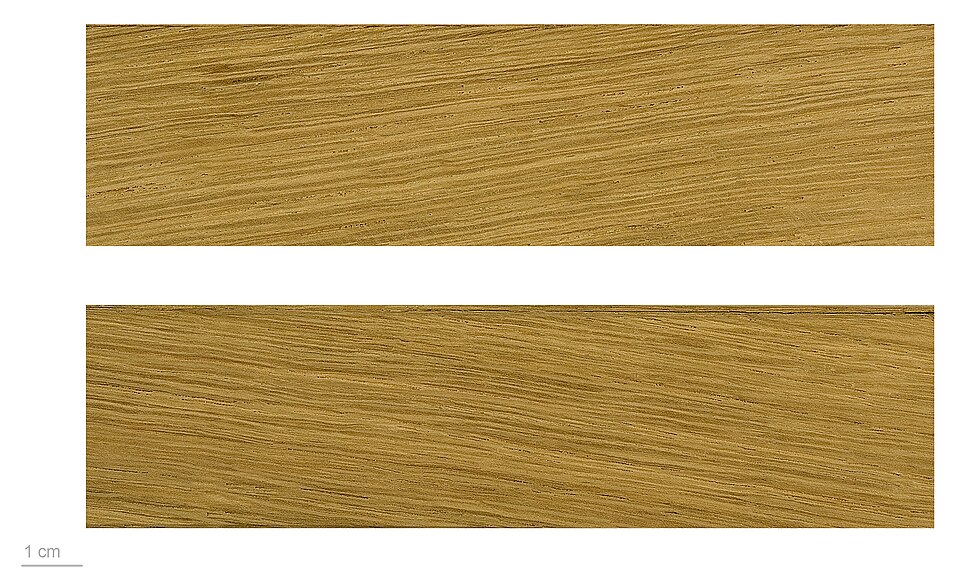
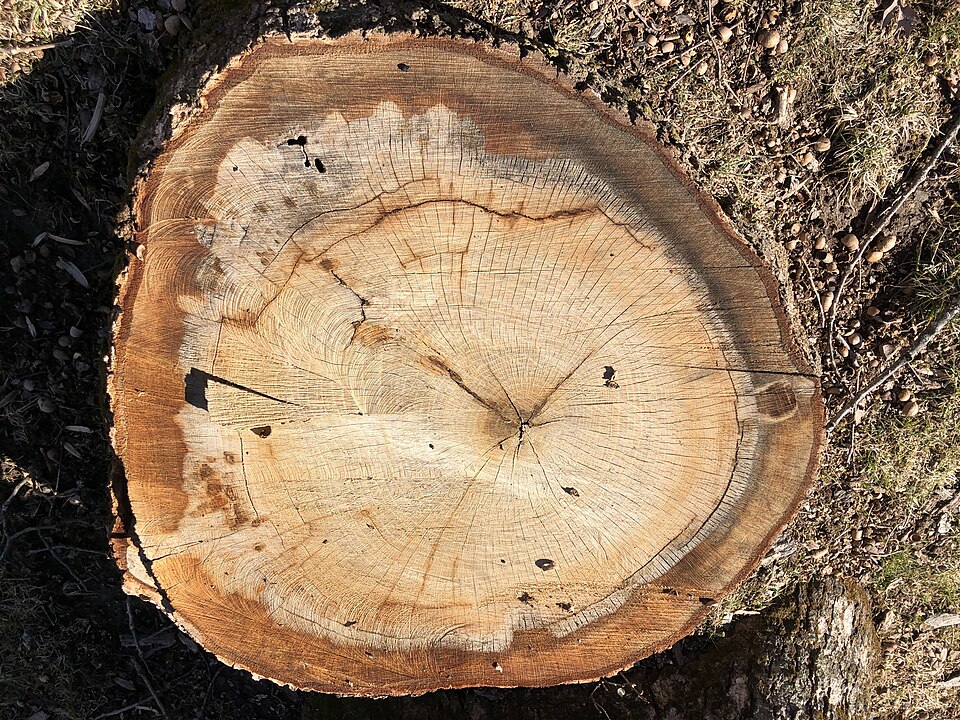
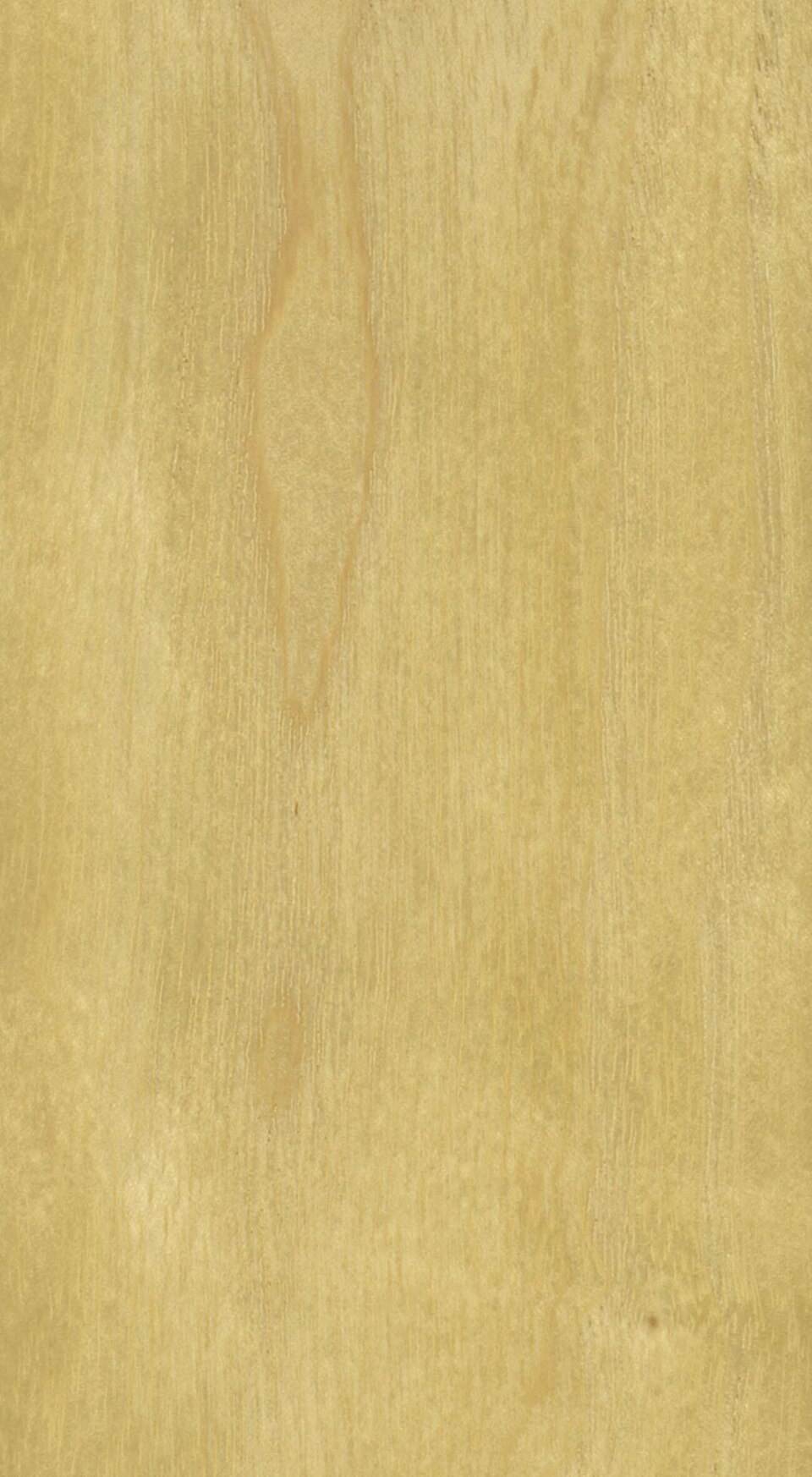
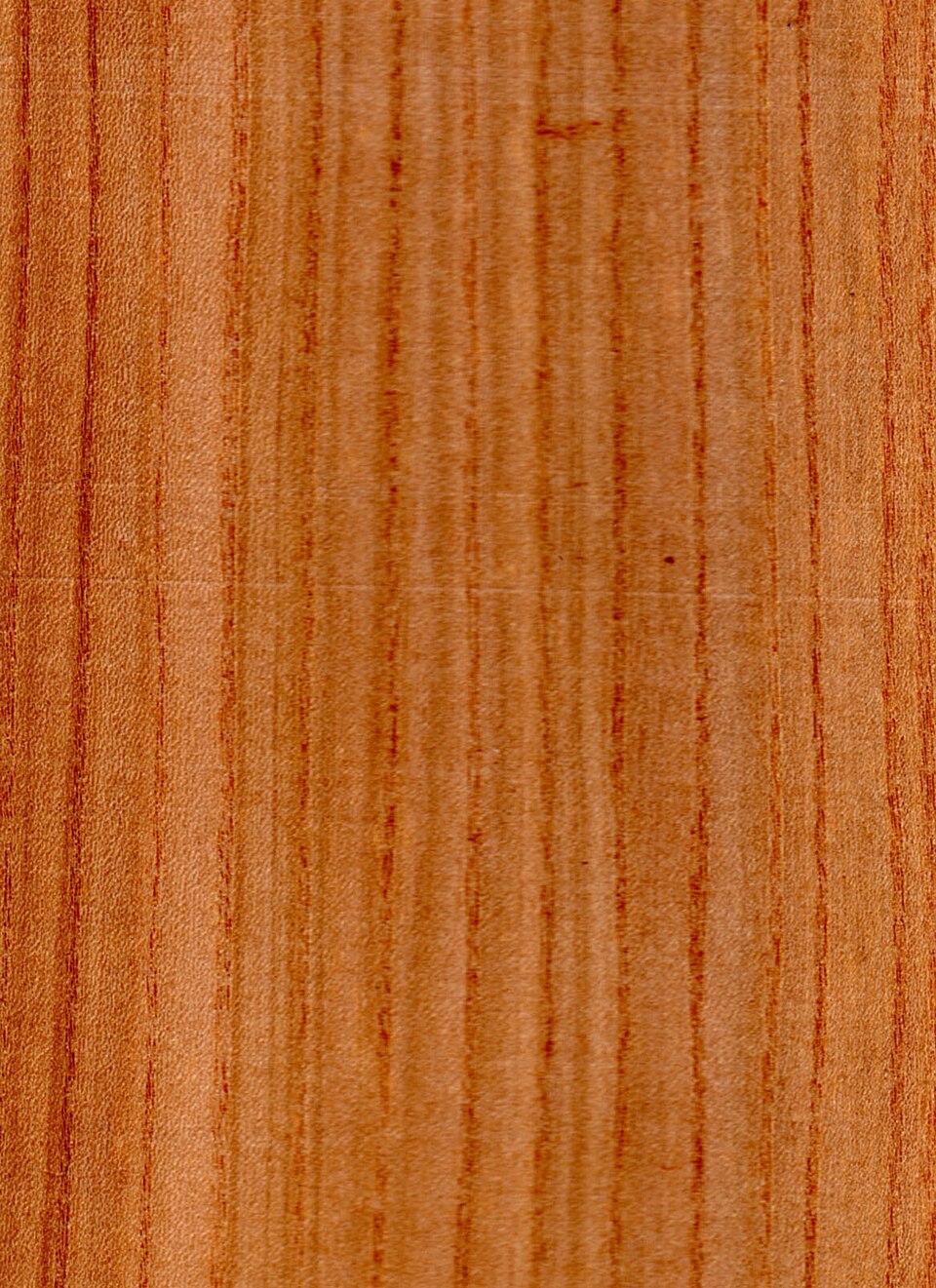
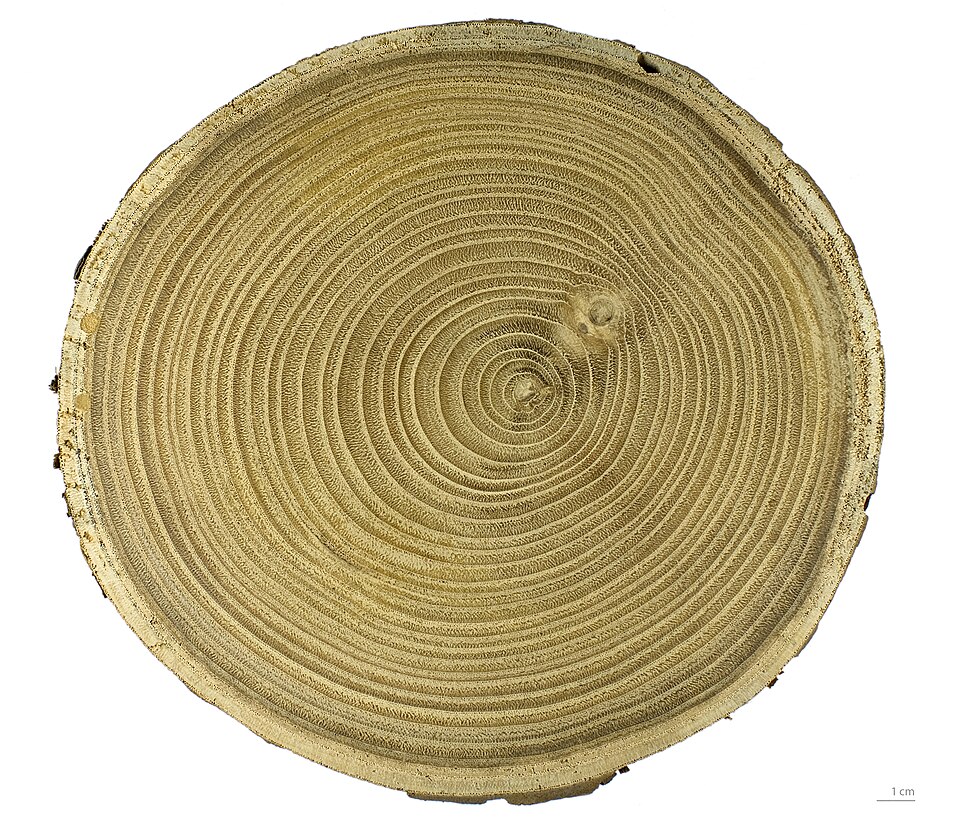
The Wood Database describes the heartwood as light to medium brown, darkening towards reddish brown with age, with a narrow, pale sapwood. The grain is straight to spiral or interlocked, and the texture coarse and uneven. The wood is ring-porous with distinct growth rings1. TRADA also notes that the heartwood is yellow-brown, closely resembles oak, and is medium in texture. It says older trees can yield spiral-grained timber3.
The resemblance to oak has limits. TRADA says sweet chestnut lacks the broad rays of oak and so does not show oak's silver figure3. The BOISmag datasheet agrees: plain-sawn faces show a branching grain pattern similar to oak's, but the overall look is duller, especially on quarter-sawn faces, because no visible silver grain appears. It also reports growth rings that are fairly wide, over 3 mm, and irregular5. This is our translation of the French original. The Wood Database says it stains and finishes well1.
How stable is sweet chestnut?
The Wood Database gives green-to-ovendry shrinkage of 4.2 % radial, 6.9 % tangential and 12.6 % volumetric, with a T/R ratio of 1.61. The BOISmag datasheet gives the same radial and tangential values but 11.1 % for volumetric shrinkage5. The two sources also describe stability differently: TRADA calls it a small movement species3, while BOISmag rates it moderately stable5.
The BOISmag datasheet notes that chestnut saws easily but dries rather slowly, with a significant risk of checking5. TRADA's data sheet says nothing on drying. For a floor, that makes the moisture content at fitting and the acclimatisation routine important; see moisture and acclimatisation and our page on solid wood flooring. Neither source we read addresses underfloor heating, so ask your supplier about it and read our underfloor heating guide.
How does tannin affect finishes and fixings?
Sweet chestnut is tannin-rich. The BOISmag datasheet gives a tannin content of 4 to 11 %5, and waldwissen.net links the wood's durability to its high tannin content6. The practical effects are:
- Iron and metals. TRADA says the timber contains tannin and is slightly acidic, so care is needed to avoid iron staining and corrosion of fixings and adjacent metals. It requires pre-drilling and corrosion-resistant fixings, and warns of tannin staining of adjacent masonry3.
- Splitting. TRADA and The Wood Database both say the wood splits easily31. The BOISmag datasheet advises many small-diameter nails, not aligned, kept away from ends and edges, and pre-drilled screw holes5.
- Adhesives. The same datasheet says gluing causes no particular problem but advises avoiding alkaline-reacting adhesives, which stain tannin-rich woods5.
- Finishes. Staining, varnishing, applying a wood stain (lasure) and painting are described as achievable without much difficulty5. The Wood Database says the wood glues, stains and finishes well1. The French datasheet adds that chestnut can blacken in the weather as tannins oxidise5. Our guide to floor finishes explains the coating options.
The Wood Database also reports that the wood has been recorded as a sensitiser that can cause skin irritation, although severe reactions are uncommon1, so wear dust protection when sanding.
What is ring shake, and why does it matter?
Waldwissen.net defines ring shake as stresses in the wood that make the grain separate from the annual rings, which can lower the wood's value. It adds that the causes are not fully understood, with an interaction of genetic predisposition and site conditions suspected, and that management aims to keep the risk of devaluation below 5 %6. The abstract of a 2002 Swiss study says chestnut wood does not meet modern market demands largely because of ring shake, calls it a far too frequent cause of downgrading, and reports that wood strength correlates positively with ring width7.
For a buyer, the practical point is to ask a supplier how shaken boards are graded out of solid-wood stock.
How durable is sweet chestnut?
Sources agree on good durability but differ on the detail. The Wood Database rates the wood durable to very durable but susceptible to insect attack1. TRADA rates it durable and notes that the heartwood is extremely resistant to preservative treatment, while the sapwood is moderately easy to treat3. The BOISmag datasheet gives durability class 3 and calls it naturally resistant to insects and fungi5, which conflicts with The Wood Database on insects. Waldwissen.net says the wood resists weathering for up to 20 years6.
Where is sweet chestnut used in floors?
Use in flooring is real but modest. The BOISmag datasheet lists planchers (floors) and parquet among current uses, alongside joinery, furniture, cladding and cooperage5. Waldwissen.net says large-diameter timber (over 30 cm at breast height) can reach prices comparable to valuable oak and is used for parquet, ceilings and furniture, although fungal damage often prevents those prices6. TRADA's data sheet lists interior and exterior joinery, panelling, cladding, shingles, furniture, cooperage and heavy carpentry, but not flooring3. The Wood Database lists furniture, veneer and carvings1.
If you like the oak look at a lower hardness, chestnut is one option, and our page on reclaimed wood may show you older chestnut boards. Construction choices such as engineered wood and installation methods apply as for other species. For other oak-like options, see American white oak and European ash.
Is sweet chestnut sustainable?
The Wood Database reports that sweet chestnut is not listed in the CITES Appendices or on the IUCN Red List1. TRADA also records it as not listed in CITES and available from well-managed sources3. EUFORGEN gives no formal category but reports high genetic diversity across Europe, five distinct gene pools, and threats from land-use and climate change that fragment habitats4. The BOISmag datasheet notes that the species can supply timber in 25 to 45 years5.
Chestnut blight is the key pest. Waldwissen.net says it was discovered in Germany in 1992, and that European chestnuts are more genetically variable than American ones, so the pathogen is less aggressive here than in the United States6. As with any timber, ask your supplier for chain-of-custody documents if certification matters to your project.
Frequently asked questions
How hard is sweet chestnut compared with oak?
Does sweet chestnut look like oak?
Will the tannin in sweet chestnut stain or rust fixings?
What is ring shake in sweet chestnut?
Sources
- Sweet Chestnut, The Wood Database. Accessed .
- English Oak, The Wood Database. Accessed .
- Specifying British-grown timbers, Wood Information Sheet WIS 2/3-67 (revised May 2017), sweet chestnut species data sheet, copy hosted by timbercladding.co.uk, TRADA (Exova BM TRADA). Accessed .
- Castanea sativa, EUFORGEN (European Forest Genetic Resources Programme). Accessed .
- Le châtaignier, fiche essence, BOISmag no. 131 (November-December 2013), BOISmag, with the support of France Bois Forêt. Accessed .
- The Sweet Chestnut: a Source of Food and Timber (Coker and Karopka, 2018), waldwissen.net (Forest Research Institute Baden-Württemberg, FVA). Accessed .
- Ring shake in chestnut: a main problem for the resumption of quality chestnut wood cultivation (Fonti, Giudici and Conedera, 2002), abstract record, Schweizerische Zeitschrift für Forstwesen, via FAO AGRIS. Accessed .
- Castanea sativa Mill., Castanea spp. (Kastanie, chestnut), University of Hamburg, Wood Biology (b-online wood database). Accessed .
This page compiles published data from the sources listed above. Read our editorial policy. Last updated .