Elm
Quick answer
Elm is a distinctive European and North American hardwood recognized for its reddish-brown heartwood and interlocked grain, with European species ranging from English elm (Ulmus procera) at 810 lbf (3,620 N) to Wych elm (Ulmus glabra) at 990 lbf (4,400 N) on the Janka hardness scale12. While its interlocking grain resists splitting under heavy foot traffic, widespread mortality from Dutch elm disease has made mature elm timber rare and sought-after3.
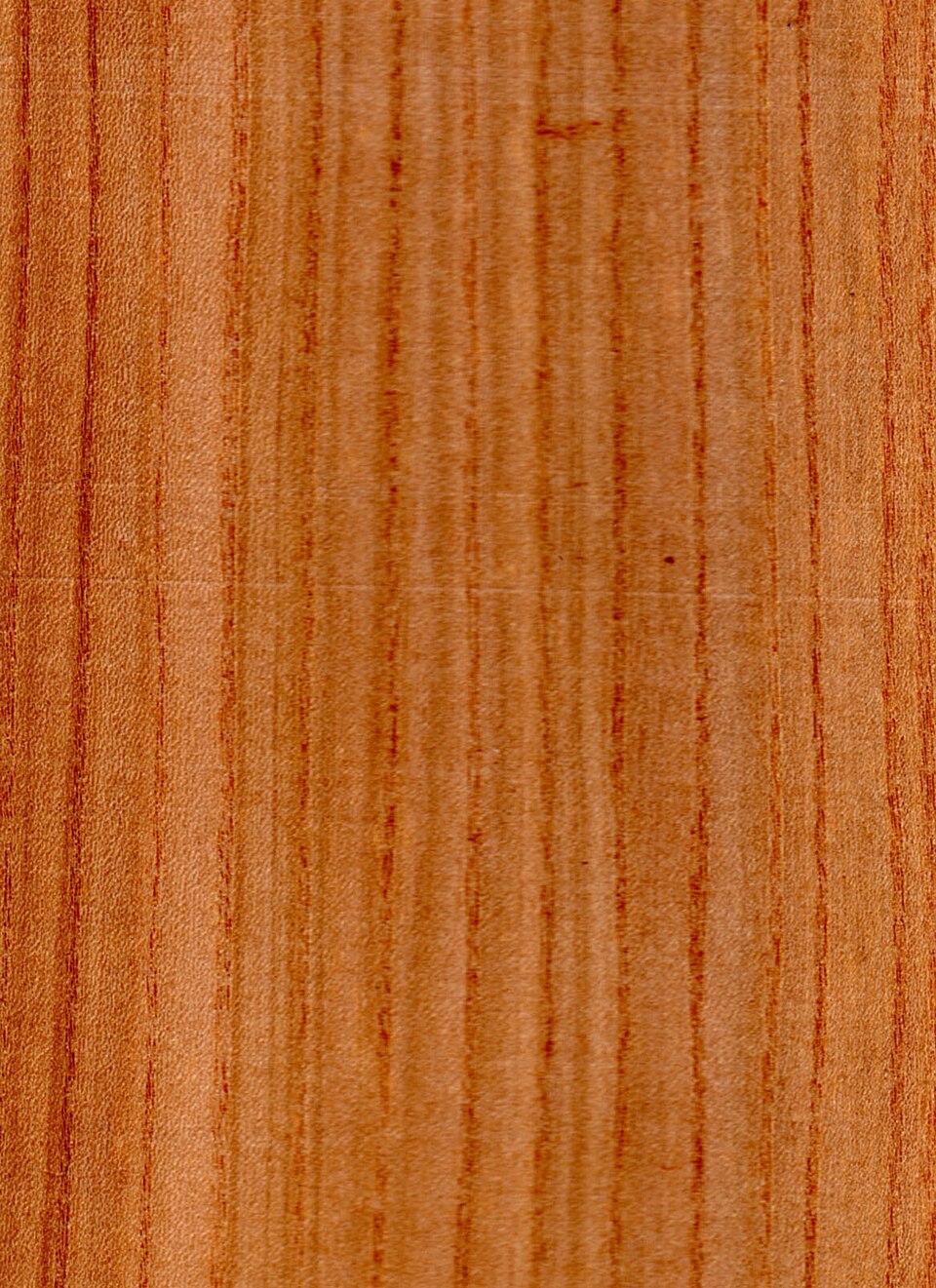
Elm is a traditional European and North American hardwood prized for its warm reddish-brown colouring, bold figure and cross-grained toughness. On the side hardness scale, English elm (Ulmus procera) registers 810 lbf (3,620 N) and Wych elm (Ulmus glabra) registers 990 lbf (4,400 N), placing both species below European oak and European ash in indentation resistance, but lending them exceptional resilience against splitting12. Because Dutch elm disease drastically reduced mature tree populations across Europe, elm flooring today is largely supplied as character-grade planks from managed arboricultural salvage and specialist sawmills3.
What species of elm are used for flooring?
The genus Ulmus contains several distinct timber species across Europe and North America:
- English elm (Ulmus procera): Historically common across southern and central Britain and western Europe, English elm produces heartwood of light to medium reddish brown, flanked by paler sapwood1. Trees typically attain 80 to 115 ft (25 to 35 m) in height with trunks 3 to 6 ft (1 to 2 m) in diameter1.
- Wych elm (Ulmus glabra): Also known as Scots elm or mountain elm, Ulmus glabra is native across northern and central Europe from Britain eastward to Siberia3. It grows as a forest tree reaching 65 to 100 ft (20 to 30 m) tall with a trunk diameter of 2 to 4 ft (0.6 to 1.2 m), yielding denser, slightly harder timber than English elm23.
- Field elm (Ulmus minor): Widespread in southern and central Europe, field elm naturally hybridises with Wych elm to form Dutch elm (Ulmus × hollandica)3.
- North American elms: In North America, American elm (Ulmus americana, soft elm) and rock elm (Ulmus thomasii, hard elm) represent separate commercial classifications with their own mechanical profiles.
When buying elm timber in the UK and Europe, verify the botanical provenance with your timber merchant, as drying behaviour and density vary across the species.
What does elm wood look like?
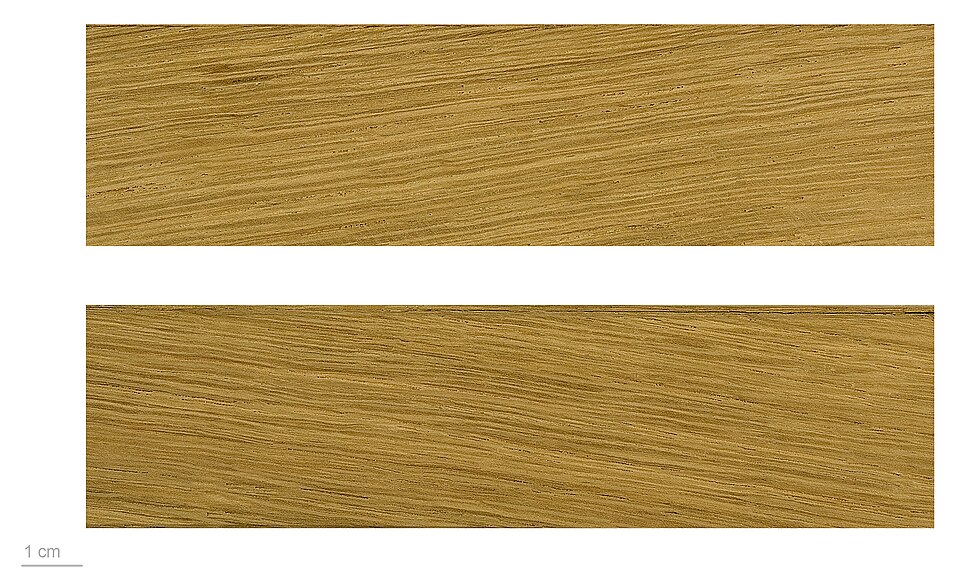
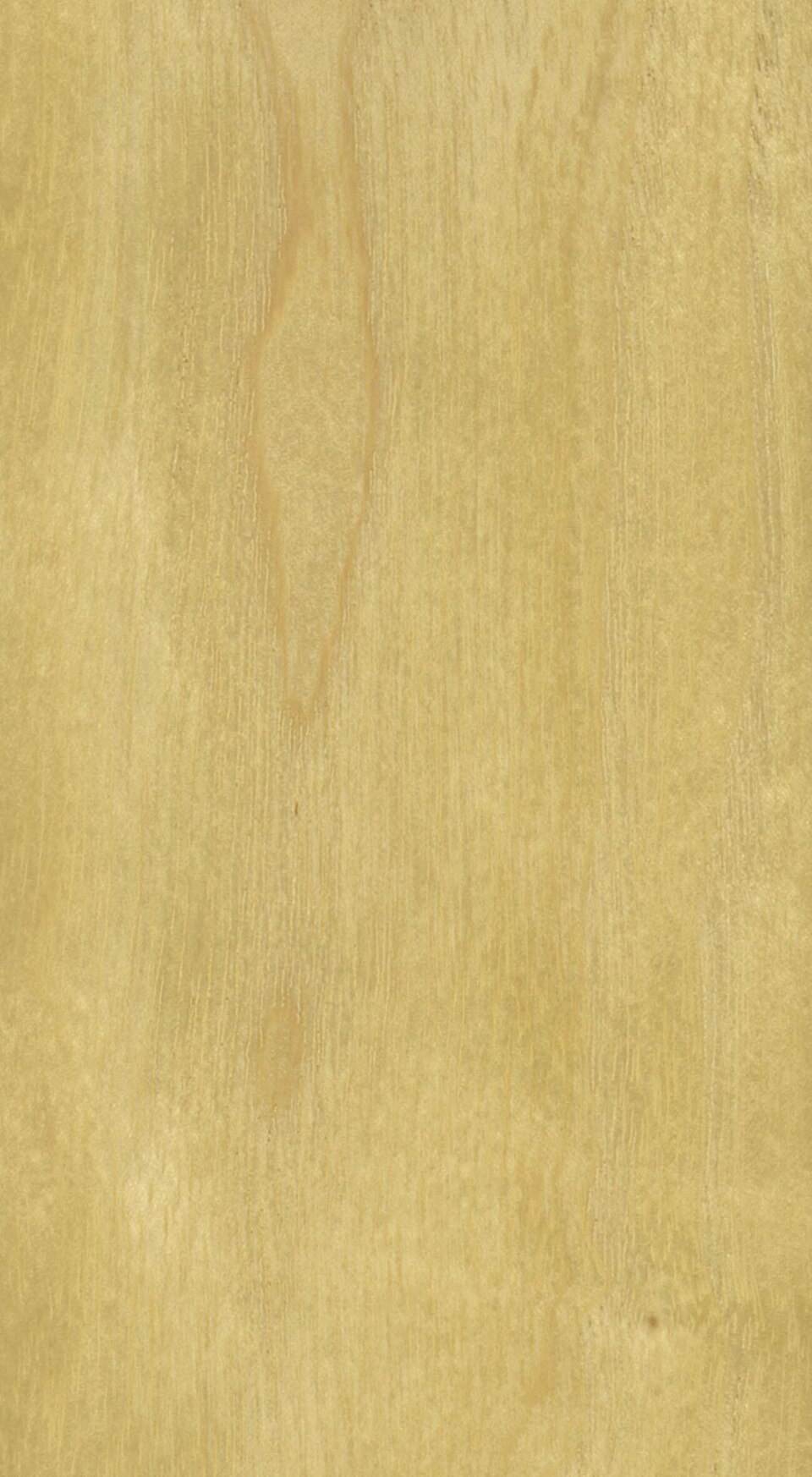
Elm displays a warm, organic appearance distinct from straight-grained oaks. Its heartwood ranges from light pinkish brown to rich reddish brown, often darkening with exposure to daylight. The sapwood is distinctly paler—typically dull white to straw-coloured—and usually clearly demarcated from the darker heartwood1.
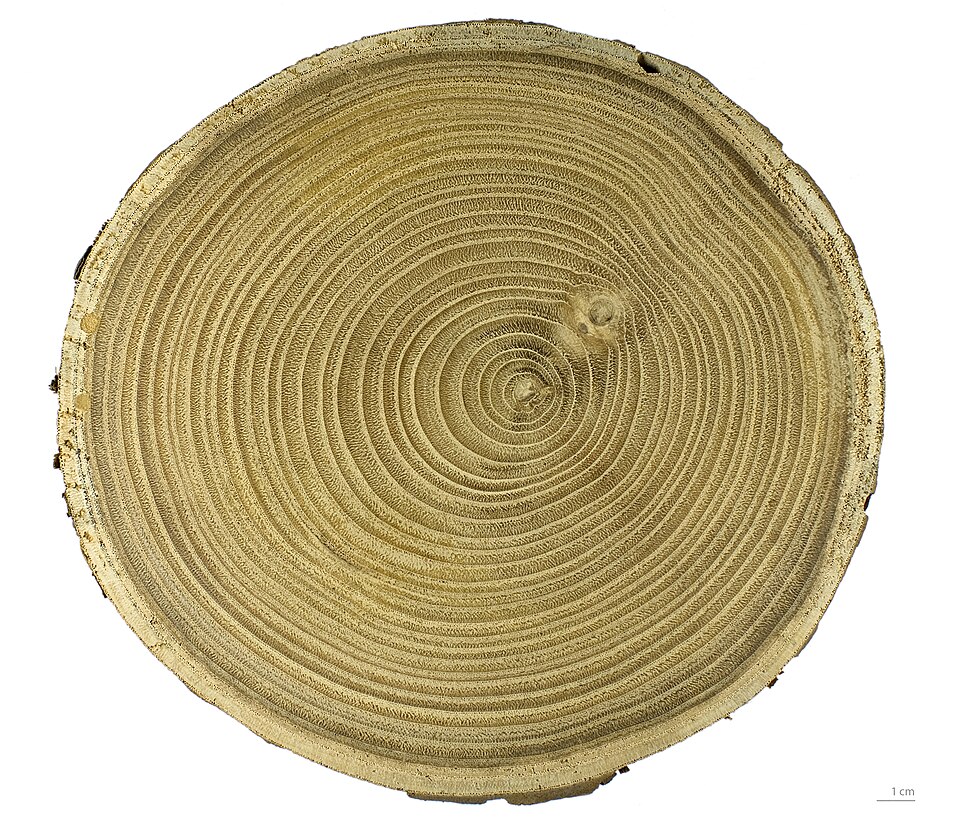
The visual character of elm comes from its growth rings and cell structure. In flatsawn boards, earlywood pores form conspicuous wavy patterns that produce a feathered, undulating figure. Burl clusters, bird's-eye knots and wild grain swirls occur frequently, giving solid wood flooring made from elm a lively, artisanal aesthetic. Quartersawn faces reveal subtle rays, although they lack the pronounced silvery medullary ray flecks seen in true oaks.
How hard and dense is elm timber?
Indentation hardness is recorded using the standard Janka side hardness test:
| Species | Botanical name | Janka hardness | Average dried weight |
|---|---|---|---|
| English elm | Ulmus procera | 810 lbf (3,620 N) | 565 kg/m³ (35 lbs/ft³) |
| Wych elm | Ulmus glabra | 990 lbf (4,400 N) | 605 kg/m³ (38 lbs/ft³) |
| English oak | Quercus robur | 1,120 lbf (4,980 N) | 675 kg/m³ (42 lbs/ft³) |
| European ash | Fraxinus excelsior | 1,480 lbf (6,580 N) | 680 kg/m³ (42 lbs/ft³) |
| Sweet chestnut | Castanea sativa | 680 lbf (3,010 N) | 560 kg/m³ (35 lbs/ft³) |
Values for density and Janka ratings derive from published testing compiled by The Wood Database12. While elm resists impact well due to its tough grain structure, sharp heels, unpadded chair legs and fallen objects will dent it more readily than hard oak or ash. You can explore how timber species compare across commercial ranges on our Janka hardness guide.
What is interlocked grain and how does it behave?
The defining anatomical characteristic of elm is its interlocked grain1. During the tree's growth, the wood fibres do not grow purely parallel to the vertical axis of the trunk. Instead, the fibre direction spirals clockwise for several seasons before reversing counter-clockwise in subsequent rings.
This interlocking structure gives elm remarkable mechanical advantages:
- Splitting resistance: Because the wood fibres weave back and forth, elm is exceptionally difficult to split along the grain. Historically, this property made it the timber of choice for wheel hubs, chair seats and butcher's chopping blocks.
- Machining challenges: During planing and moulding, the reversing grain tends to lift and tear out on quartersawn faces unless cutting angles are kept low and tool cutters remain razor sharp1.
- Steam bending: Elm bends well under steam, allowing craftsmen to form curved thresholds, nosings and furniture frames without fracture1.
How stable is elm under moisture changes?
The Wood Database reports dimensional shrinkage for English elm as follows1:
- Radial shrinkage: 5.0%
- Tangential shrinkage: 7.0%
- Volumetric shrinkage: 12.2%
- T/R ratio: 1.4
For Wych elm, tangential shrinkage is listed at 12.4%2.
While the tangential-to-radial shrinkage ratio of English elm is relatively low (1.4), the irregular grain orientation means individual boards can cup, twist or bow during uneven moisture swings1. Consequently, thorough acclimatisation prior to fitting is imperative. In modern installations with radiant subfloors, choosing an engineered wood flooring format stabilizes the face lamella, restricting cross-grain distortion. Review our detailed recommendations in the moisture and acclimatisation guide.
What is the history of Dutch elm disease and timber availability?
Commercial elm availability was reshaped by Dutch elm disease (DED), a vascular wilt caused by the microfungi Ophiostoma ulmi and Ophiostoma novo-ulmi, transmitted by elm bark beetles (Scolytus species)3.
Between the 1920s and the late 1970s, two consecutive disease waves swept across Europe and North America3. The second outbreak—driven by the highly aggressive Ophiostoma novo-ulmi—killed tens of millions of mature trees throughout the British Isles and western Europe3. While root suckers continue to regenerate in hedgerows, trees often succumb to the beetle once stems reach sufficient girth to support breeding galleries.
Today, European elms are not extinct, but mature stands yielding clean sawlogs are scarce3. Most elm flooring available on the market is sourced from selective deadwood salvage, estate tree surgery, storm falls or managed conservation reserves in northern Europe and Scotland where beetle activity has been cooler and less severe.
Frequently asked questions
How hard is elm compared with oak?
Why does elm have interlocked grain?
How has Dutch elm disease affected flooring supply?
Can elm flooring be installed over underfloor heating?
Sources
- English Elm, The Wood Database. Accessed .
- Wych Elm, The Wood Database. Accessed .
- Ulmus glabra (Wych elm), EUFORGEN. Accessed .
This page compiles published data from the sources listed above. Read our editorial policy. Last updated .