Engineered vs solid wood flooring
Quick answer
Choosing between solid and engineered wood flooring depends on subfloor conditions, heating systems and expected lifespan. The National Wood Flooring Association defines solid wood as one continuous piece from top to bottom, whereas engineered wood consists of multiple cross-bonded timber layers topped with a real wood wear layer12. Solid wood allows more frequent sanding cycles, while engineered wood provides greater dimensional stability against relative humidity swings.
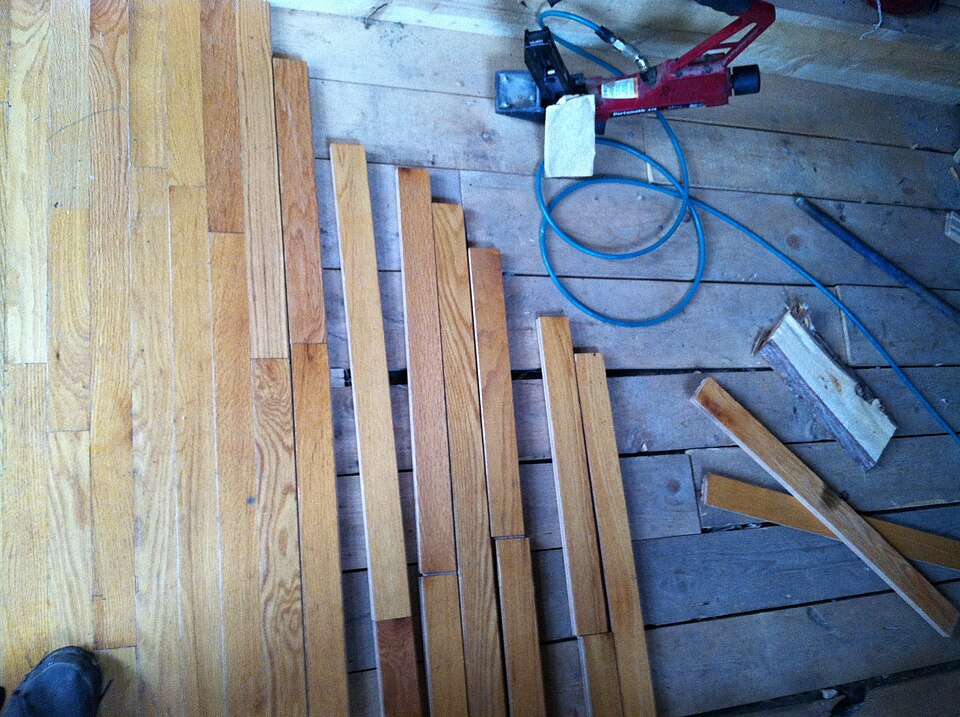
When specifying a natural timber floor, the core architectural decision usually comes down to solid wood flooring versus engineered wood flooring. Both options provide genuine timber underfoot, but their mechanical construction, moisture response and service life differ fundamentally. Understanding these technical distinctions ensures the floor performs reliably within your specific building envelope.
How are solid and engineered wood floors constructed?
According to the official definition issued by the National Wood Flooring Association (NWFA), genuine real wood flooring encompasses products made entirely from wood materials2. However, their internal architectures differ:
- Solid wood flooring: Milled from a single continuous piece of timber from top to bottom, without lamination, adhesive lines or backings1. In European standardisation, solid parquet elements with grooves and tongues are defined by EN 132264. Standard thicknesses typically range from 14 mm to 22 mm, providing substantial solid timber above the tongue.
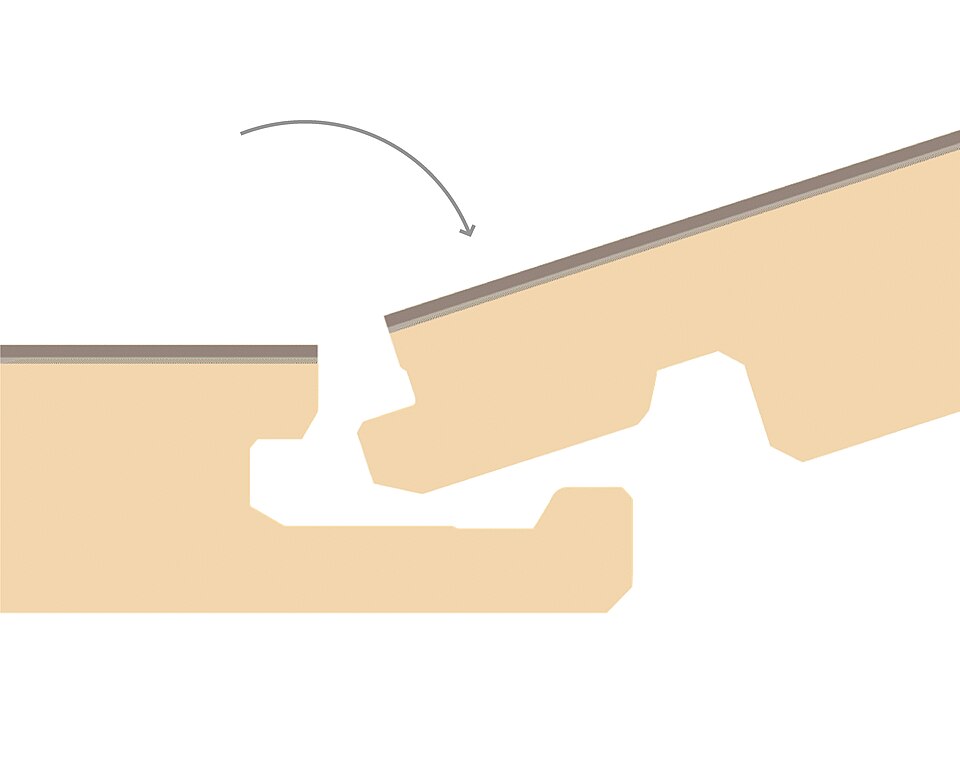
- Engineered wood flooring: Composed of multiple cross-bonded wood layers glued together with adhesives under heat and pressure1. Regulated in Europe by EN 13489 (Multi-layer parquet elements), engineered boards feature a real wood top wear layer (lamella), a central stabilizing core (often birch plywood, spruce slats, or high-density fiberboard), and a balancing backing veneer3.
The alternating grain orientations in an engineered board cancel out the natural directional expansion of individual timber cells, giving engineered flooring its signature structural balance.
How do solid and engineered wood behave under moisture changes?
Wood is naturally hygroscopic, exchanging water vapour with surrounding air until it reaches equilibrium moisture content. In solid wood boards, moisture absorption causes dimensional movement across the grain—swelling in summer humidity and shrinking during winter heating seasons.
Because of this anisotropic movement, solid wood flooring is vulnerable to cupping, crowning and visible gaps if ambient relative humidity fluctuates widely1. The NWFA specifically notes that solid wood can be installed in any room that is on or above ground level, but advises against installing solid wood below grade or directly over damp concrete slabs1.
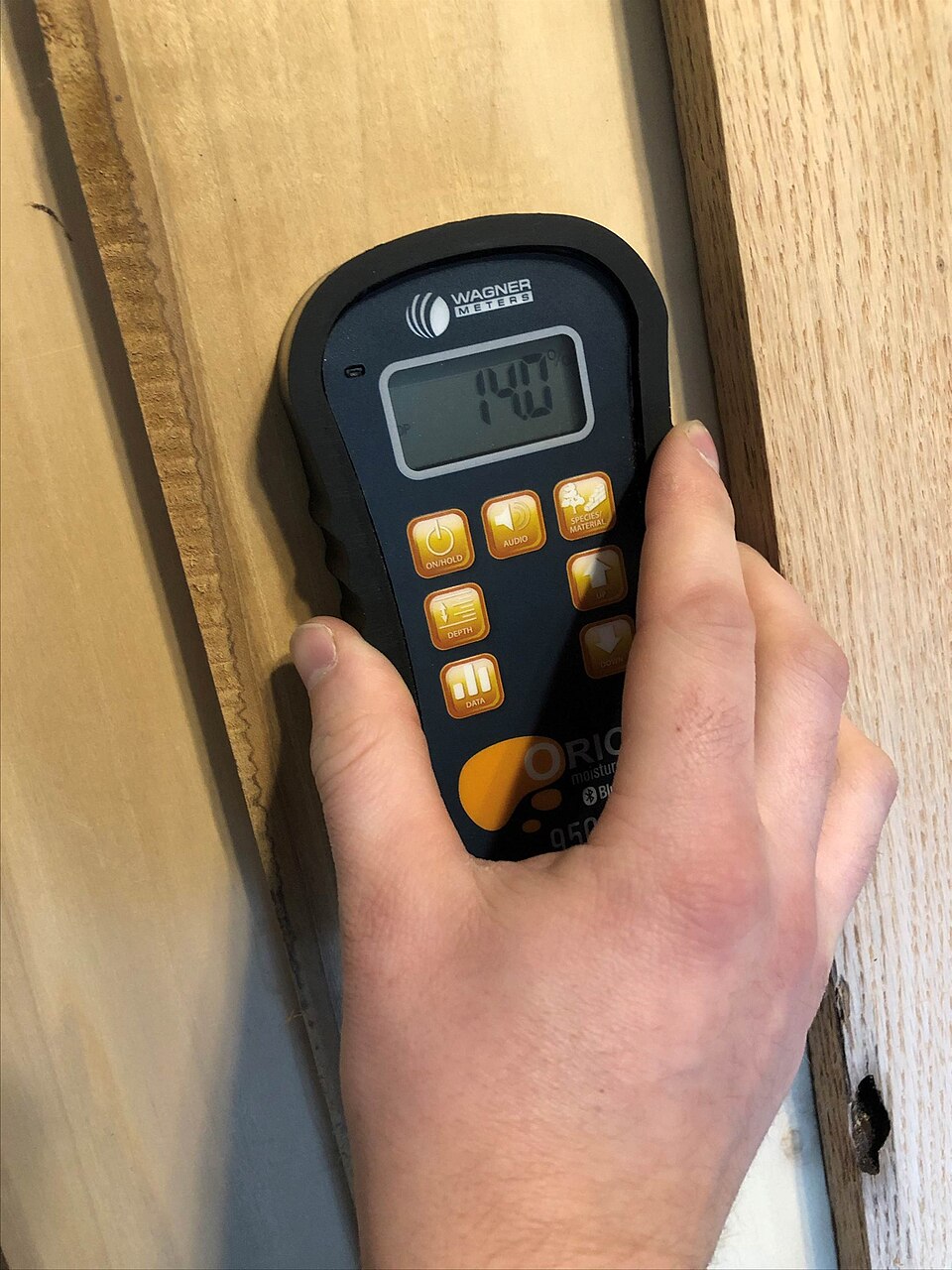
In contrast, engineered boards distribute internal hygroscopic stresses across their cross-ply layers1. When the top hardwood wear layer attempts to expand tangentially, the transverse core resists that force. This cross-laminated stability makes engineered wood ideal for installations over dry concrete subfloors, in basements, and in open-plan ground floor layouts where wide solid planks might otherwise gap. Before laying either floor type, always review our guidance on moisture and acclimatisation.
| Performance criteria | Solid wood flooring | Engineered wood flooring |
|---|---|---|
| Structure | Single homogeneous timber piece1 | Multi-layer cross-bonded wood13 |
| Applicable European standard | EN 132264 | EN 134893 |
| Below-grade / basement use | Not recommended by NWFA1 | Ideal for below-grade installation1 |
| Underfloor heating suitability | Limited (requires narrow boards and strict monitoring) | Highly compatible with wet and electric systems |
| Refinishing potential | Multiple full sandings (often 5 to 7+ cycles)1 | Limited by wear layer (typically 1 to 4 sandings)1 |
| Typical plank widths | Narrower widths (strip < 3 in, planks typically 70–150 mm) | Wide planks readily available (up to 200–300+ mm) |
How many times can each floor type be sanded and refinished?
The lifespan of any real wood floor depends directly on how many times its wear surface can be sanded back to clean timber.
With solid wood flooring, the usable wear depth extends from the board's top face down to the upper edge of the tongue-and-groove profile—typically 6 mm to 8 mm of usable timber on a 20 mm board. The NWFA emphasizes that solid wood floors can be sanded and refinished multiple times, frequently lasting over a century in residential properties with regular periodic care1.
With engineered wood flooring, the refinishing capacity is strictly bounded by the thickness of the top lamella1:
- 2.5 mm to 3.0 mm wear layer: Allows 1 to 2 light maintenance sandings.
- 4.0 mm to 4.5 mm wear layer: Permits 2 to 3 professional drum or planetary sandings.
- 6.0 mm wear layer: Approaches solid timber performance, allowing 4 to 5 full refinishing cycles.
- Veneer floors (< 1 mm wear layer): Cannot be sanded; damaged boards must be replaced or spot-repaired.
For practical instructions on machine sanding sequences and finish stripping, refer to our detailed guide on sanding and refinishing.
Is engineered flooring better for underfloor heating?
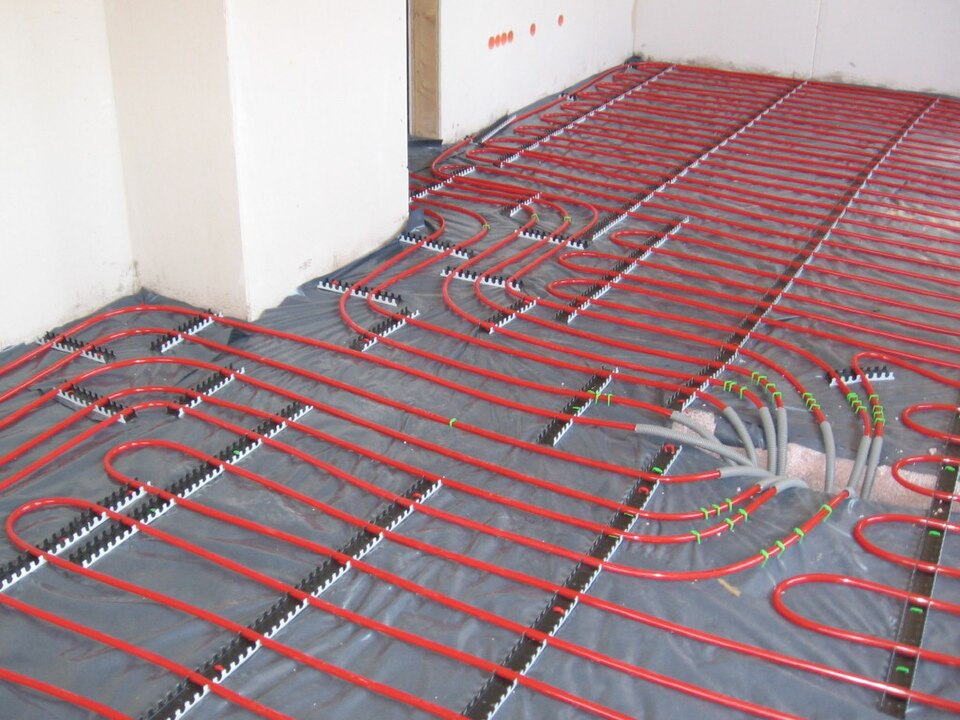
In modern residential construction with embedded hydronic or electric radiant floor heating, engineered wood is almost universally preferred over solid timber. Underfloor heating subjects wood flooring to localized thermal gradients: the bottom of the board warms while the top remains exposed to cooler indoor room air.
Under EN 13489, multi-layer engineered parquet elements provide high resistance to thermal distortion and delamination3. The thermal resistance (R-value) of typical 14 mm or 15 mm engineered boards is low enough to permit efficient heat transfer through the floor without over-insulating the screed.
Solid wood can occasionally be used over radiant heat, but requires narrow board widths, quarter-sawn grain selection, strict temperature limits (usually maximum 27°C at the interface), and continuous indoor humidity controls to prevent severe joint separation. For complete specification rules, read our dedicated guide on underfloor heating with wood floors.
Summary: How to choose between solid and engineered wood
When deciding between these two real wood flooring systems, consider your specific building constraints:
- Choose solid wood if: You are renovating a historic period home with joisted subfloors, want narrow-to-medium board widths that can be blind-nailed, desire the longest possible multi-generational lifespan, and do not intend to install underfloor heating.
- Choose engineered wood if: You have a concrete subfloor or screed, plan to install radiant underfloor heating, require wide planks (180 mm to 300 mm), are fitting floors in basements or ground-floor extensions, or prefer floating click-lock or full-spread adhesive installation.
Frequently asked questions
What is the structural difference between solid and engineered wood?
Can engineered wood flooring be sanded as often as solid wood?
Which type is better suited for basements and concrete slabs?
Which European standards govern solid and multi-layer wood flooring?
Is engineered wood flooring compatible with underfloor heating?
Sources
- Types of Wood Floors, National Wood Flooring Association (woodfloors.org). Accessed .
- NWFA Announces Official Definition of Real Wood Flooring, National Wood Flooring Association. Accessed .
- EN 13489:2023 Wood flooring and parquet - Multi-layer parquet elements, Genorma (CEN standards catalogue). Accessed .
- EN 13226:2009 Wood flooring - Solid parquet elements with grooves and/or tongues, Genorma (CEN standards catalogue). Accessed .
This page compiles published data from the sources listed above. Read our editorial policy. Last updated .