European larch
Quick answer
European larch (Larix decidua) is a deciduous conifer whose heartwood runs from yellow to reddish brown and darkens with light and age. The Wood Database lists it at 740 lbf (3,290 N) on the Janka scale, well below English oak at 1,120 lbf, and describes the wood as moderately durable12. Resin, knots and drying behaviour are the main points to check when you choose larch boards.
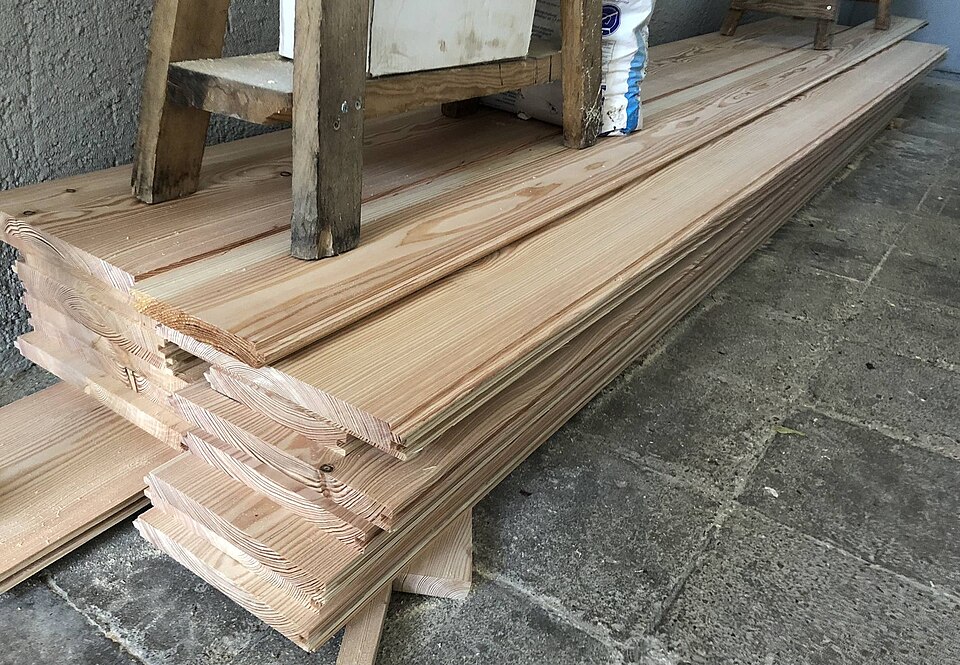
European larch is a warm-toned conifer with a fine, flame-like grain and plenty of knots. It is much softer than oak: the Wood Database gives it 740 lbf (3,290 N) on the Janka scale against 1,120 lbf for English oak12. If you are considering it, the practical questions are resin, knots, how the boards were dried and how the colour will age.
What is European larch?
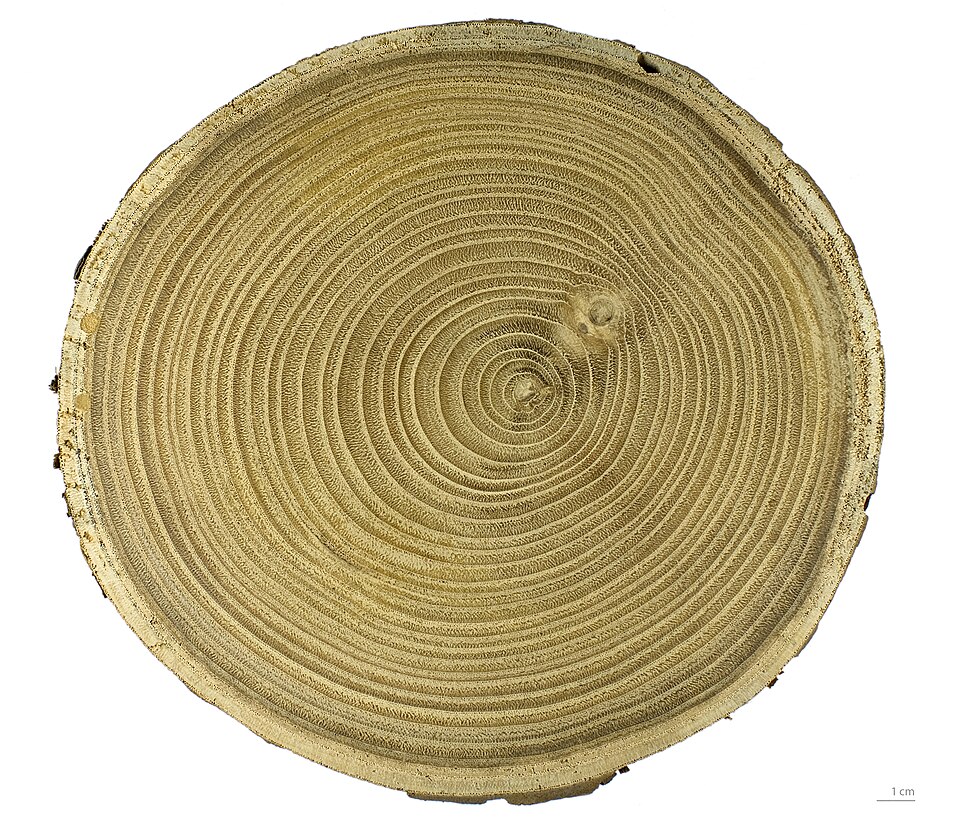
European larch is Larix decidua, also sold as Common Larch. The Wood Database gives its distribution as Central Europe, and describes a tree 85 to 150 ft (25 to 45 m) tall with a trunk 2 to 3 ft (0.6 to 1 m) in diameter1. EUFORGEN calls it a large, long-lived, fast-growing deciduous conifer native to the mountains of central Europe, and notes that its distribution is fragmented5.
Forest Research says it is native to the Alps, the Carpathian regions and parts of eastern Europe, usually growing between 1000 and 2200 m above sea level7. The Walloon authors group it with the other European conifers (résineux, the French trade term for softwoods) and report that it stands out from them for its higher density and hardness. They note that this reputation, which earned it the nickname "mountain oak", rests mostly on literature about larch grown in its native range4.
Siberian larch. Siberian larch is a different species, Larix sibirica. EUFORGEN describes it as widely distributed across northern Eurasia, with a range that spans Russia, Kazakhstan, Mongolia and China, and says its wood is valued for high density, durability and resistance to decay6. We did not find a Janka hardness figure for it in a source we could open, so the figures below are for European larch only.
What does larch look like on the floor?
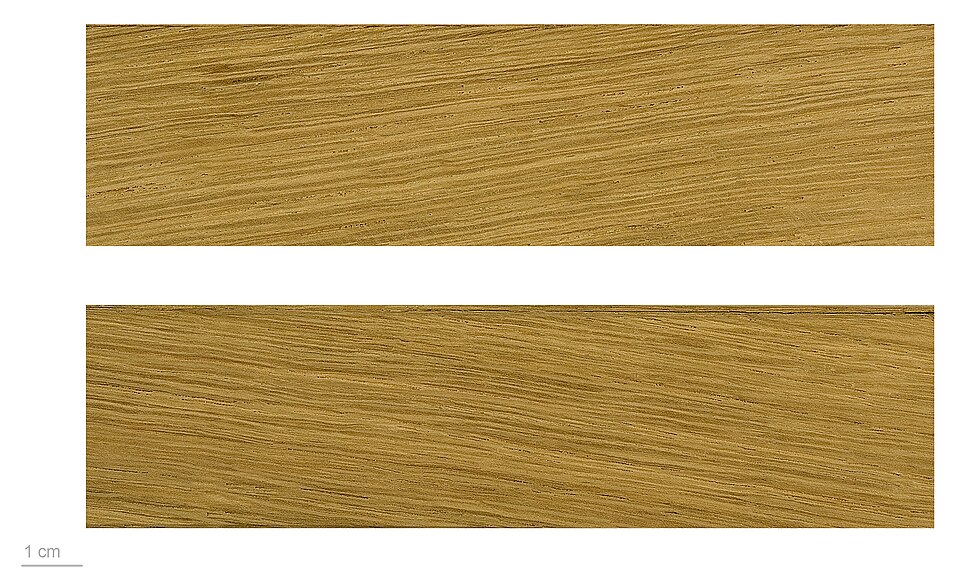
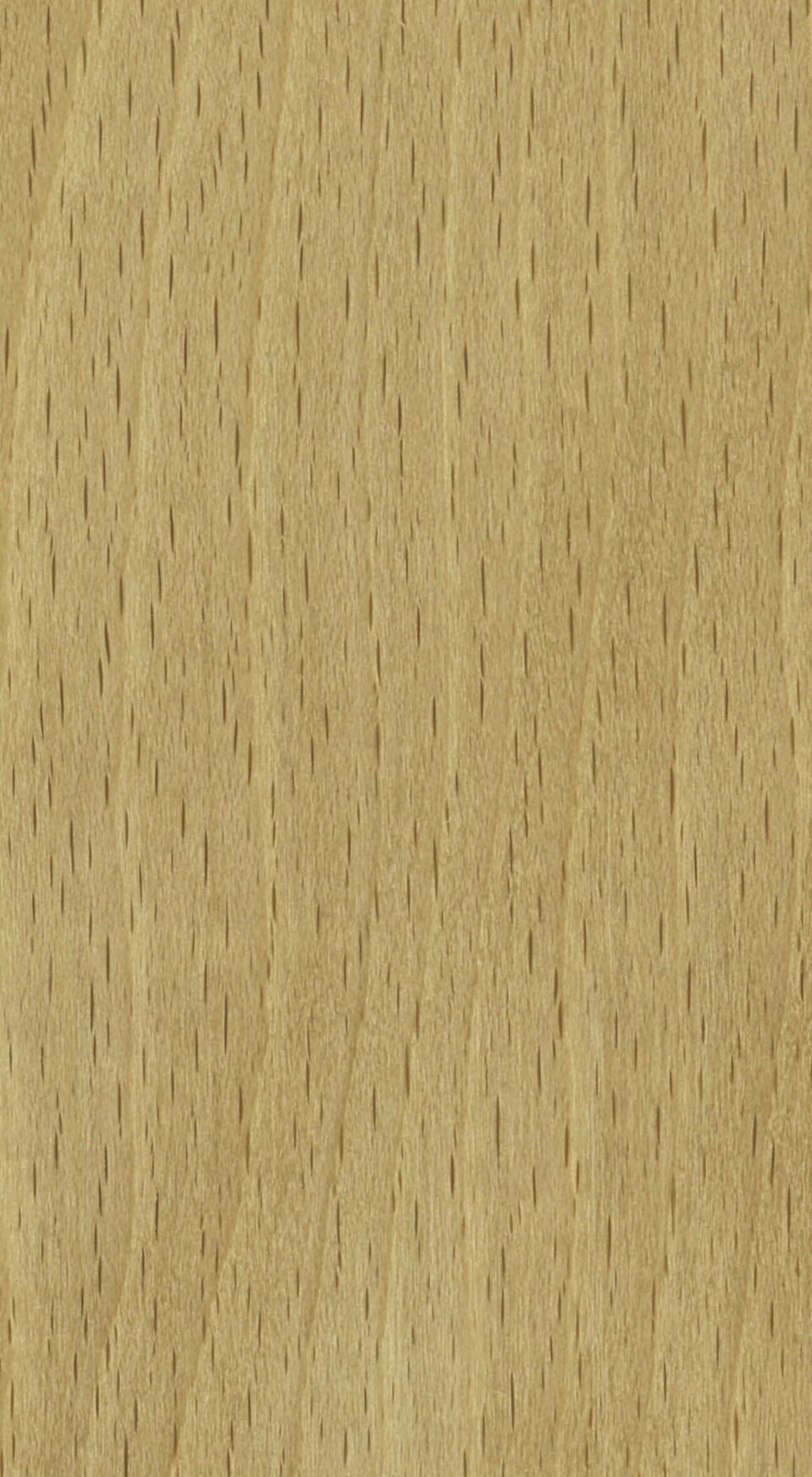
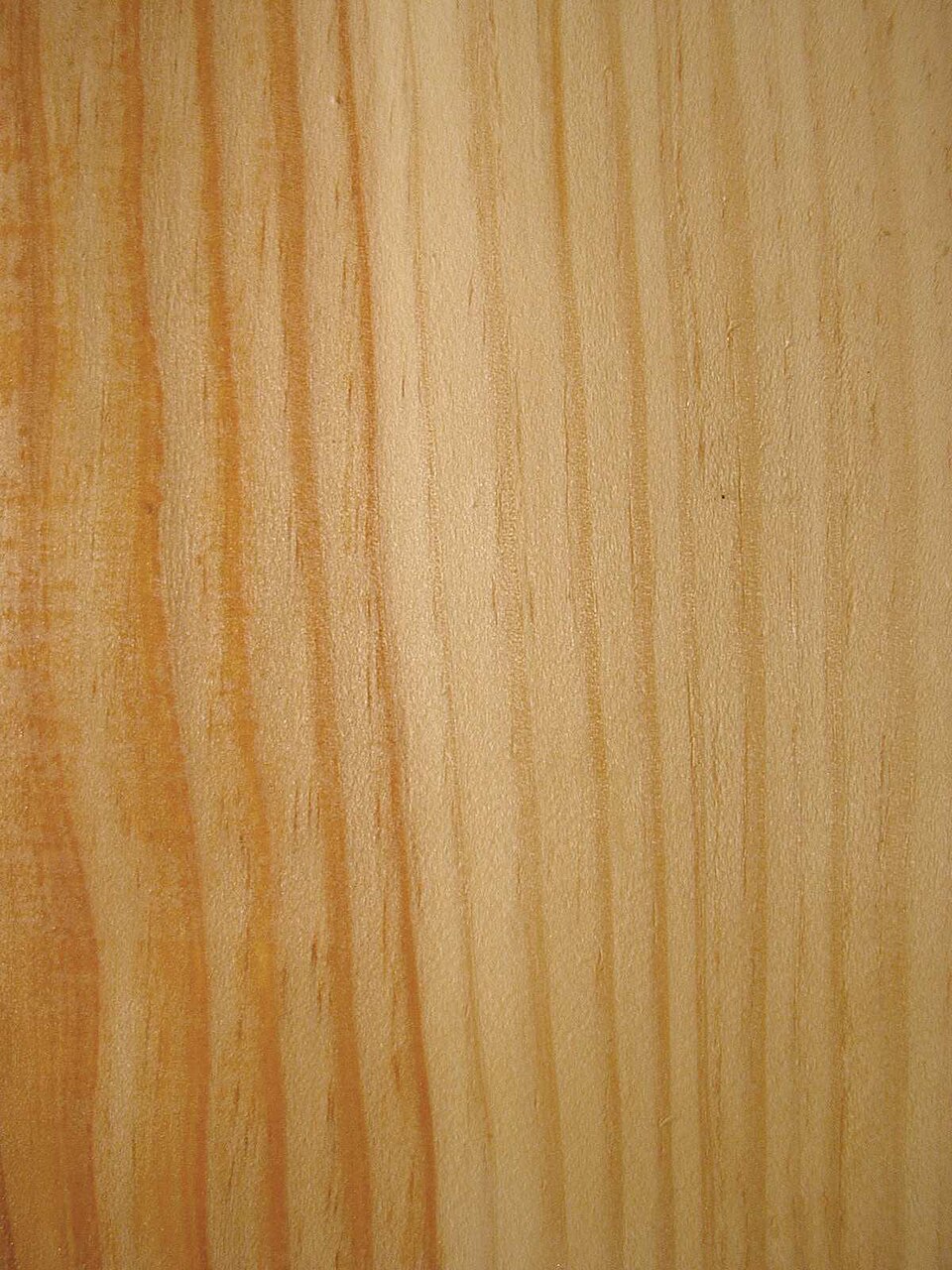
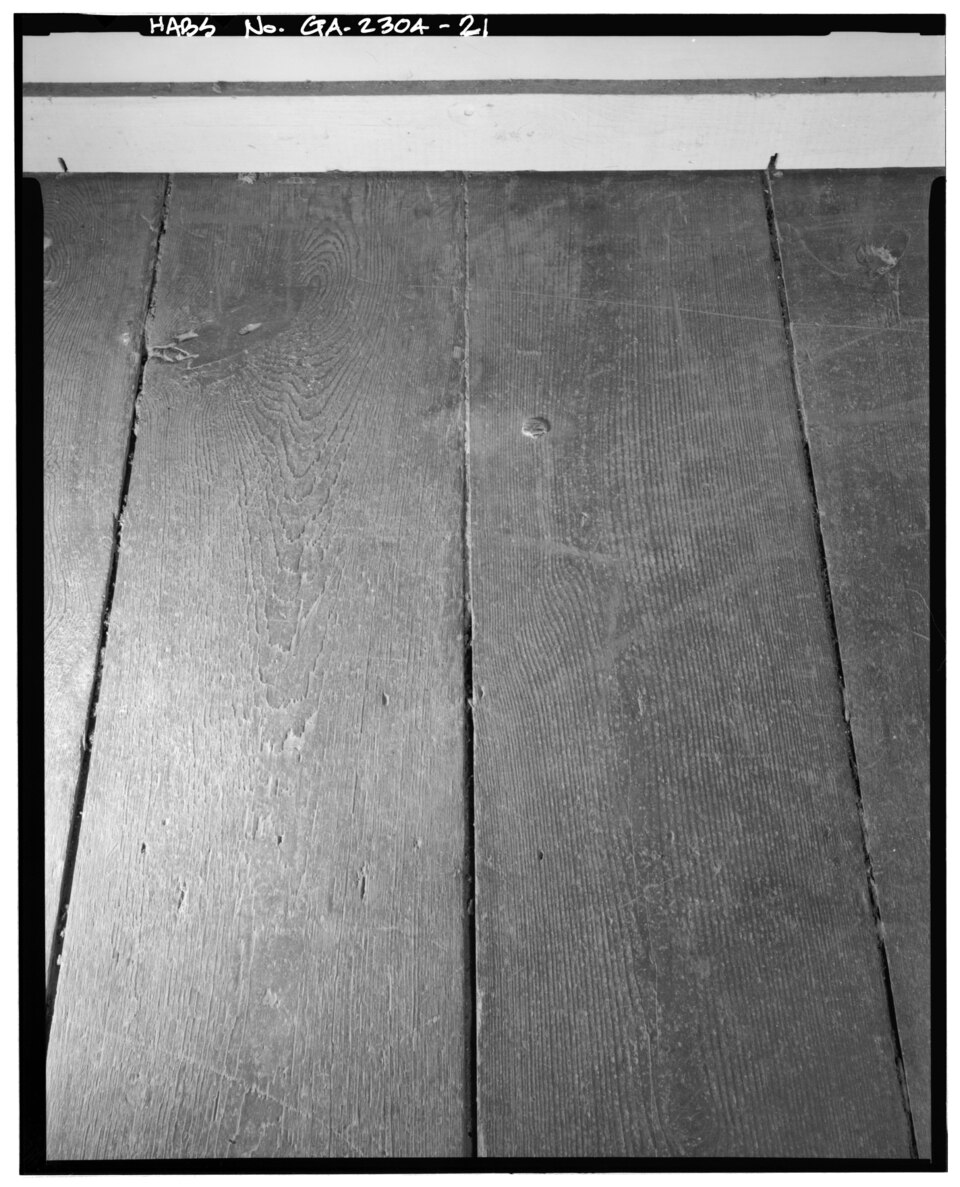
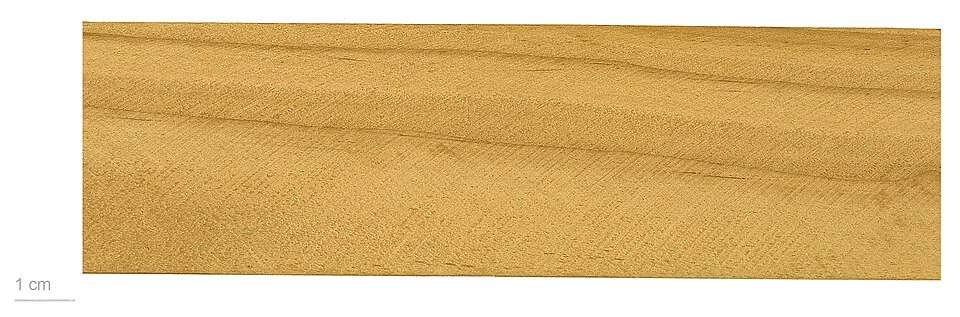
The Wood Database describes the heartwood as yellow to medium reddish brown, with narrow, nearly white sapwood that is clearly distinct from the heartwood. The grain is generally straight or spiralled, and the texture is medium to fine, with a greasy or oily feel1.
The Walloon study adds that heartwood is salmon red to reddish brown and becomes more attractive under light and ageing. It describes a flame-like figure on flat-sawn faces and a striped figure on quarter-sawn faces, a fine to medium grain (coarse in fast-grown trees), and frequent resin pockets4. It also says the strong resin smell persists after drying4.
Knots and resin
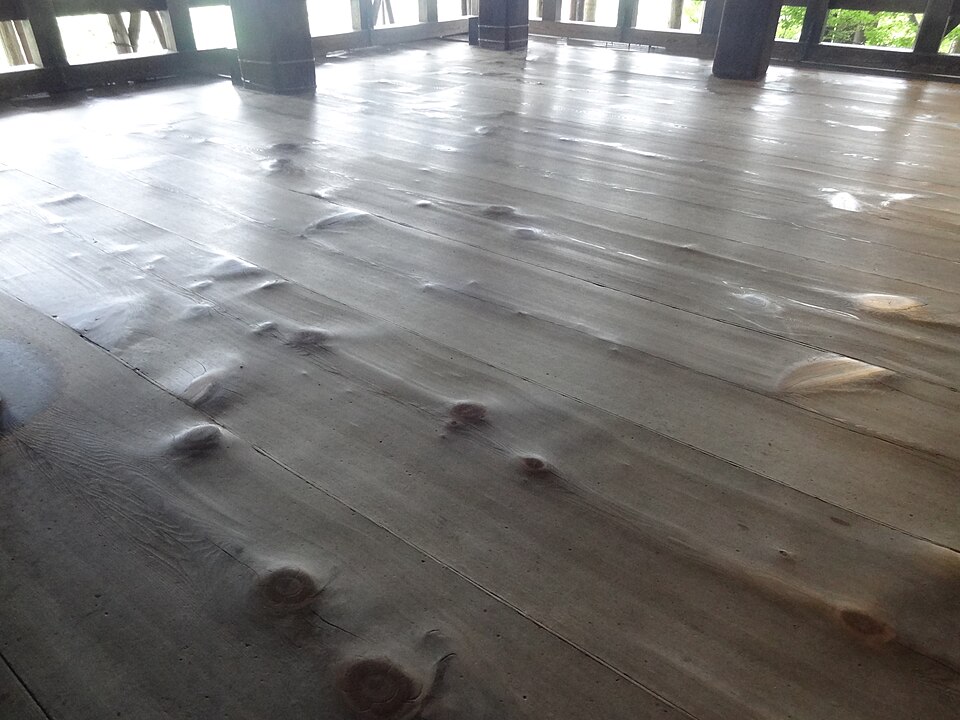
Larch is knotty. The Walloon authors say knots are numerous but, because larch does not grow in whorls, they are spread evenly along the board. They describe the knots as fairly hard and poorly bonded to the surrounding wood, so they tend to split or burst out during machining and drying4. Knot size and frequency vary by board, so ask your supplier how the boards are graded and look at a sample before you order.
How hard and dense is larch compared with hardwoods?
| Species | Janka hardness | Average dried weight |
|---|---|---|
| European larch (Larix decidua) | 740 lbf (3,290 N) | 575 kg/m³ |
| English oak (Quercus robur) | 1,120 lbf (4,980 N) | 675 kg/m³ |
| European beech (Fagus sylvatica) | 1,450 lbf (6,460 N) | 710 kg/m³ |
All values are from The Wood Database123. See the hardness chart for every species on this site and our Janka hardness guide for how to read the numbers. In practice a softer board dents more easily than European oak or European beech.
Where sources disagree. The Walloon study measured an average density of 640 kg/m³ at 12% moisture on defect-free specimens of European larch grown in Wallonia, and classed it as a heavy wood4. The Wood Database gives 575 kg/m³ average dried weight, with a specific gravity of 0.58 at 12% moisture1. The two figures are for different samples and methods, so treat 575 to 640 kg/m³ as the range reported. The Walloon authors also rank larch at the boundary between semi-hard and hard woods on their own scale (Chalais-Meudon hardness 4.1, against 1.4 for spruce and 2.2 for Douglas fir), which is a comparison with other conifers rather than with oak4.
How much does larch move?
Shrinkage is a rough guide to how a board reacts to changes in humidity. The two sources report these figures:
| Source | Radial | Tangential | Volumetric | T/R ratio |
|---|---|---|---|---|
| The Wood Database1 | 4.2% | 8.2% | 12.5% | 2.0 |
| Walloon study (total shrinkage)4 | 4.7% | 7.5% | 15.2% | 1.7 |
| English oak, Wood Database2 | 4.7% | 8.4% | 13.0% | 1.8 |
The Walloon authors rate the three larches they tested as moderately stable, and conclude that, given this and their hardness class, they are suitable for joinery and parquet flooring. They add that larch wood is characterised by nervousness (internal tension, partly from compression wood and an off-centre heart), and that proper drying to an equilibrium moisture content that suits the end use can control much of this4. Our guide to moisture and acclimatisation covers site conditions.
Is larch suitable for wide-plank and rustic floors?
The sources we opened do not give a recommended board width, so we cannot say how wide a larch board can safely be. What they do say is relevant to the choice. The Wood Database lists flooring among larch's uses, alongside veneer, utility poles, fence posts, boatbuilding and construction lumber1. The Walloon authors say its fine grain suits parquet and that its colour and figure suit interior floors, ceilings, doors, furniture and stairs4.
For a wide-plank floor, the points to weigh are the ones above: moderate hardness, a tangential-to-radial ratio of 1.7 to 2.0, and the internal tension that proper drying must control. Larch also has numerous knots and resin pockets, which suit a rustic look but should be checked on a sample. For how boards are built, see solid wood flooring.
How do you work and finish larch?
The Wood Database says most hand and machine operations give good results, but resin builds up on saw blades, and sanding can leave dips because the earlywood is soft and the latewood hard1. The Walloon authors add that sanding can lift fibres, that drying naturally takes on average two to three times as long as spruce, and that artificial drying should be gradual, ending at about 70 to 80 °C4.
For gluing, the same authors advise alkaline or organic-solvent adhesives applied only to freshly planed or sanded surfaces, and pre-drilling before nailing or screwing to limit splitting. They say paint, varnish, stain or wax present no difficulty, but resin-rich surfaces should be degreased first4. See our guides to wood floor finishes and sanding and refinishing.
How durable is larch?
The Wood Database rates larch as moderately durable against decay1. In the Walloon study the heartwood is natural durability class 3, resistant to insects, while the sapwood is class 5 (not durable) and is vulnerable to house longhorn beetle and furniture beetle. The authors say larch can be used untreated indoors4. Indoor floors do not face the weather, so in our reading hardness and stability matter more than decay resistance here.
Where does larch come from and is it a sustainable choice?
The Wood Database notes that European larch is not listed in the CITES Appendices and is rated least concern by the IUCN1. Forest Research lists the variety polonica (from hills on the Polish plains) as endangered on the IUCN list7.
EUFORGEN lists threats to natural populations, including hybridisation with introduced material (the species crosses readily with Japanese larch, Larix kaempferi), climate change and the loss of range to shade-tolerant species5.
In Britain, Forest Research says Phytophthora ramorum is seriously affecting larch species and causing widespread mortality in many areas. Japanese larch is highly susceptible, and European and hybrid larch are also affected7. Before the disease was found in 2009, larch covered about 154,000 hectares, five per cent of Great Britain's woodland. The National Forest Inventory recorded 111,300 hectares of larch woodland at 31 March 2016, including areas due for felling for disease control8. The same page says most larch forests remain healthy and that new infection rates in England and Scotland have been trending downwards8. We found no source on how this affects flooring supply or price, so ask your supplier for the origin and species of the timber.
How does larch compare with other species?
- European oak: harder (1,120 lbf) and with higher density (675 kg/m³)2. See European oak.
- European beech: harder still (1,450 lbf) and with higher tangential shrinkage (11.7%)3. See European beech.
- Sweet chestnut: a different European species with its own figures; see sweet chestnut.
- Scots pine: softer (540 lbf) and a lighter conifer option; see Scots pine.
Frequently asked questions
How hard is European larch compared with oak?
Does larch flooring change colour?
Does the resin in larch cause problems?
Is Siberian larch the same as European larch?
Sources
- European Larch, The Wood Database. Accessed .
- English Oak, The Wood Database. Accessed .
- European Beech, The Wood Database. Accessed .
- Le mélèze, un bois de qualité aux multiples usages (Charron, Hébert and Jourez), Forêt Wallonne no. 61, November-December 2002, Forêt Wallonne (authors from Gembloux and the Walloon Region research centre). Accessed .
- Larix decidua, EUFORGEN (European Forest Genetic Resources Programme). Accessed .
- Larix sibirica, EUFORGEN (European Forest Genetic Resources Programme). Accessed .
- European larch (EL), Forest Research (UK). Accessed .
- Ramorum disease (Phytophthora ramorum), Forest Research (UK). Accessed .
This page compiles published data from the sources listed above. Read our editorial policy. Last updated .