European birch
Quick answer
European birch means two closely related trees, silver birch (Betula pendula) and downy birch (Betula pubescens). Silver birch is listed at 1,210 lbf (5,360 N) on the Janka scale and downy birch at an estimated 930 lbf (4,140 N), and both are pale, fine-textured and perishable outdoors12. Birch can be hard to stain evenly, and much of it goes into plywood3.
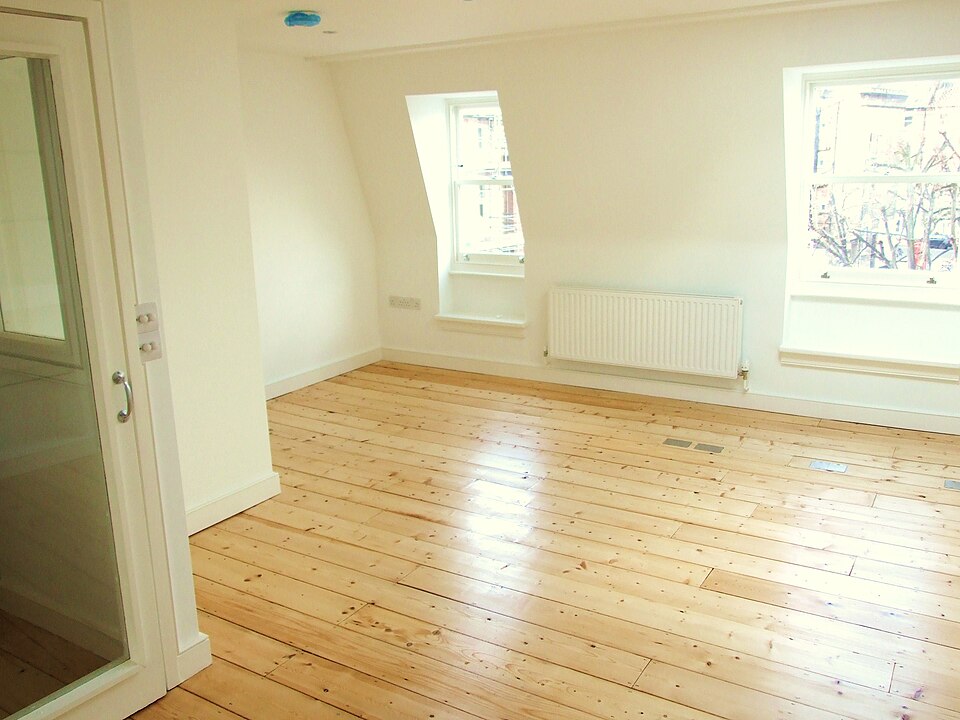
European birch is a pale, fine-textured hardwood that comes from two closely related trees, silver birch (Betula pendula) and downy birch (Betula pubescens). In flooring it is used for residential and gym floors, and birch plywood is commonly the backing of engineered boards, but it can be hard to stain evenly3. Silver birch is listed at 1,210 lbf (5,360 N) on the Janka scale1.
What is European birch?
"European birch" is a trade shorthand rather than a single species. The Wood Database lists silver birch (Betula pendula) as native to Europe and southwest Asia, and downy birch (Betula pubescens) under the other name European white birch, with a range in northern Europe, Asia, Iceland and Greenland12.
EUFORGEN describes silver birch as a fast-growing, medium-sized deciduous tree with white bark, found across Europe from the Mediterranean to central Siberia, and among the most commercially important trees in northern Europe. It lists pulp, fuelwood, timber and plywood among its uses4. Forestry England describes the UK native as a slender tree growing up to 15 metres tall, with a lifespan of up to 120 years7.
Downy birch is similar to silver birch but has hairy leaves, and EUFORGEN says it hybridises with silver birch. EUFORGEN also calls its timber poor and small in size, and says it is used mainly for pulp and fuelwood5. The Wood Database, by contrast, gives both species the same uses and workability notes, including plywood, interior trim and veneer12. In Finnish research the two are studied together; a study of mature Finnish stems lists parquet, veneer and plywood among its keywords6.
Yellow birch (Betula alleghaniensis) is a different, North American species and is not covered here. NWFA's article treats it alongside silver birch, but its figures should not be mixed with the European species3.
What does birch look like?
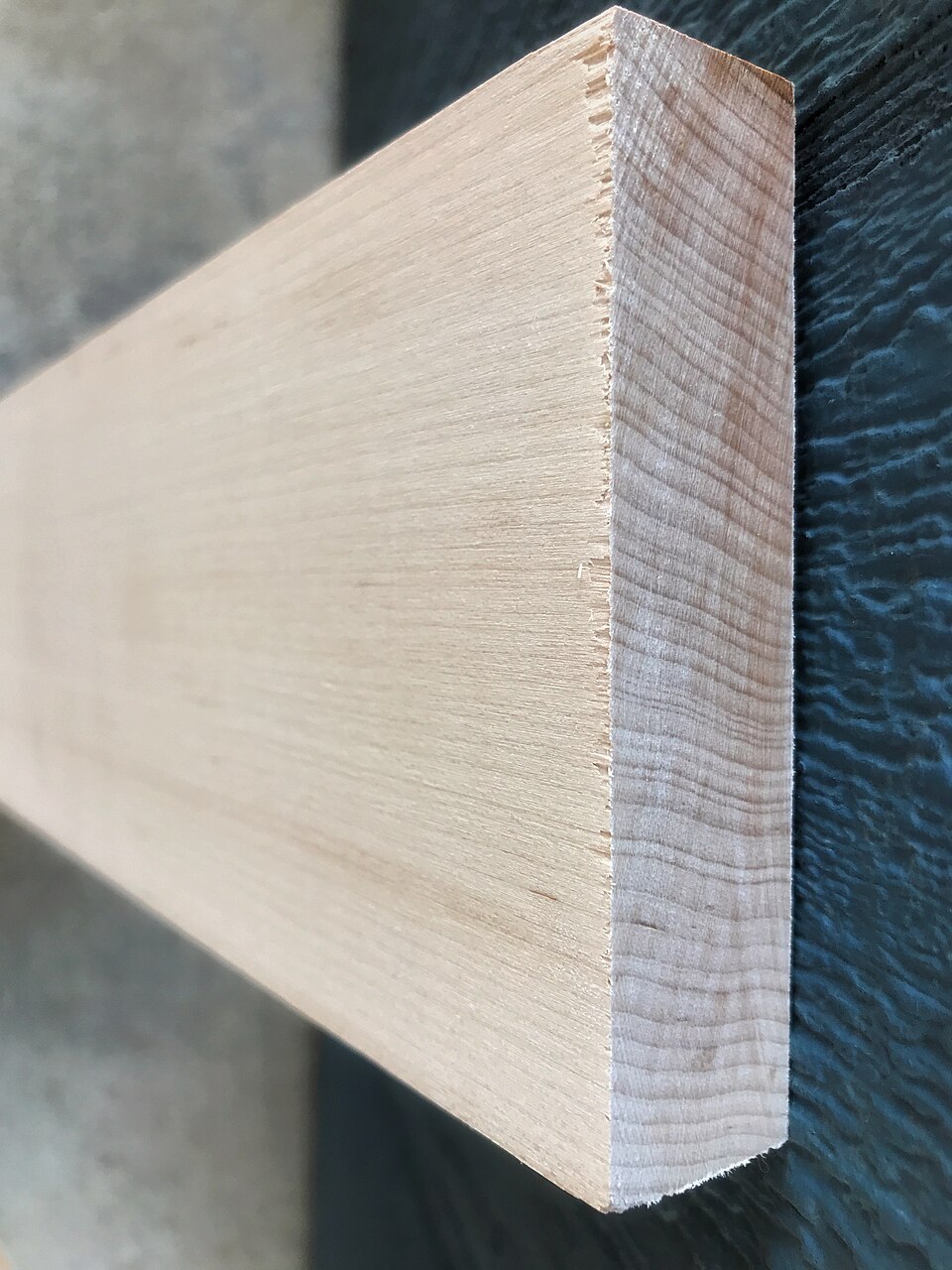
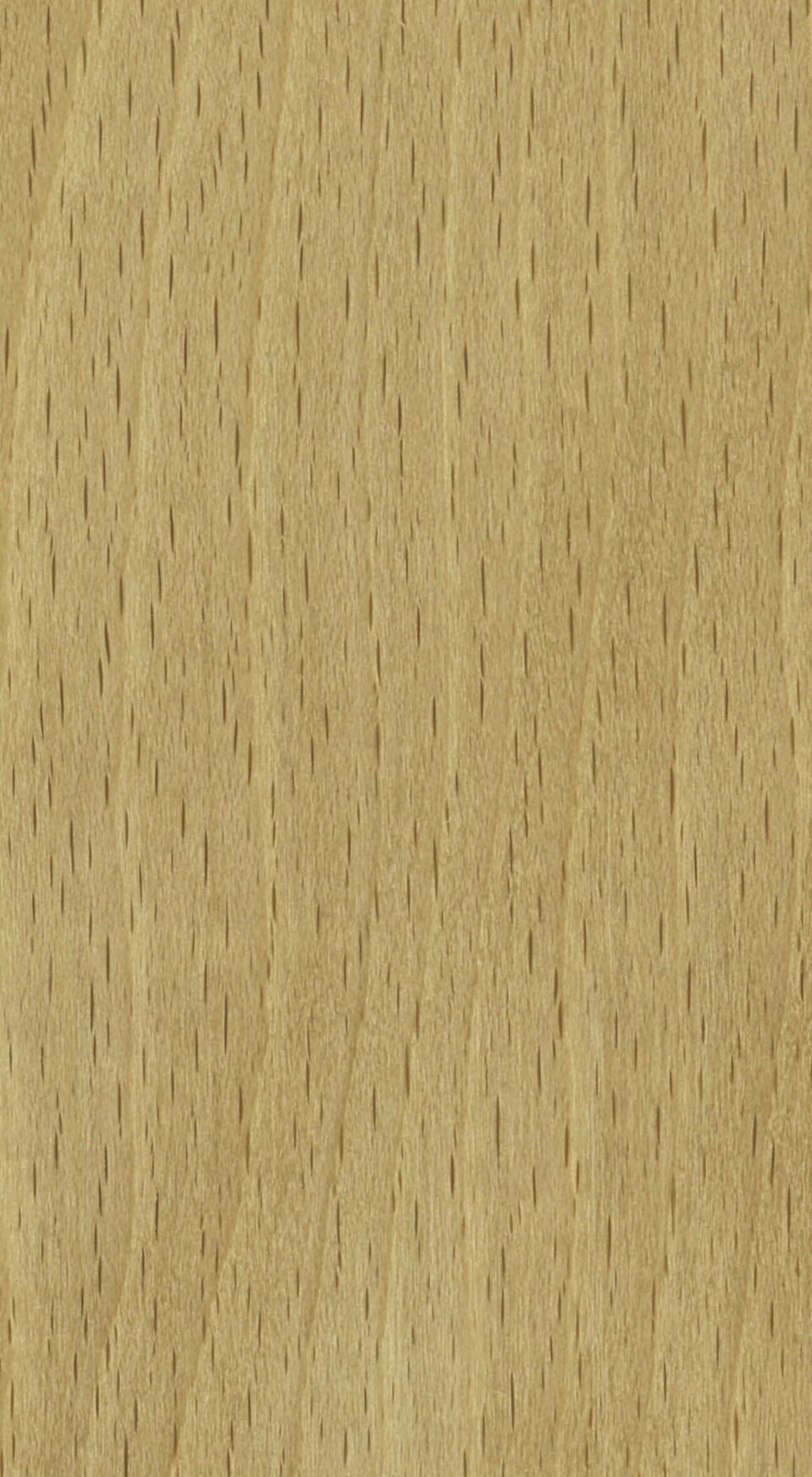
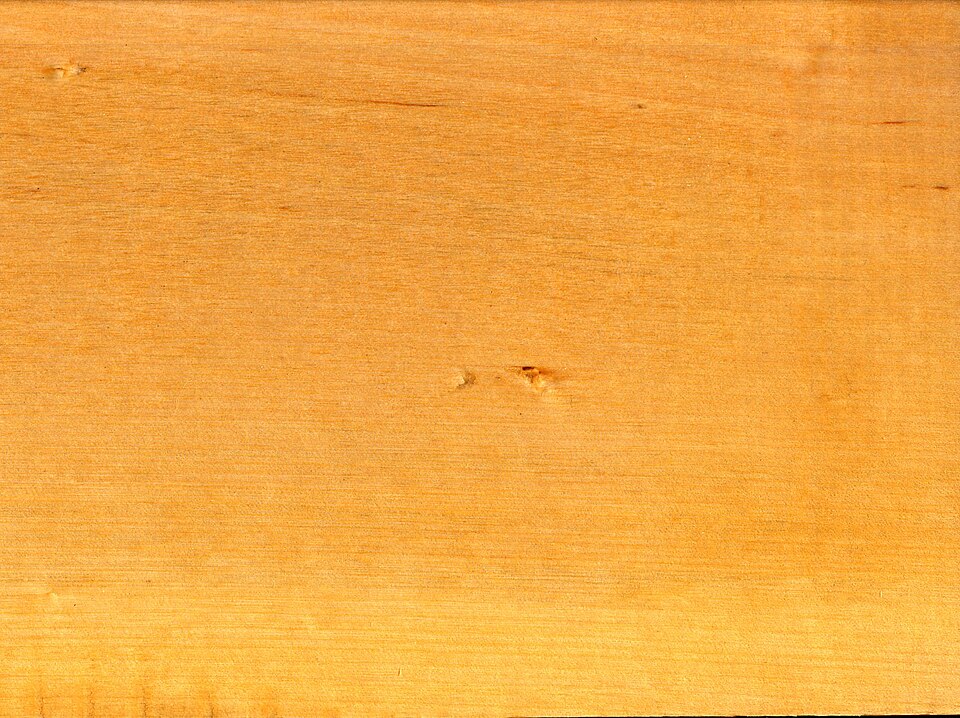
The Wood Database describes the heartwood of both species as light reddish brown and the sapwood as almost white. Growth rings are barely distinguishable, so the wood looks fairly uniform, and the grain is mostly straight or slightly wavy with a fine, even texture and low natural lustre. Occasional figured pieces show a wide, shallow curl12.
NWFA's article describes silver or European birch as creamy white to pale brown, often plain, with little contrast between sapwood and heartwood, and notes that figured grain costs more3. The sources agree that birch is a quiet, light-toned wood rather than a strongly patterned one.
How hard and dense is birch?
| Measure | Silver birch (B. pendula) | Downy birch (B. pubescens) |
|---|---|---|
| Janka hardness | 1,210 lbf (5,360 N) | 930 lbf (4,140 N), estimated from specific gravity |
| Dried weight at 12% MC | 640 kg/m³ | 625 kg/m³ |
| Specific gravity (basic, 12% MC) | 0.50 and 0.64 | 0.48 and 0.62 |
| Mean basic density, Finnish stems | 512 kg/m³ | 478 kg/m³ |
| Mean Brinell hardness, Finnish stems | 23.4 MPa | 20.5 MPa |
The Janka and density rows are from The Wood Database, and the last two rows are from a measurement study on small, defect-free specimens of Finnish wood126. Brinell hardness (in MPa) is a different test from Janka (in lbf), so the two cannot be compared directly. The same study found that wood near the pith was less dense than wood near the stem surface, and that Brinell hardness correlated positively with basic density6.
Two sources agree on silver birch's Janka figure: NWFA's article gives 1,210 for silver or European birch3. The article gives a specific gravity of .66 for silver birch, against the Wood Database's 0.64 at 12% moisture content, a small difference31. For the scale itself, see our Janka hardness guide. For a harder North American pale wood, compare hard maple.
How stable is birch?
Published shrinkage figures differ by source and species. The Wood Database lists no shrinkage data for silver birch, but for downy birch it gives radial 6.0%, tangential 10.0% and volumetric 16.0%, with a T/R ratio of 1.712. NWFA's article gives silver or European birch 6.3% radial and 8.6% tangential shrink or swell from green (30% moisture content) to oven-dried3.
Those are different species and, probably, different test conditions, so treat them as a range: roughly 6% radial and 8.6% to 10.0% tangential. Compare European beech, another pale European hardwood, on its own page. For practical advice on fitting, read about moisture and acclimatisation.
How is birch used in flooring?
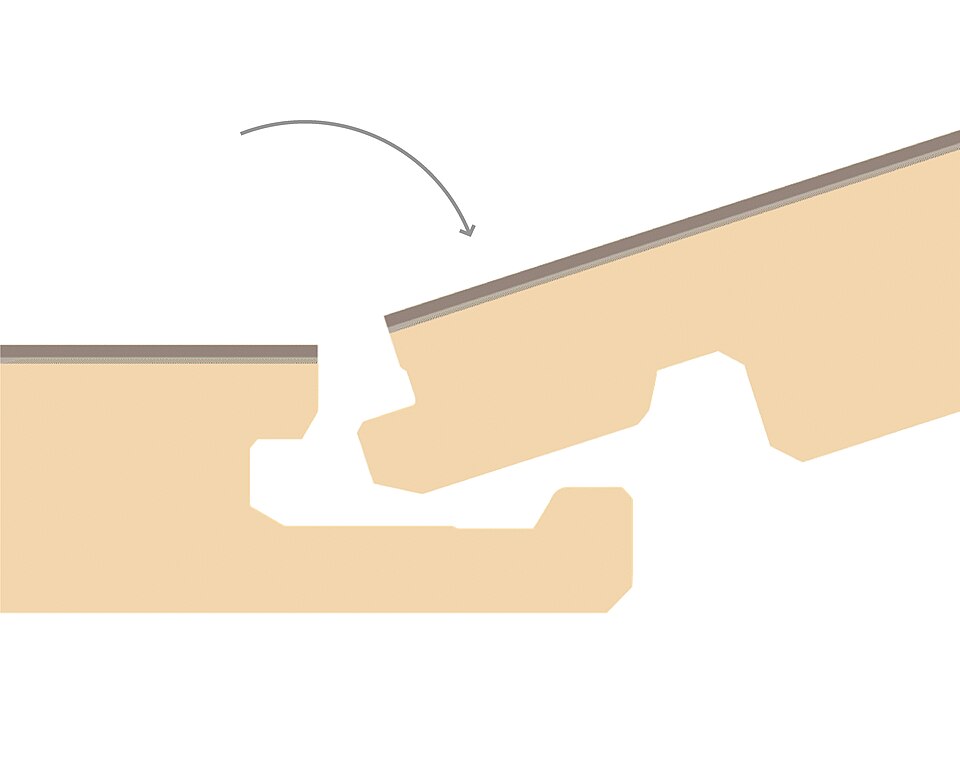
NWFA's article lists residential flooring and gym flooring as uses of birch, alongside furniture, cabinetry, millwork and veneers. It also says Russian birch plywood is commonly used as the platform or backing for engineered flooring3. That is the only source we have opened on plywood cores, so we do not generalise about particular brands.
Plywood is a major use of the species. The Wood Database says silver birch is one of the most widely used woods for veneer and plywood1, and Forestry England lists plywood, furniture and veneers among the uses of UK silver birch timber7.
The Wood Database says both species are generally economical, with plain birch priced similarly to maple or oak, and that figured boards cost more12.
How does birch sand, stain and finish?
The Wood Database says silver birch and downy birch are easy to work with hand and machine tools, although wild grain can tear out, and that they turn, glue and finish well12. NWFA's article says there are no known issues with nailing birch3.
Sanding needs care. NWFA's article notes that the tight grain, density and light colour make sanding marks more visible, so a higher-grit sequence is often needed. It also says birch can be hard to stain and may look blotchy3. If you want a coloured finish, ask the installer for a sample on offcuts, and read our guides to wood floor finishes and sanding and refinishing.
None of the sources we opened give figures on how a birch floor changes colour with age or light, so we make no claim about yellowing.
How durable and sustainable is birch?
The Wood Database rates both species as perishable: they rot readily when exposed to the weather and are susceptible to insect attack, which is why birch flooring is an interior choice12. The Betula genus is reported as a sensitizer, usually causing skin and respiratory irritation1.
On conservation, neither species is listed in the CITES Appendices or on the IUCN Red List, according to the Wood Database12. EUFORGEN says downy birch is not considered to be under threat, though many populations are isolated5. Both are pioneer species, according to EUFORGEN and Forestry England47. We have not cited a certification figure; ask your supplier for FSC or PEFC chain-of-custody documents if you need them.
How does birch compare with other species?
- European beech: another pale European hardwood; see its page for figures.
- Hard maple: another pale hardwood, from North America; see its page for figures.
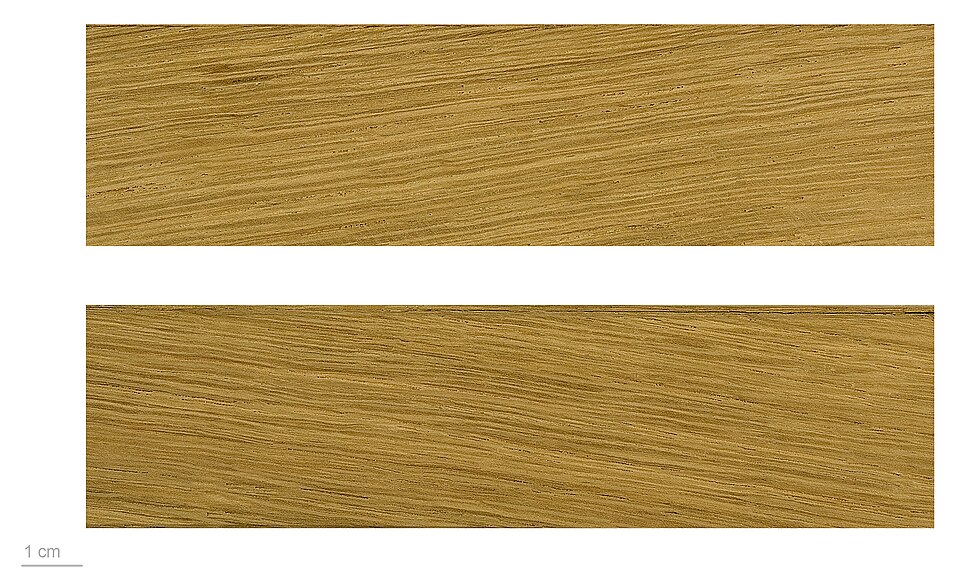
- European oak: more strongly figured and a traditional European choice; see its page for figures.
Frequently asked questions
Is birch a good flooring wood?
Is silver birch the same as downy birch?
Does birch stain evenly?
Is birch plywood used under engineered floors?
Sources
- Silver Birch, The Wood Database. Accessed .
- Downy Birch, The Wood Database. Accessed .
- Species Specs: Birch, Hardwood Floors Magazine (NWFA). Accessed .
- Betula pendula, EUFORGEN (European Forest Genetic Resources Programme). Accessed .
- Betula pubescens, EUFORGEN (European Forest Genetic Resources Programme). Accessed .
- Variation of Basic Density and Brinell Hardness Within Mature Finnish Betula pendula and B. pubescens Stems, Wood and Fiber Science (Society of Wood Science and Technology). Accessed .
- Silver birch, Forestry England. Accessed .
This page compiles published data from the sources listed above. Read our editorial policy. Last updated .