Wood flooring grades
Quick answer
A wood flooring grade describes appearance, not strength. In the United States, the NWFA/NOFMA standard grades unfinished oak as Clear, Select, No. 1 Common and No. 2 Common, from the most uniform to the most characterful, and states that appearance alone determines the grade. Prefinished and European floors use makers' own names such as Rustic, so a grade on one brand's sheet is not a guaranteed match for the same word on another's.
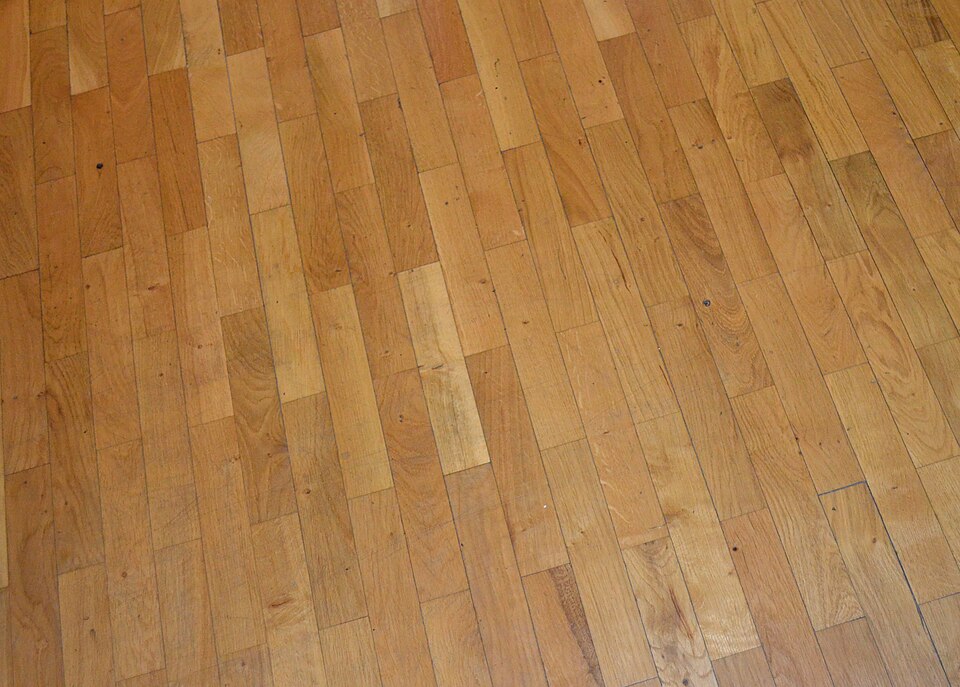
A wood flooring grade is a statement about appearance. It tells you how many knots, streaks, sapwood and other natural features to expect, not how strong the floor is. In the United States the NWFA/NOFMA standard grades unfinished oak as Clear, Select, No. 1 Common and No. 2 Common, and says that appearance alone determines the grades since all are equally strong and serviceable1. European and prefinished floors often use brand names instead, so the same word can mean different things on different sheets.
What does a grade actually describe?
The NWFA's training course for architects and designers lists the surface characteristics that grades control: knots, mineral streaks, burls, worm holes, sapwood and checks2. The standard also sets board lengths and milling tolerances for certified unfinished flooring1. The course adds that grades affect appearance, that No. 1 does not mean "best", that manufacturers may have proprietary grades, and that buyers should request samples and know what to expect2.
So a grade has two jobs. It sets how busy the floor will look, and, for US unfinished flooring, how long the boards are on average.
What are the NWFA/NOFMA grades for oak?
The standard defines four main oak grades and a shorts category. Each higher grade's allowed characters are automatically accepted in lower grades, and grades are sometimes sold combined, such as Select and Better1.
| Grade | Description in the standard (summarised) |
|---|---|
| Clear | Mostly heartwood with a minimum number of character marks, giving a uniform appearance and allowing all natural heartwood colour variation. Admits narrow bright sapwood, small burls and fine pin worm holes |
| Select | Colour variation from heartwood and sapwood. May show unlimited sound sapwood, one small tight knot every 3 ft (914 mm) of piece, pin worm holes, burls and a reasonable amount of slightly open checks; spot filling is generally required |
| No. 1 Common | Prominent variations in colour and varying characters. Open characters such as checks and knot holes are admitted but must be sound and readily fill; broken knots over 1/2 in (12.7 mm) are not |
| No. 2 Common | Sound natural variations and manufacturing imperfections, intended for homes, general utility use or where character marks and contrast are wanted; unsound defects such as shake and advanced rot are not admitted |
All four are from the NWFA/NOFMA grading rules1. Pieces of 9 to 18 in (229 to 457 mm) may be bundled as shorts and graded by the same rules1.
How long are the boards in each grade?
The NWFA's course notes that longer boards mean a higher grade2. The standard sets an average board length minimum for each grade, applied to a shipment of 1,000 sq ft (92.9 m²) or more1:
| Grade | Strip under 3 in (76 mm) | Plank 3 to 5 in (76 to 127 mm) |
|---|---|---|
| Clear | 36 in (914 mm) | 36 in (914 mm) |
| Select | 33 in (838 mm) | 32 in (813 mm) |
| No. 1 Common | 30 in (762 mm) | 28 in (711 mm) |
| No. 2 Common | 24 in (610 mm) | 24 in (610 mm) |
No individual piece may be shorter than 9 in (229 mm), there is no length compliance for flooring wider than 5 in (127 mm), and up to 5% of pieces may be off-grade1. The length rules apply to species including red oak, white oak, hard maple, beech, birch, hickory, ash, cherry and walnut1. For these species see our pages on American white oak and American red oak.
The standard also grades maple, beech and birch separately, with a Select and Better grade described as practically free of defects and a No. 1 Common grade with distinct colour variation, streaks and sound knots1.
How do European makers grade floors?
There is no single set of names. Boen, for example, shows three oak grades on one page: Calm, described as selected grading with even growth and medium knots; Lively, a natural grading with small to medium knots and a limited colour spectrum from sapwood; and Rustic, with vivid growth, larger knots and a rich spectrum of colours from sapwood and heartwood. It also lists Andante, Animoso, Vivo and Espressivo, with downloadable explanations4.
In France, the FCBA's sheet on parquet says the NF Parquets certification for hardwood parquet covers dimensional conformity, moisture content and appearance grading3. We did not open the CEN product standards that define appearance classes, so we do not reproduce them. Our guide to flooring standards lists those standards.
Why do the words Prime, Select, Natural and Rustic vary?
Trade names such as Prime or Rustic are common in retail catalogues, but the sources we opened do not define them as a standard scheme. The NWFA says manufacturers may use proprietary grades2, and Boen's names show how far brands diverge4. Treat these words as a rough ladder from uniform to characterful and verify with samples or photographs.
When a retailer says "Select" you cannot assume it matches NWFA/NOFMA Select. For example, one maker lists the oak of its plank range as "flatgrain select oak" and gives no grade definition in the information we hold; ask what the term means before comparing5.
How do you compare grades between brands?
- Ask for the definition. Which standard or house grading rules apply, and where can you read them?
- Look at a full-size sample or large photographs. Tiny swatches under-represent knots and sapwood.
- Compare the features, not the label. Knot size, sapwood, colour range, and how cracks are filled.
- Check lengths and widths. For wide boards see wide-plank flooring.
- Match the grade to the look you want. A higher grade is not a stronger floor, only a more uniform one.
Grade is a separate question from construction. Solid wood and engineered floors both come in several appearance grades, and our page on European oak covers the main European flooring species.
Can a maker's "select" be compared with NWFA grades?
Not directly. One example of oak sold by a named grade word is Droit's straight select-oak planks from OscarOno Paris, which the maker lists as flatgrain select oak, 12 mm with a 4 mm top layer, in 150 or 190 mm widths5. The NWFA/NOFMA standard grades unfinished solid flooring and sets its own Select definition1, so a maker's word "select" and the NWFA's Select are different scales unless the maker says otherwise.
Frequently asked questions
Does a higher grade mean a stronger floor?
What is the difference between Clear and Select oak?
Are Prime, Select, Natural and Rustic official grades?
Does No. 1 mean the best grade?
Sources
- NWFA/NOFMA International Standards for Unfinished Solid Wood Flooring, National Wood Flooring Association (NWFA). Accessed .
- Hardwood Flooring Grades (continuing education course, 2019), National Wood Flooring Association (NWFA). Accessed .
- Parquets (fiche P.O.B. 71.01, January 2015), FCBA and IRABOIS (France). Accessed .
- Grading systems, BOEN. Accessed .
- Droit collection, OscarOno Paris. Accessed .
This page compiles published data from the sources listed above. Read our editorial policy. Last updated .