Wood flooring installers in Paris
Quick answer
Finding a qualified wood flooring installer (parqueteur) in Paris requires navigating Haussmannian structural joists, plaster subfloors and acoustic regulations. Professional installations in France are governed by NF DTU 51.1 for nailed floors and NF DTU 51.2 for glued floors12. Below is our directory of verified Parisian flooring businesses that maintain published addresses and workshops across the capital.
Installing or restoring hardwood flooring in Paris presents unique architectural challenges. From 18th-century hôtels particuliers in the Marais to iconic 19th-century Haussmannian boulevards, timber floors are deeply intertwined with the architectural identity of the French capital. When planning a flooring project, engaging an experienced artisan parqueteur who understands local structural conditions and national standards is essential. For general advice on vetting contractors and preparing contract schedules, read our comprehensive installers hiring guide or explore directory listings for other capitals like London.
What building standards apply in Paris and France?
Parquet works in France are subject to strict technical specifications codified in the Documents Techniques Unifiés (DTU) published by AFNOR:
- NF DTU 51.1 (Nailed parquet installations): This standard governs traditional nailed solid parquet laid over timber battens (lambourdes) or direct structural floor joists1. It sets precise guidelines for joist spacing, batten leveling, acoustic isolation pads, nail spacing and minimum board thicknesses (typically 20 mm to 23 mm for direct structural spans).
- NF DTU 51.2 (Glued parquet installations): This standard governs glued wood flooring laid over cementitious screeds, concrete slabs, or levelled subfloors2. It defines mandatory checks for substrate dryness (under 3% moisture content for concrete or 0.5% for anhydrite screeds), mechanical surface cohesion, and compatible silane or polyurethane adhesives.
- NF DTU 51.11 (Floating installations): Dictates tolerances for floating engineered wood floors, requiring underlayment membranes and acoustic decoupling.
Reputable contractors operating in Paris frequently carry professional trade certifications such as Qualibat 5111/5112 (Parquets traditionnels et collés) and decennial liability insurance (garantie décennale).
How do Parisian apartment structures influence installation?
The majority of pre-war residential buildings in Paris feature timber floor structures rather than solid concrete slabs. Haussmannian buildings constructed between 1853 and 1870 typically employ wood floor joists with lightweight plaster and rubble infill (augets en plâtre).
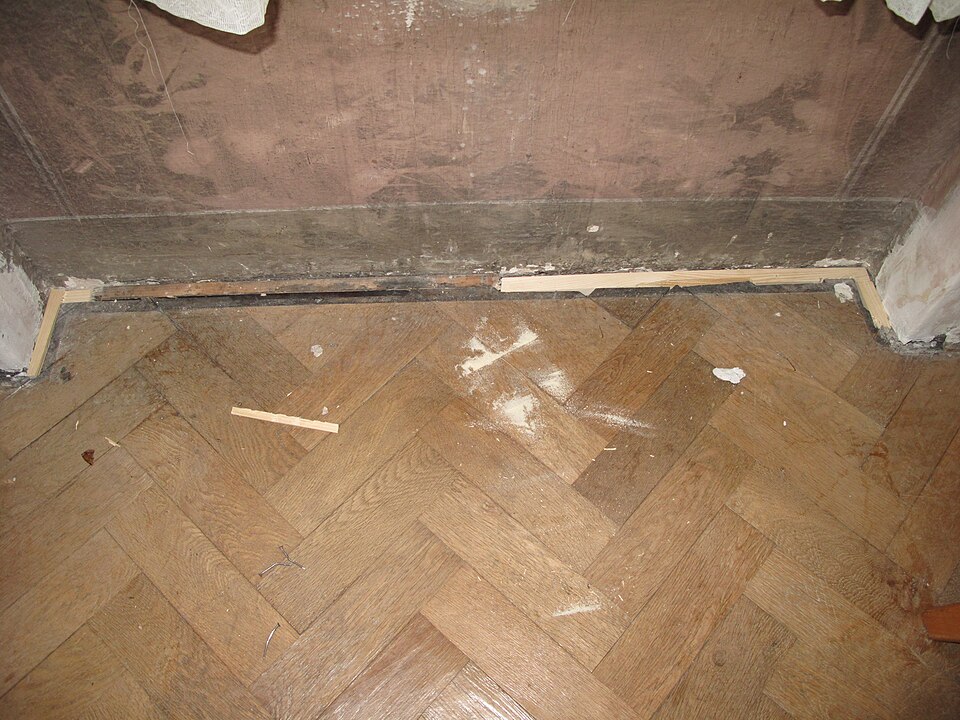
These floors cannot support heavy self-levelling compounds without risk of structural cracking or water damage to historic decorative plaster ceilings below. Consequently, Parisian parqueteurs rely on dry leveling techniques, loose mineral granules, or replacing worn wooden battens before nailing solid boards.
Acoustic insulation is also strictly enforced by building co-ownership regulations (règlement de copropriété). Because nailed timber floors can transmit footsteps to lower apartments, contemporary installers embed resilient acoustic strips under battens or install certified soundproofing mats compliant with French acoustic regulations (Réglementation Acoustique).
What are the historic parquet styles of Paris?
Parisian interiors are celebrated for classic geometric patterns:
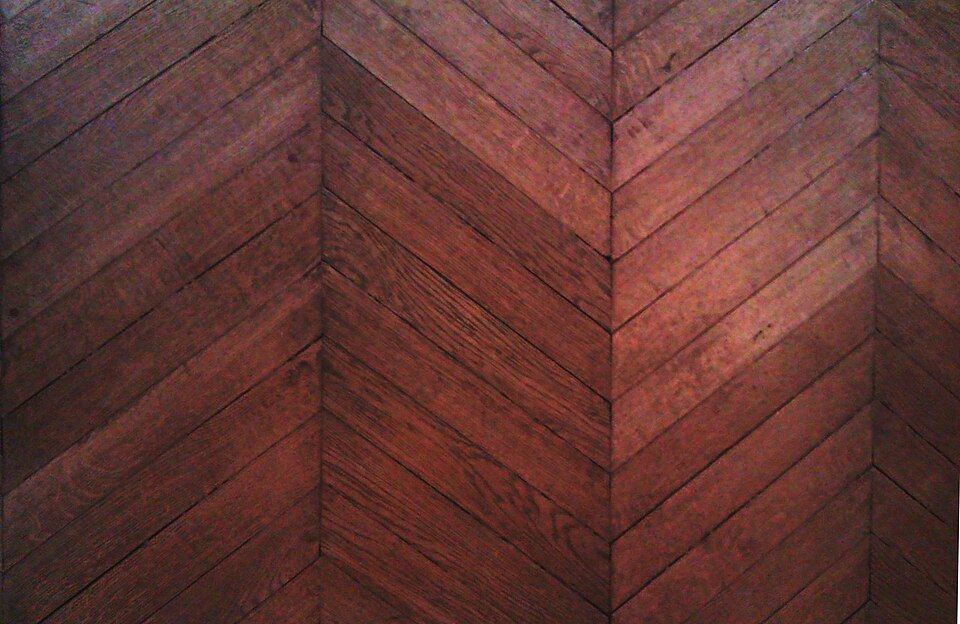
- Point de Hongrie (chevron): Boards cut at 45° or 60° angles at each end, forming continuous straight zig-zag lines. This is the quintessence of Haussmannian salon floors.
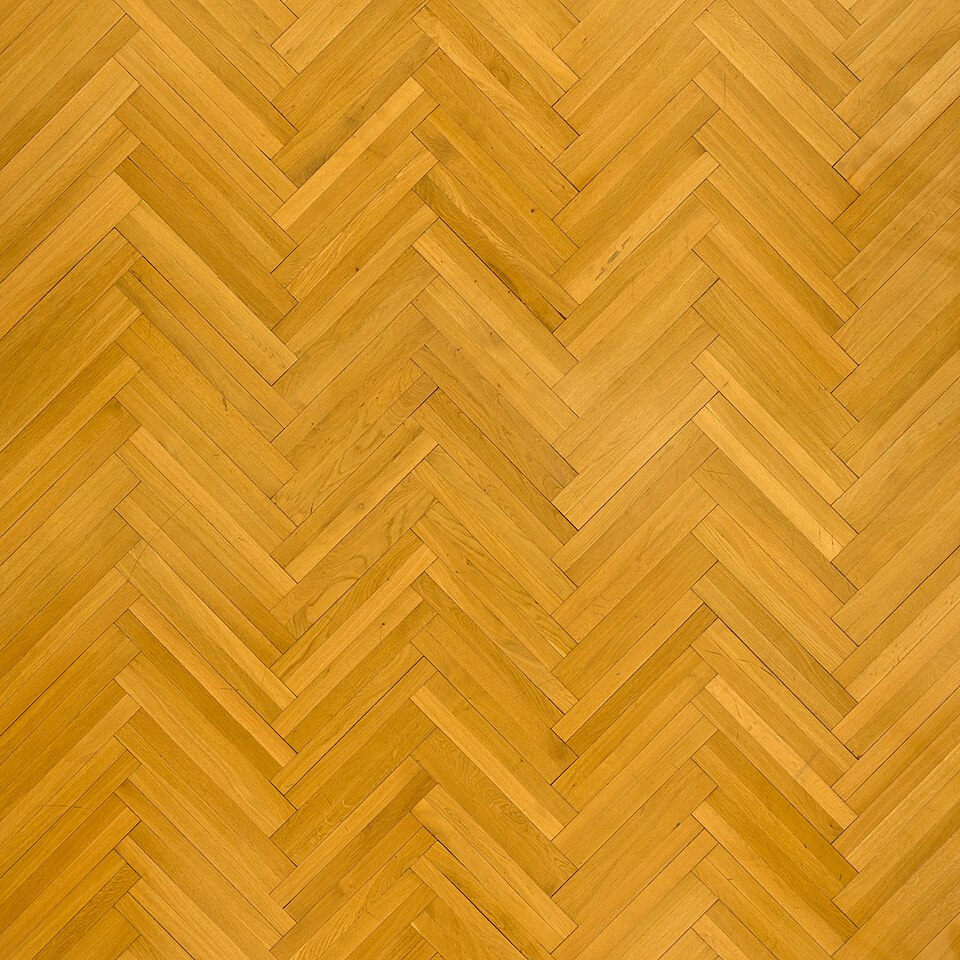
- Bâtons rompus (herringbone): Rectangular boards laid at right angles to one another, with staggered head joints.
- Panneaux de parquet: Elaborate square marquetry panels like the historic Versailles and Chantilly patterns found in grand apartments.
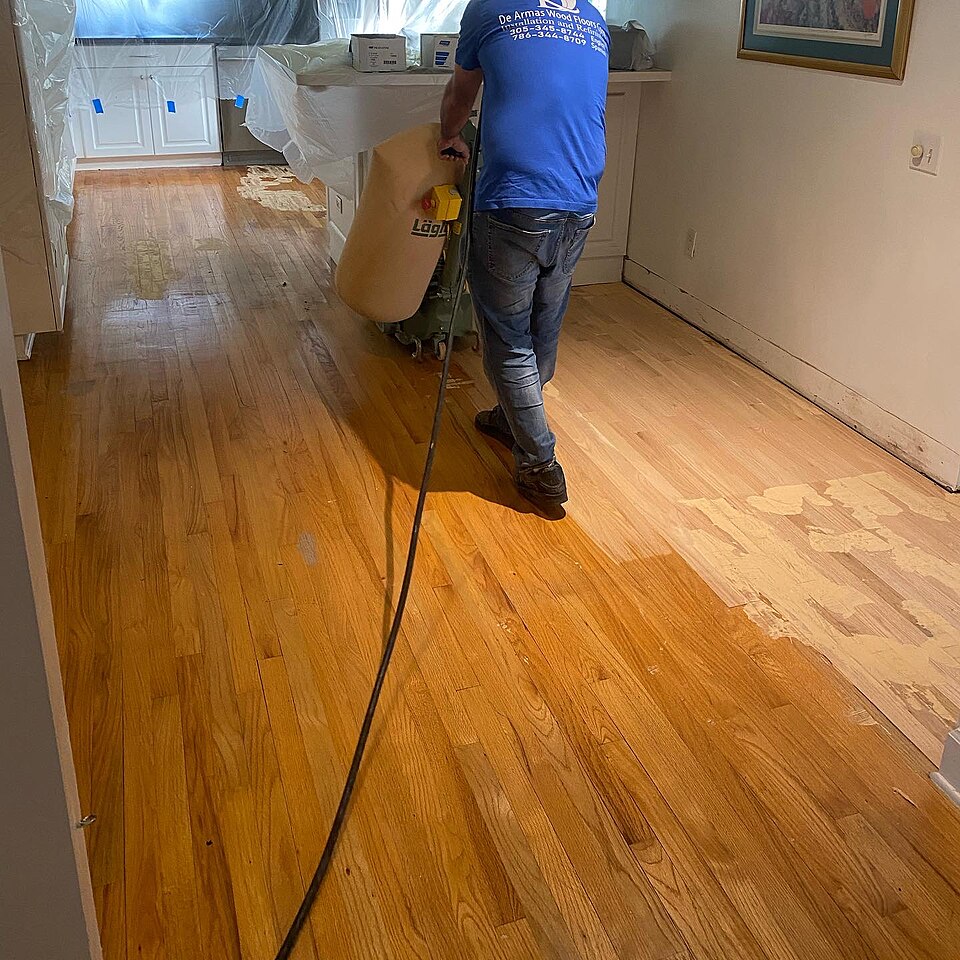
Restoring these historical floors requires careful selective replacement of damaged oak strips, historic resin mastic filling, and dust-free drum sanding before applying satin vitrification (polyurethane lacquer) or traditional floor wax. Learn more about professional floor restoration in our guide to sanding and refinishing.
How does the Paris climate affect wood moisture?
Climate data recorded by Météo-France at the Paris-Montsouris meteorological station indicates a temperate oceanic climate characterized by moderate rainfall throughout the year and high outdoor relative humidity in winter (averaging 75% to 85%)3.
However, during winter months, central heating inside Parisian apartments significantly dries the indoor air, frequently dropping relative humidity down to 30% or 35%. This seasonal shift causes natural timber boards to contract, opening hairline gaps between planks. In summer, elevated humidity causes the timber to expand. Qualified installers ensure timber packs acclimatize indoors for at least two weeks prior to fitting and leave adequate 10 mm to 15 mm expansion gaps beneath skirting boards to accommodate this movement. For detailed acclimatisation protocols, consult our guide to installation methods.
Listed businesses
ADP (Artisans des Parquets)
2 rue du Cardinal Mercier, 75009 Paris
Atelier 18
55 rue du Simplon, 75018 Paris
Aubry Parquets
5 rue Alphonse Daudet, 75014 Paris
Avenir Parquet
26 rue Sainte-Félicité, 75015 Paris
Ponçage Parquets de Paris (PPdP)
20 rue Léon Jouhaux, 75010 Paris
Frequently asked questions
What national building standards govern parquet installation in France?
Why do Parisian Haussmannian apartments require specialised installation?
How does Paris's climate affect timber flooring?
What patterns are most common in Parisian apartments?
Sources
- NF DTU 51.1 P1-1: Parquets - Pose des parquets à clouer, Boutique AFNOR. Accessed .
- NF DTU 51.2 P1-1: Travaux de bâtiment - Parquets collés, Boutique AFNOR. Accessed .
- Normales et relevés climatiques: Paris-Montsouris, Météo-France. Accessed .
This page compiles published data from the sources listed above. Read our editorial policy. Last updated .