Hickory
Quick answer
Hickory is a group of North American Carya species, so any hardness figure depends on which species it refers to: The Wood Database lists shagbark hickory at 1,880 lbf (8,360 N) and other hickories and pecan between 1,820 and 2,140 lbf. Mills traditionally mix pecan and hickory, and the group is ranked among the less stable domestic floor species15.
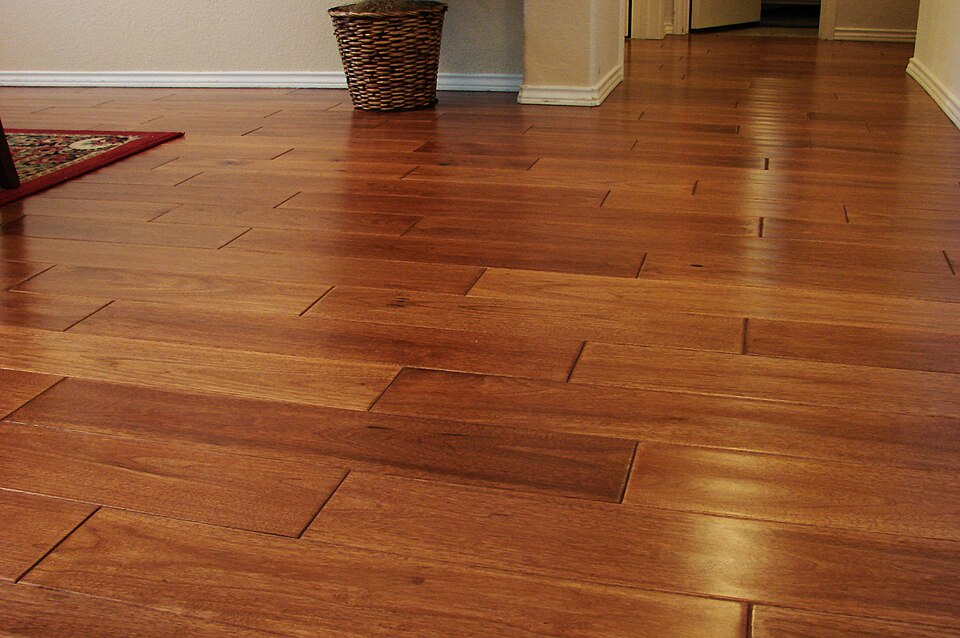
Hickory is not a single species, so there is no single hardness number for it. The flooring sold as hickory usually comes from the genus Carya, and The Wood Database lists individual species between 1,820 and 2,140 lbf; the headline figure of 1,880 lbf (8,360 N) used on this site is for shagbark hickory (Carya ovata)143. Expect strong colour variation and movement that needs managing.
What counts as hickory?
AHEC gives the Latin name as Carya spp. and says the trees grow naturally throughout the Eastern US, from north to south. Hickory and pecan are separate species, but they look nearly identical as logs, so mills often process and sell them together6.
NWFA's Hardwood Floors Magazine lists four true hickories (pignut, shellbark, shagbark and mockernut) and four pecan hickories (water hickory, bitternut hickory, pecan and nutmeg hickory), and says pecan and hickory are traditionally mixed by flooring mills5. The Wood Database makes the same point: various hickories and pecan are typically mixed together and simply sold as hickory4. Always ask a supplier which species, or which mix, is in the product you are buying.
How hard is hickory, species by species?
| Species | Janka hardness | Average dried weight |
|---|---|---|
| Pecan (Carya illinoinensis) | 1,820 lbf (8,100 N) | 735 kg/m³ |
| Shagbark hickory (Carya ovata) | 1,880 lbf (8,360 N) | 800 kg/m³ |
| Mockernut hickory (Carya tomentosa) | 1,970 lbf (8,760 N) | 815 kg/m³ |
| Pignut hickory (Carya glabra) | 2,140 lbf (9,520 N) | 835 kg/m³ |
Values are from The Wood Database4123. NWFA's article gives a single Janka figure of 1820 for the hickory and pecan group and says pecan hickory is slightly softer than true hickories; it does not break the figure down by species5. That matches the pecan row above but is lower than the true-hickory figures from The Wood Database, so be wary of any source that quotes one number for all hickory.
The Wood Database also says pecan falls into a Pecan-Hickory grouping that tends to be slightly more stable but weaker than the true hickories4. For how to read these numbers, see our Janka hardness guide.
What does hickory look like?
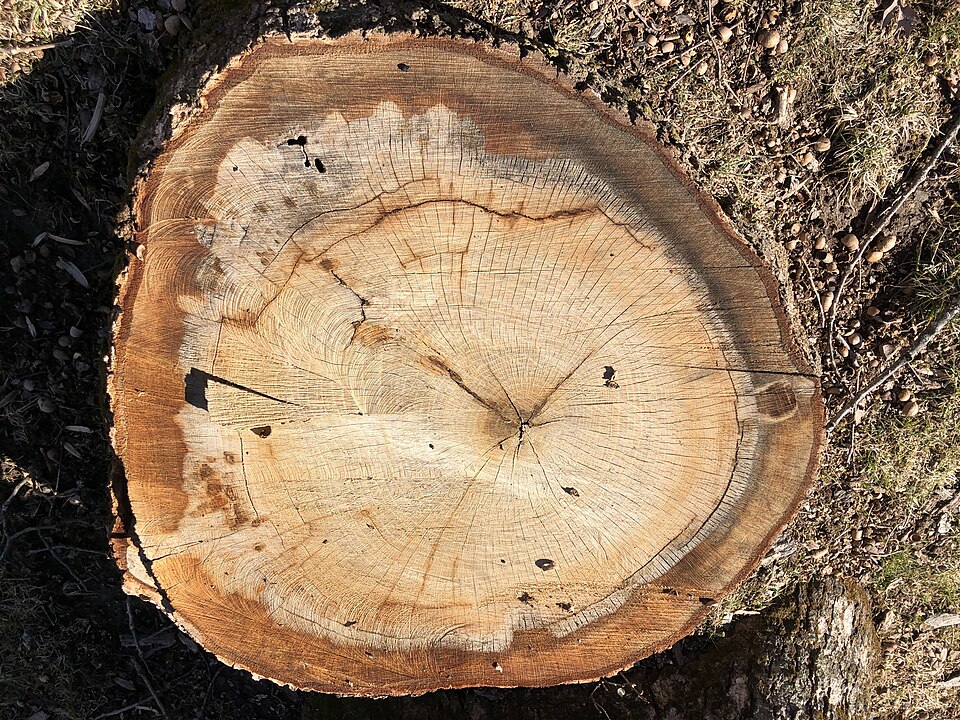
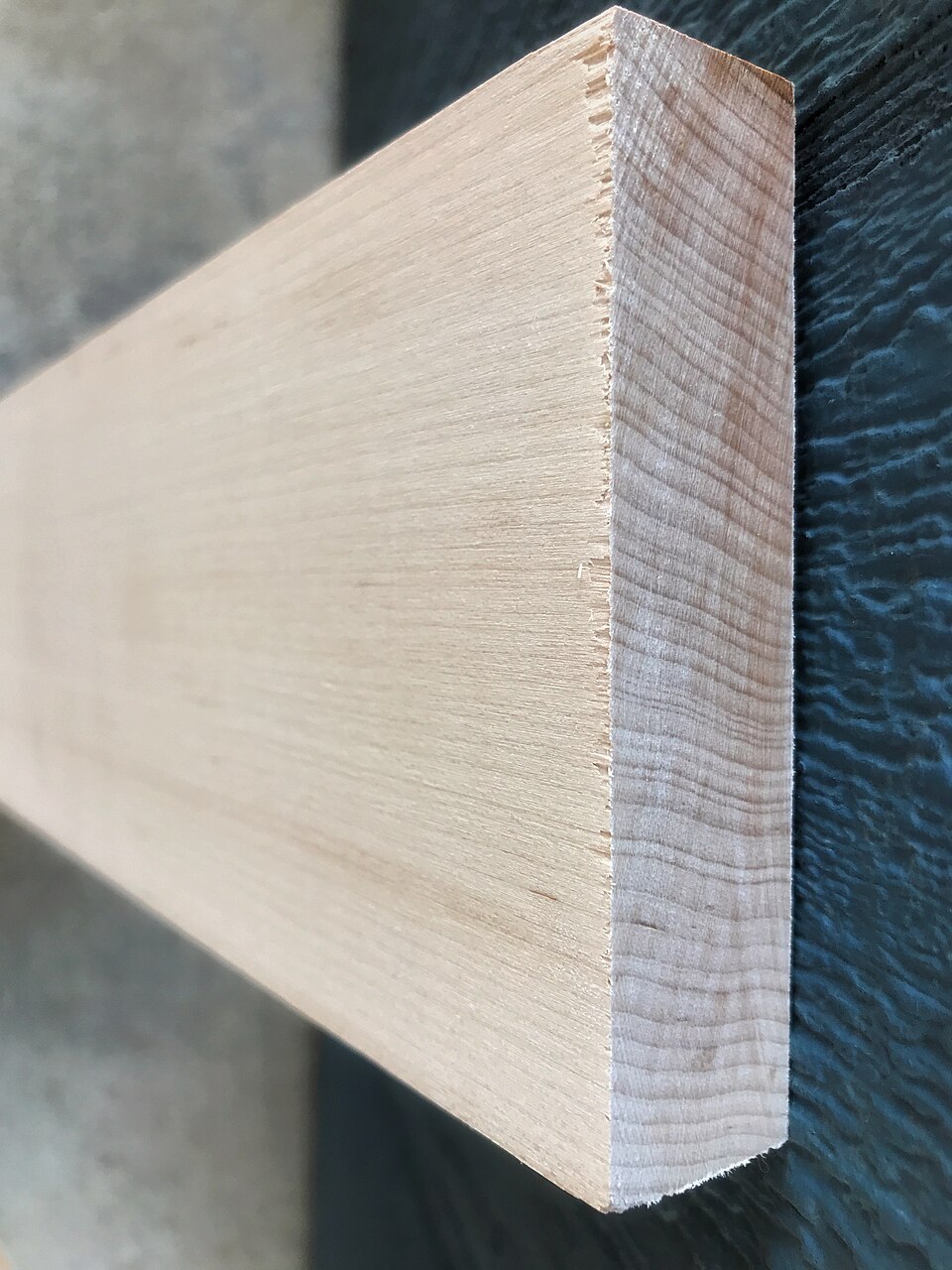
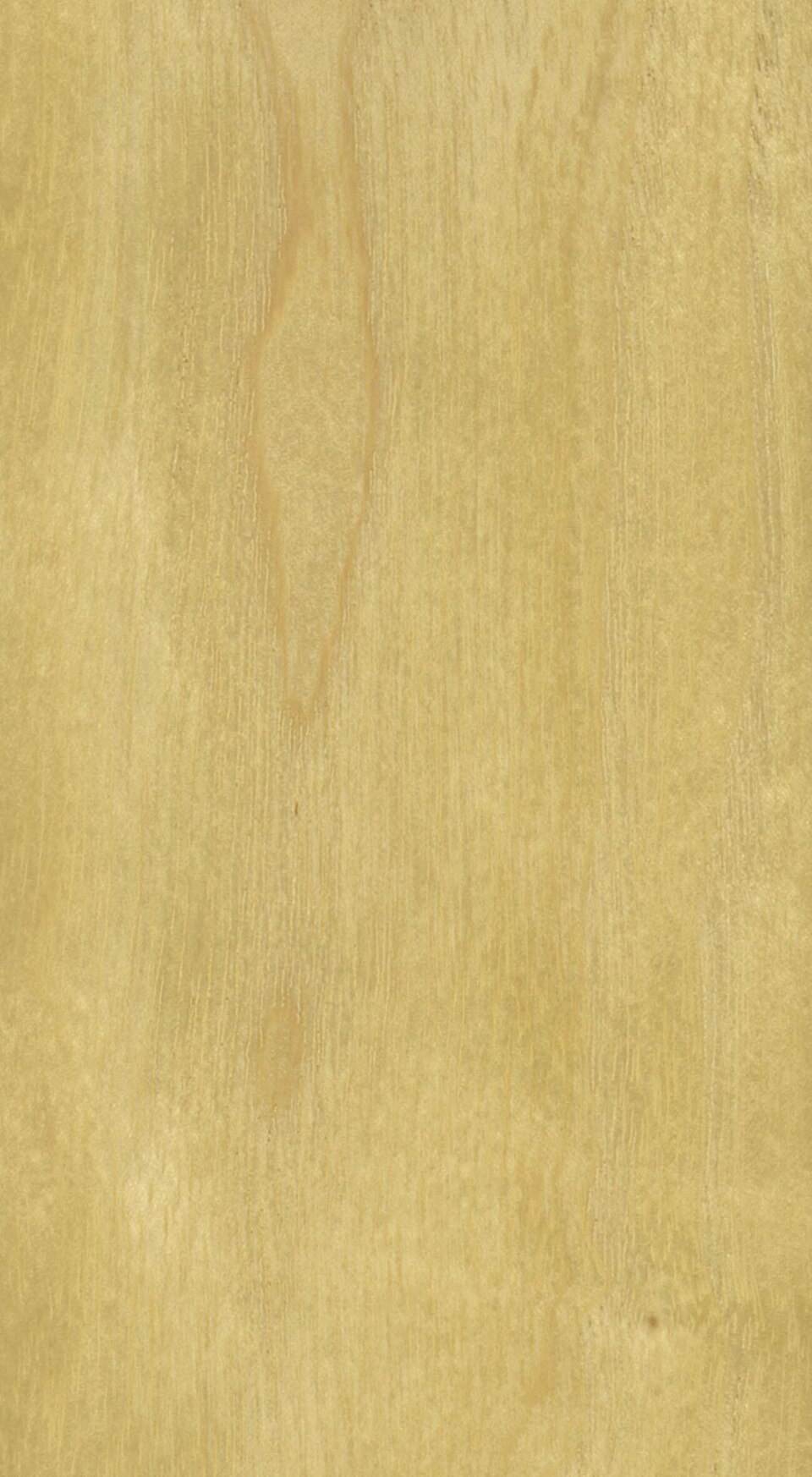
Colour varies by species and by part of the tree. NWFA describes pecan heartwood as reddish brown with dark brown stripes and its sapwood as white or creamy with pinkish tones, while true hickory heartwood is tan or reddish with white to cream sapwood. In both, there are often pronounced differences in colour between spring wood and summer wood5. AHEC adds that deep purple mineral streaks are a natural characteristic6.
The Wood Database describes shagbark heartwood as light to medium brown with a reddish hue, and sapwood as a paler yellowish brown; boards with both are sometimes marketed as Calico Hickory1. NWFA notes that in pecan, sapwood is usually graded higher than the darker heartwood5.
How stable is hickory?
| Species group | Radial | Tangential |
|---|---|---|
| True hickory (NWFA, green to oven-dried) | 7.0% | up to 12.6% |
| Pecan hickory (NWFA) | 4.9% | 8.9% |
| Shagbark (The Wood Database) | 7.0% | 10.5% |
Figures are from NWFA's Hardwood Floors Magazine and The Wood Database51. The two sources differ on the tangential figure for true hickory: NWFA states up to 12.6%, while The Wood Database lists 10.5% for shagbark, 11.0% for mockernut and 11.5% for pignut. The Wood Database's full shagbark line is 7.0% radial, 10.5% tangential, 16.7% volumetric and a T/R ratio of 1.5123.
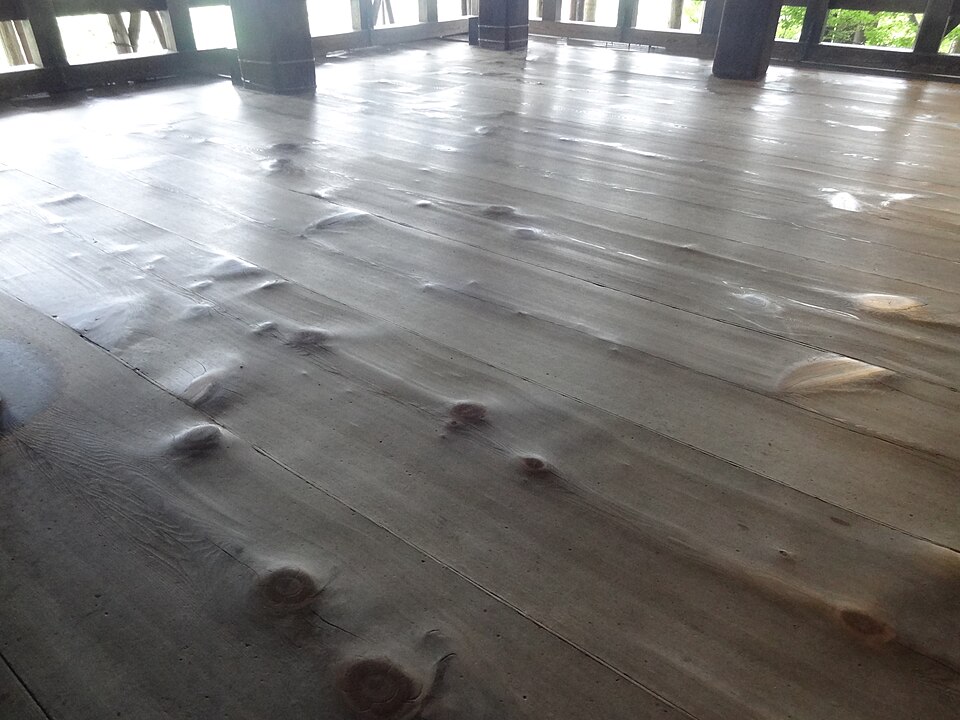
NWFA's rating line for hickory reads "Average", yet its text ranks the species among some of the least stable domestic species used in wood floors, and AHEC says it can be difficult to dry and has large shrinkage that may affect stability under variable moisture56. Plan acclimatisation and humidity control carefully; see moisture and acclimatisation.
How does hickory install, sand and finish?
AHEC says hickory is considered difficult to machine and glue and very hard to work with hand tools. It holds nails and screws well but tends to split, so pre-boring is advised, and it sands and polishes to a good finish6. NWFA says it is difficult to sand because of its density, that its light colour can make sander marks more visible, and that it can be somewhat brittle and tends to split the tongues during installation5.
AHEC rates the heartwood as non-resistant to decay6, which points to dry interior use. For finishes and refinishing, see wood floor finishes and sanding and refinishing.
Is hickory sustainable, and where is it used?
The Wood Database lists tool handles, ladder rungs, wheel spokes and flooring among typical uses, and states that shagbark hickory and pecan are not listed in the CITES Appendices14. NWFA adds that lower grades go to pallets and higher-grade logs are often sliced into veneer for furniture and panelling5.
How does hickory compare with other species?
- American white oak: a common floor species; see its page for its figures.
- Hard maple: also on the hardness chart.
- European ash: a European alternative with a different grain and colour; see its page for figures.
For how boards are built, see solid wood flooring.
Frequently asked questions
Which hickory does the 1,880 lbf figure refer to?
Is pecan the same as hickory?
Is hickory flooring stable?
Why do hickory boards vary so much in colour?
Sources
- Shagbark Hickory, The Wood Database. Accessed .
- Mockernut Hickory, The Wood Database. Accessed .
- Pignut Hickory, The Wood Database. Accessed .
- Pecan, The Wood Database. Accessed .
- Species Specs: Hickory/Pecan, Hardwood Floors Magazine (NWFA). Accessed .
- American hardwood guide: American hickory, American Hardwood Export Council (AHEC China). Accessed .
This page compiles published data from the sources listed above. Read our editorial policy. Last updated .