Sapele
Quick answer
Sapele (Entandrophragma cylindricum) is a golden to dark reddish-brown African hardwood with a Janka hardness of 1,360 lbf (6,060 N) and an average dried weight of 665 kg/m³. Its interlocked grain gives it a striped figure but can cause tearout in machining, and the species is on the IUCN Red List as vulnerable, so check legality and origin before you buy13.
Sapele is a golden to dark reddish-brown African hardwood with a Janka hardness of 1,360 lbf (6,060 N) and an average dried weight of 665 kg/m³1. It is valued for flooring, but its interlocked grain makes machining and sanding less forgiving than with straight-grained species32. It is also on the IUCN Red List as vulnerable, so legality and origin matter1.
What is sapele?
Sapele is Entandrophragma cylindricum, a tropical African tree. The Wood Database gives its other names as sapelli and sapeli mahogany, and notes trees 100 to 150 ft (30 to 45 m) tall with trunks 3 to 5 ft (1 to 1.5 m) in diameter1. ITTO places it in the family Meliaceae and records the names Sapelli, Sapele mahogany, Scented mahogany and West African cedar2. PROTA adds the French names sapelli and cédrat d'Afrique3.
The "mahogany" in these names is a trade and common name only. The sources do not describe sapele as a substitute for any other species, so this page does not either32.
Where does sapele grow?
PROTA describes it as widespread, from Sierra Leone east to Uganda and south to DR Congo and Cabinda (Angola)3. ITTO gives the range as West, Central and East Africa, from Côte d'Ivoire to Uganda2. PROTA calls sapelli one of the most important export timbers of tropical Africa, with exports valued at "at least US$ 165 million in 2003", mainly from Cameroon, the Central African Republic and Congo3.
What does sapele look like?
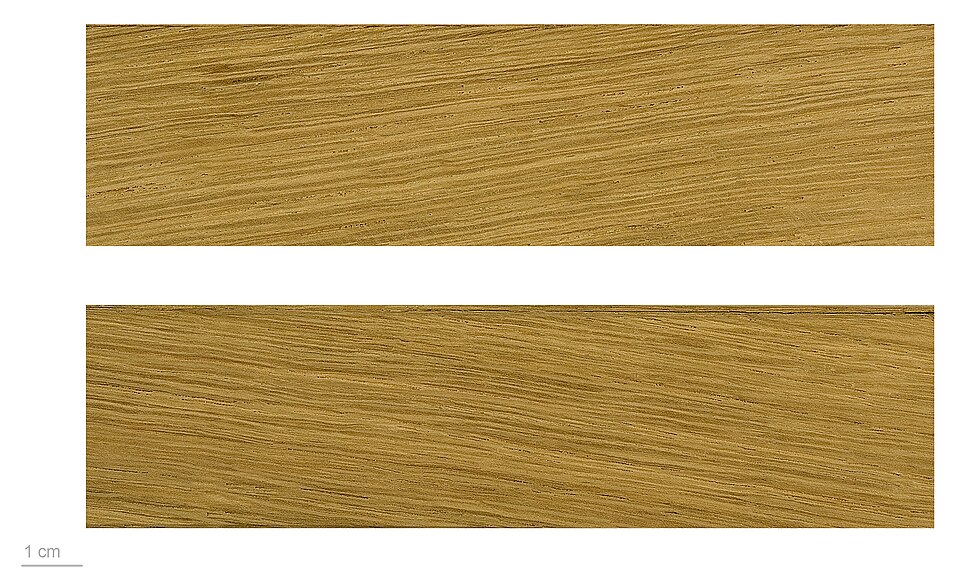
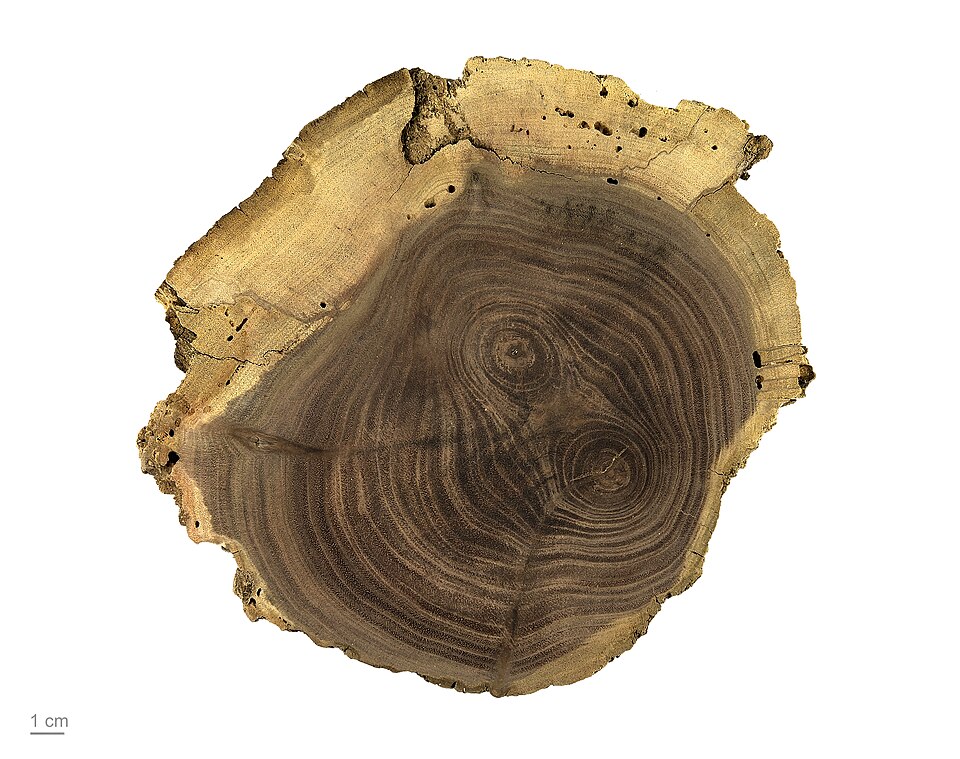
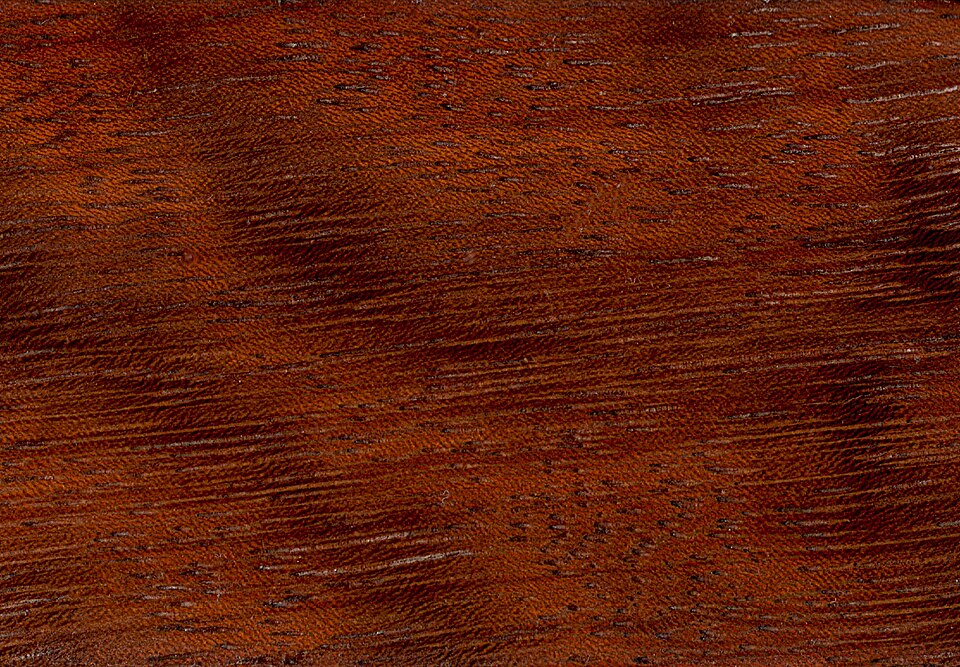
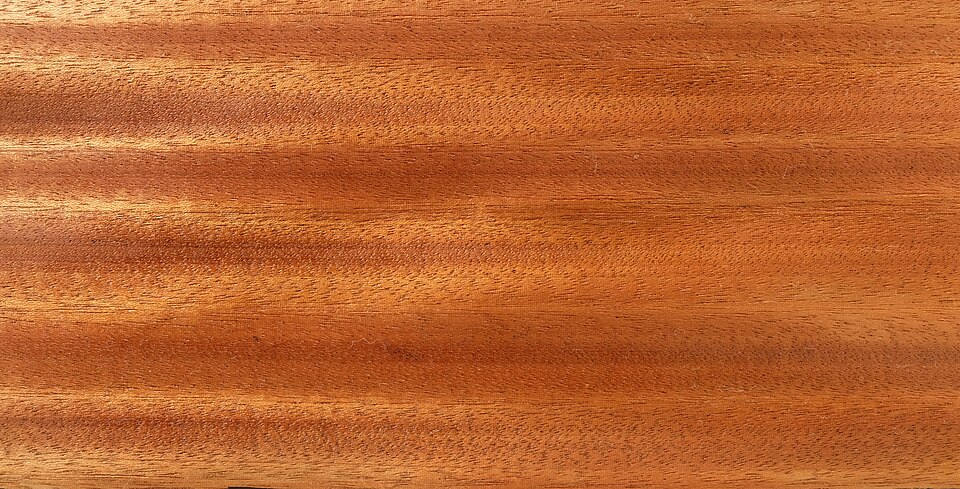
The Wood Database describes the heartwood as golden to dark reddish brown, darkening with age, with a fine, uniform texture and good natural lustre1. PROTA says freshly cut heartwood is pinkish brown and darkens to reddish or purplish brown, while the sapwood is creamy white to pinkish grey and up to 10 cm wide3.
The grain is the defining feature. The Wood Database calls it interlocked and sometimes wavy, and PROTA says quarter-sawn surfaces are regularly striped or show a roe figure13. ITTO describes the figure as fine with ripple marks2. The Wood Database notes that figured sapele, such as pommele or quilted, can be extremely expensive as lumber and veneer, whereas regular flatsawn or quartersawn lumber is moderately priced1.
How hard and dense is sapele?
The Wood Database lists a Janka hardness of 1,360 lbf (6,060 N)1. ITTO publishes its own figures in kilograms-force, 592 kgf (side) and 689 kgf (end grain) at 12% moisture content, which are not directly comparable with the lbf figure without conversion2. For more on how to read these numbers, see Janka hardness explained, and compare species on the hardness chart.
| Property | The Wood Database | ITTO | PROTA |
|---|---|---|---|
| Density | 665 kg/m³ average dried weight; specific gravity 0.56 to 0.67 | 0.69 g/cm³ air-dry at 12% moisture content | 560 to 750 kg/m³ at 12% moisture content |
| Shrinkage | Radial 5.2%, tangential 7.2%, volumetric 12.9% | Total tangential 7.2%, radial 5.0% | Green to oven dry: 3.5 to 7.6% radial, 4.3 to 9.8% tangential |
| T/R ratio | 1.4 | 1.4 | not stated |
Source:123. The sources broadly agree: a medium-weight timber with a tangential shrinkage of about 7.2% in two of them.
How stable is sapele on the floor?
A T/R ratio of 1.4 means tangential shrinkage is about 1.4 times radial shrinkage, a modest difference12. PROTA says that once dry the wood is moderately stable in service3. Drying is the sensitive stage. ITTO says the grain is slightly but systematically interlocked and needs special care when drying, with a moderate to slight tendency to bow, cup and check; PROTA says it air-dries fairly rapidly but is prone to warping and distortion and needs mild kiln schedules23.
For a finished floor, this means buying from a supplier who kiln-dries carefully and allowing boards to settle in the room. See moisture and acclimatisation for the general method, and solid wood flooring for how solid boards respond to humidity.
How does interlocked grain affect sanding and finishing?
The sources disagree on how easy sapele is to work, which is worth knowing before you hire a sander.
- Machining: The Wood Database says interlocked grain can cause tearout in planing and routing, and that sapele has a slight blunting effect on cutters1. ITTO says planing is moderately easy but moulding, boring and mortising are rather difficult, and recommends pre-boring for nails2. PROTA says it saws and works easily with hand and machine tools3.
- Sanding: ITTO says it is difficult to get very good sanding results because of the interlocked grain2.
- Gluing and finishing: The Wood Database says it turns, glues and finishes well, and PROTA also rates gluing, staining and polishing as good. ITTO rates gluing as difficult because of extractives, though it says the wood can be polished without surface preparation132.
- Iron: The Wood Database notes that the wood can discolour and stain when in direct contact with iron1.
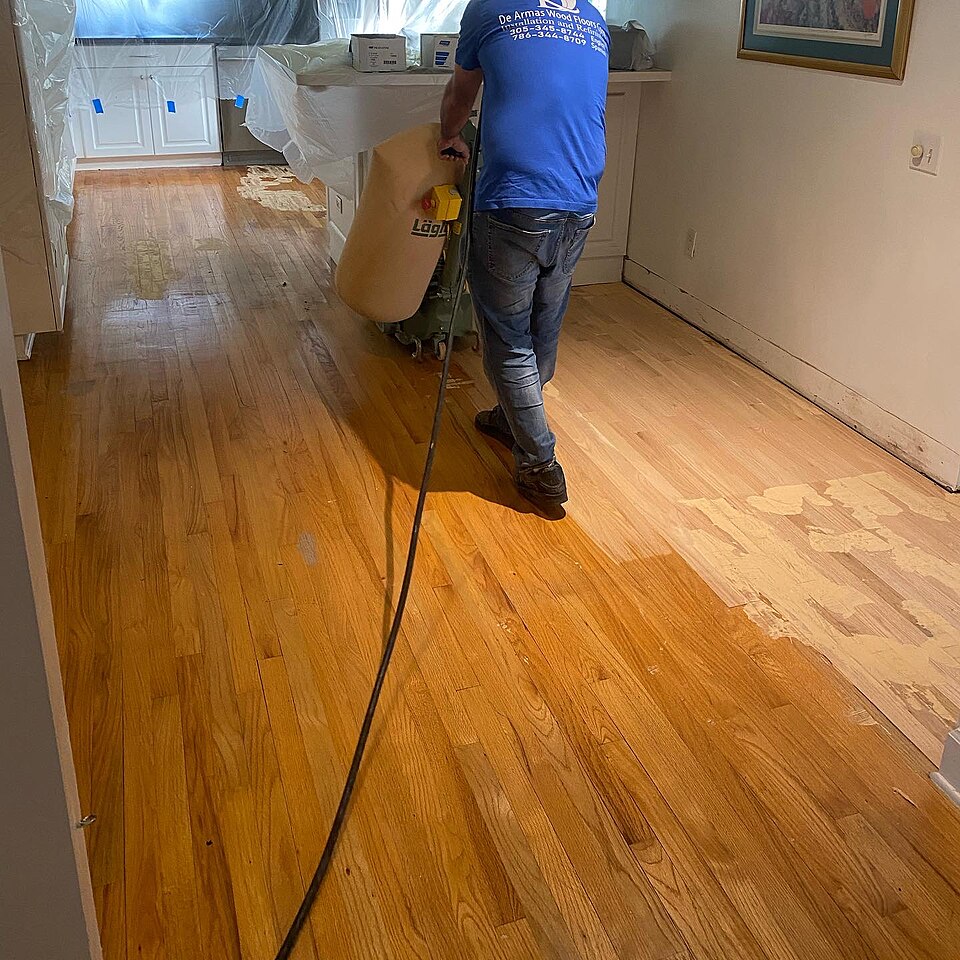
Practical takeaway: ask your installer about experience with interlocked grain and whether they will test the adhesive or finish on offcuts. The general method for resurfacing is in sanding and refinishing.
How durable is sapele?
The Wood Database says the heartwood ranges from moderately durable to very durable against decay, with moderate insect and borer resistance1. ITTO gives a natural durability index of 3, moderately durable, and says the wood is not suited to permanent or long-lasting humidification2. PROTA also says moderately durable, with moderate termite resistance3. Keep floors away from persistent moisture.
The Wood Database also reports that sapele has been reported as a skin and respiratory irritant, though severe reactions are quite uncommon1.
Is sapele used for flooring and parquet?
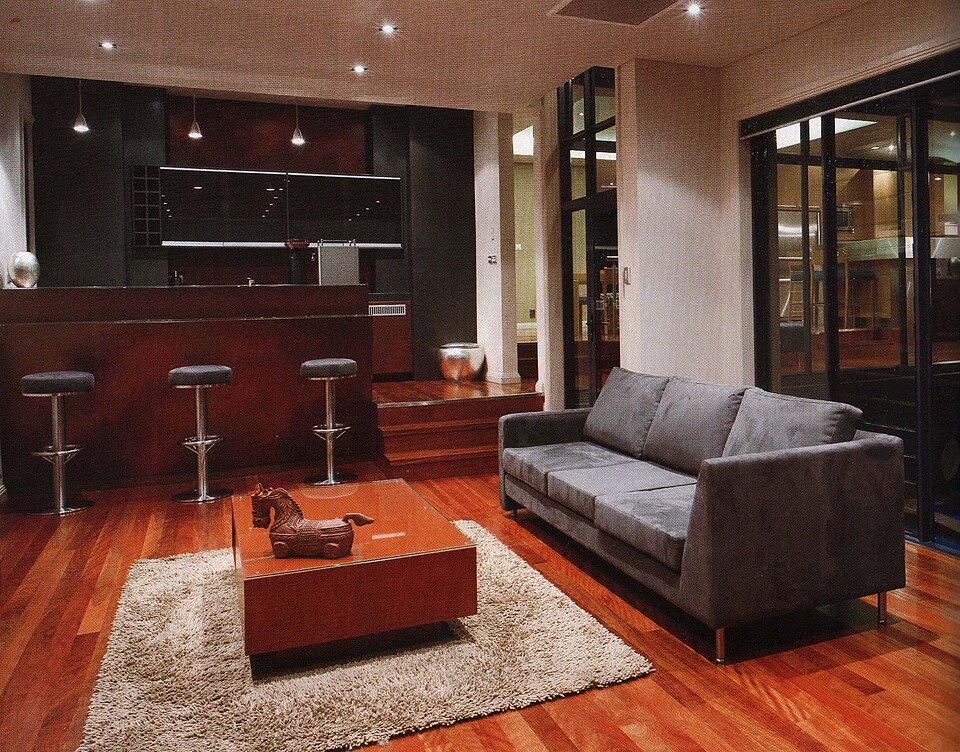
Yes. PROTA says the wood is highly valued for flooring, interior joinery, panelling, stairs and furniture3. The Wood Database lists flooring among common uses, alongside veneer, plywood, furniture, cabinetry, boatbuilding and musical instruments1. ITTO lists flooring and parquet under general housing uses2.
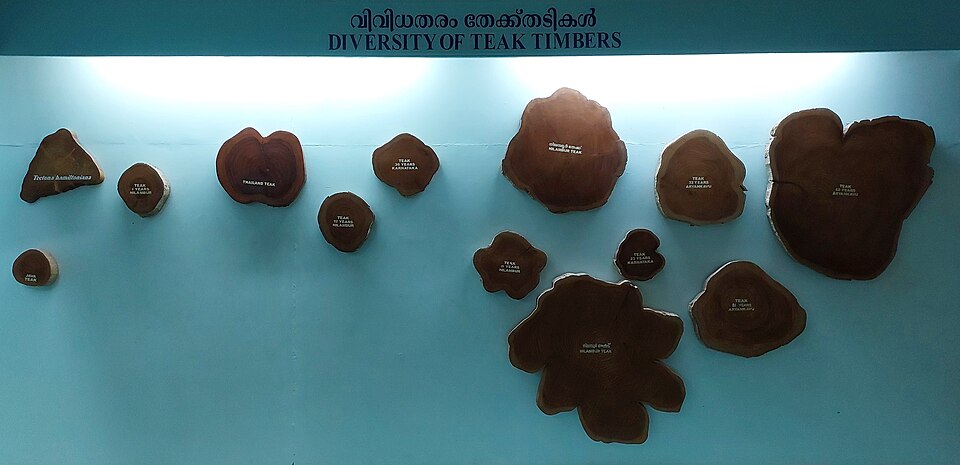
The striped figure shows best on quarter-sawn faces, so that is where a striped pattern is most visible3. For parquet patterns see herringbone, and see engineered wood for boards with a thin timber top layer. For comparison with other tropical hardwoods, see teak and the oak and walnut pages linked below.
Is sapele sustainable and legal to buy?
The Wood Database says sapele is not listed in the CITES Appendices but is on the IUCN Red List as vulnerable, owing to a population reduction of over 20% in the past three generations1. PROTA likewise says it is on the IUCN Red List as vulnerable, and that in many regions it is still not exploited on a sustainable basis3. ITTO gives the CITES status as unrestricted2. We could not open the IUCN page directly, so check the current Red List entry for the latest assessment.
PROTA lists minimum felling diameters by country, for example 100 cm in Cameroon and 80 cm in Gabon3. In the EU, the European Commission says wood is one of seven commodities under the Deforestation Regulation, which requires operators placing products on the market to show they are deforestation-free and legally produced, with a digital due-diligence statement. It repeals the EU Timber Regulation4. For any sapele floor, ask the supplier for proof of species, country of harvest and legal documentation.
Related pages
Compare European oak, black walnut and teak, and see flooring standards for grading and certification context.
Frequently asked questions
Is sapele a true mahogany?
Is sapele hard enough for flooring?
Why is sapele hard to sand evenly?
Is sapele endangered?
Does sapele fall under EU deforestation rules?
Sources
- Sapele, The Wood Database. Accessed .
- Sapelli (Entandrophragma cylindricum), ITTO (International Tropical Timber Organization), Tropical Timber species database. Accessed .
- Entandrophragma cylindricum (PROTA), PROTA, via Pl@ntUse. Accessed .
- Regulation on deforestation-free products, European Commission, Directorate-General for Environment. Accessed .
This page compiles published data from the sources listed above. Read our editorial policy. Last updated .