Teak
Quick answer
Teak (Tectona grandis) is a golden to medium brown timber with a Janka hardness of 1,070 lbf (4,740 N) and lower shrinkage than European oak. Sourcing needs care: natural teak forests exist in only four countries, and under EU sanctions on Myanmar Timber Enterprise, timber exported from Myanmar is regarded as illegal under the EU Timber Regulation145.
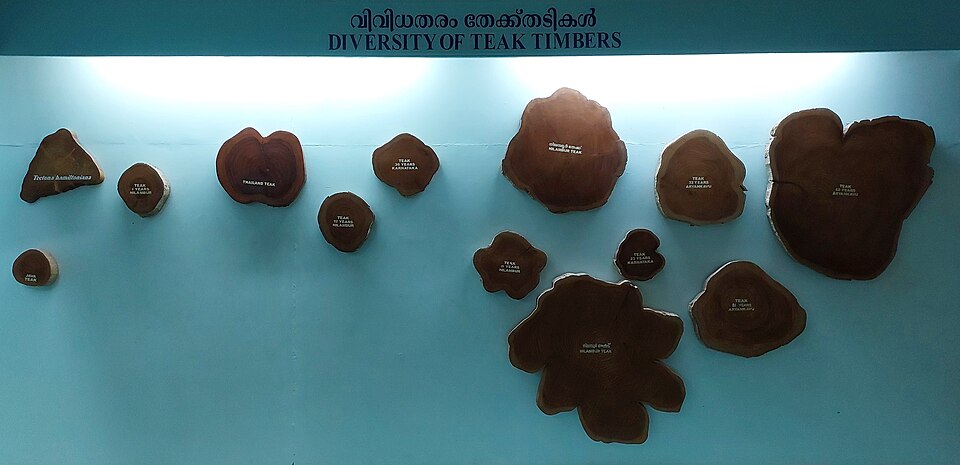
Teak is a golden to medium brown timber with a Janka hardness of 1,070 lbf (4,740 N), slightly below English oak, and noticeably lower shrinkage figures12. Its sourcing is the harder question: natural teak forests grow in only four countries, and timber from Myanmar is caught by EU sanctions45. Check species and origin before you buy.
What is teak?
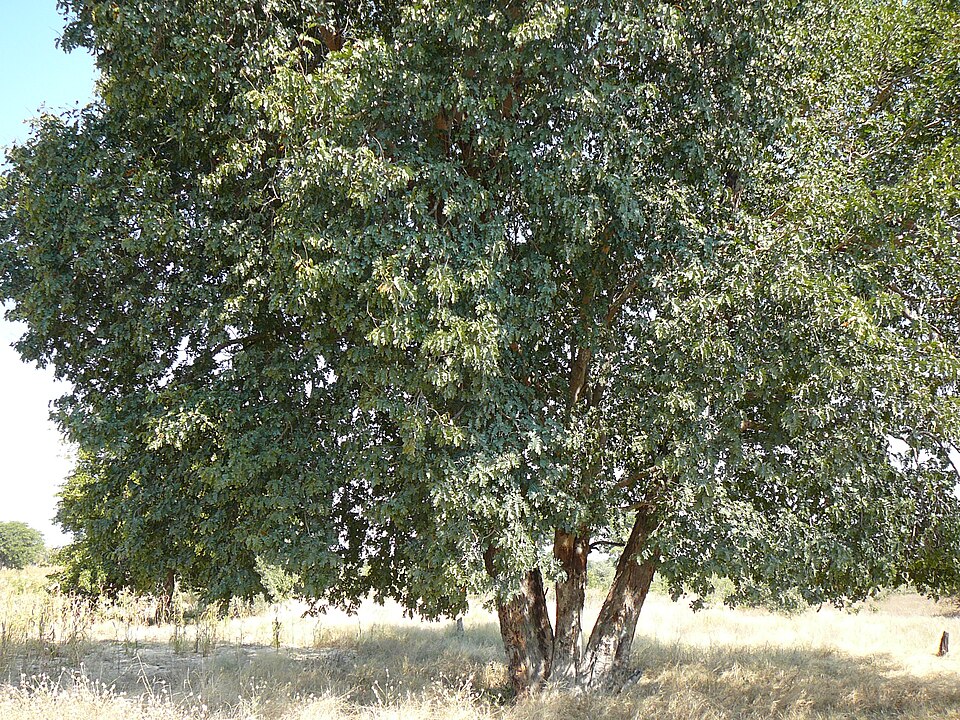
Teak is Tectona grandis, also known as Burmese teak or genuine teak. The Wood Database says it is native to southern Asia and widely grown on plantations throughout tropical Africa, Asia and Latin America1. The name "teak" is also applied to other woods that resemble it, which is why the page treats "Burmese teak" as the unambiguous term for the genuine species1.
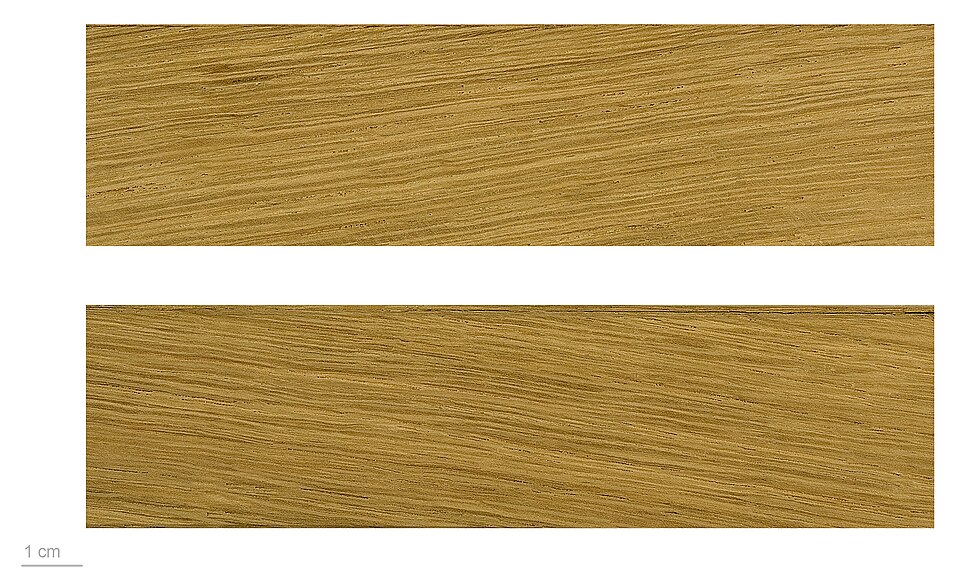
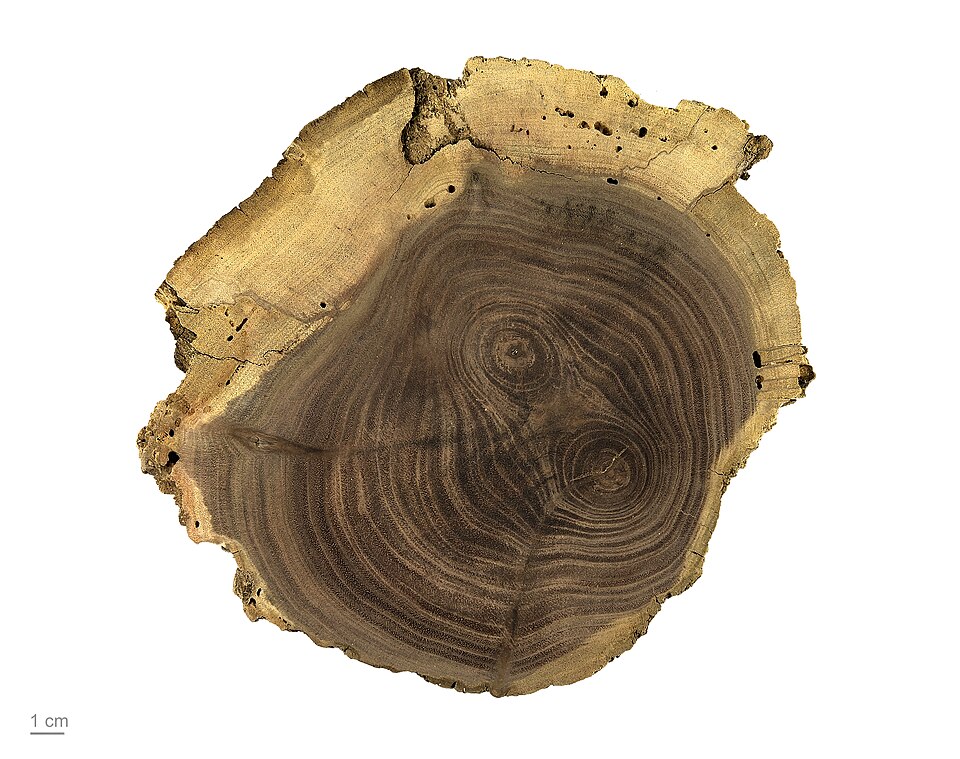
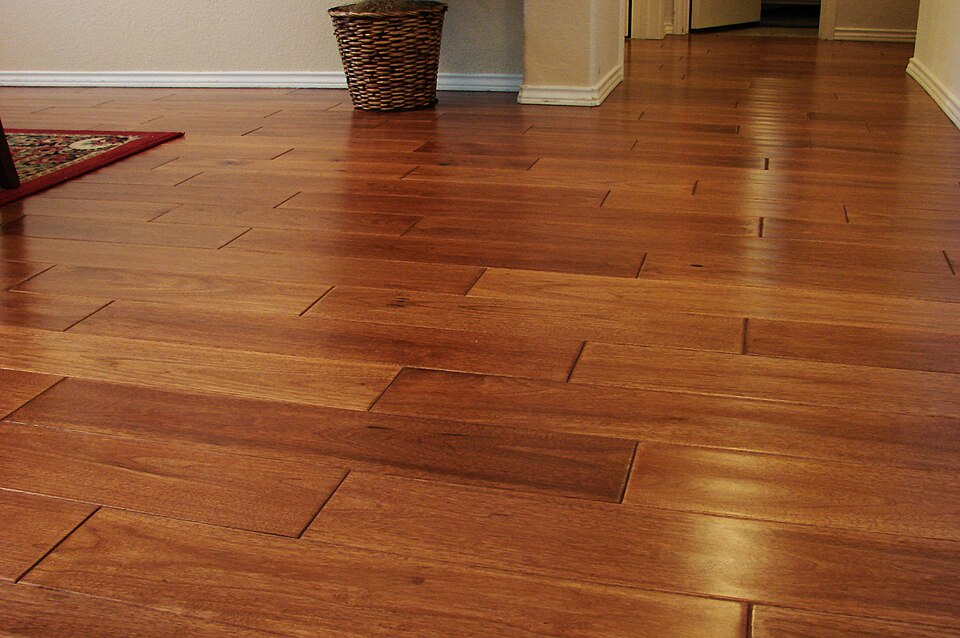
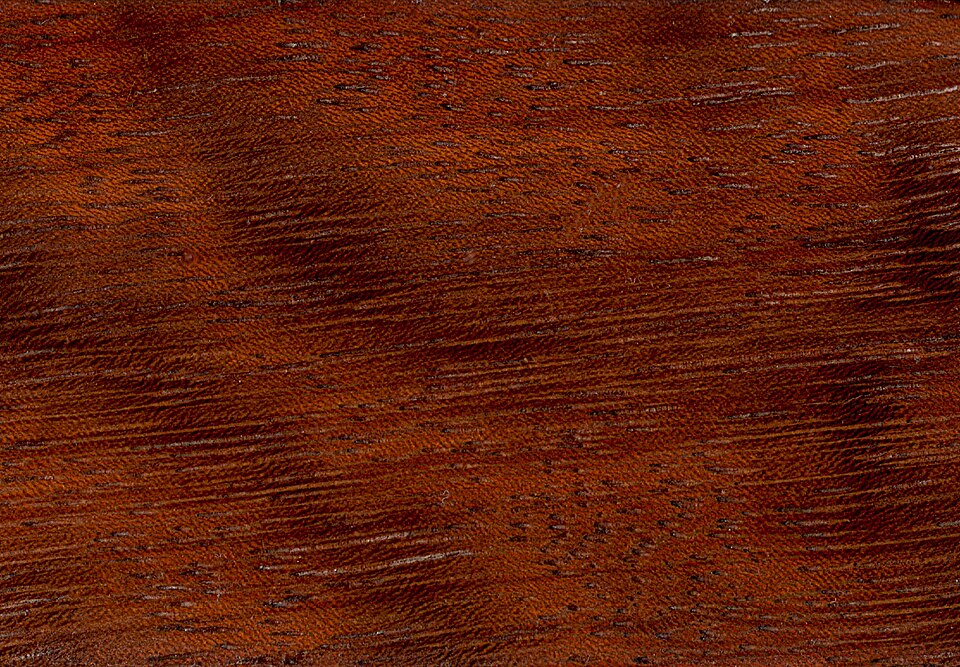
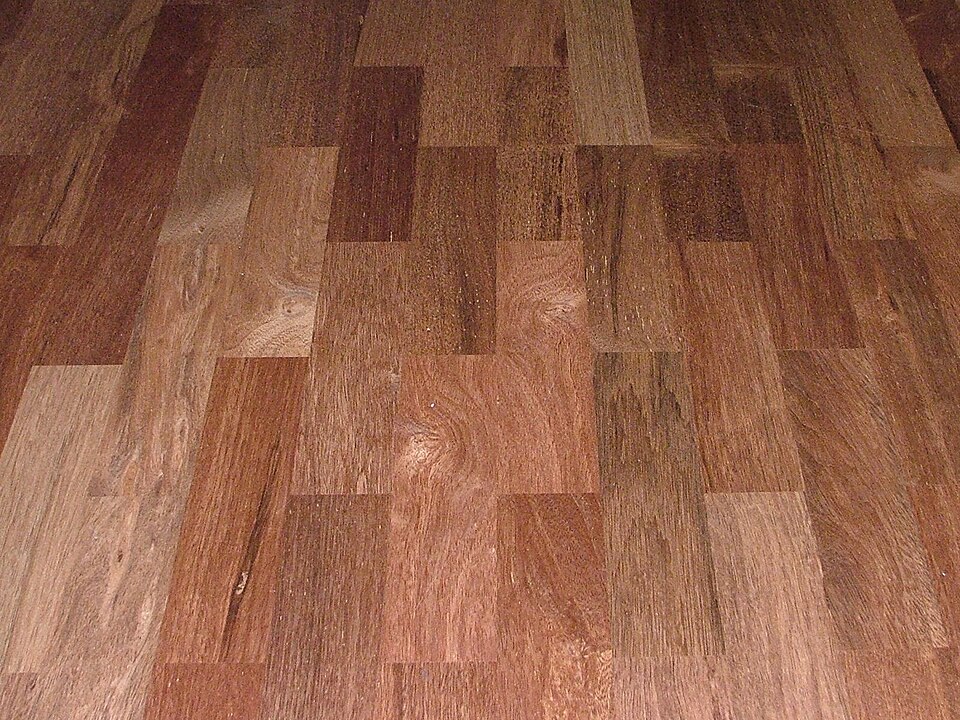
NWFA includes teak among the species on its wood flooring pages, giving the origin as Asia and describing heartwood from yellow-brown to dark golden brown that turns rich brown under exposure to sunlight, with a lighter cream sapwood and straight grain with a coarse, uneven texture3. The Wood Database does not list flooring among teak's common uses; it names ship and boatbuilding, veneer, furniture, exterior construction, carving and turnings1.
How hard, dense and stable is teak?
| Species | Janka hardness | Average dried weight | Shrinkage (radial / tangential) |
|---|---|---|---|
| Teak (Tectona grandis) | 1,070 lbf (4,740 N) | 655 kg/m³ | 2.6% / 5.3% |
| English oak (Quercus robur) | 1,120 lbf (4,980 N) | 675 kg/m³ | 4.7% / 8.4% |
Figures are from The Wood Database12. The tangential and radial shrinkage values for teak are well below those of English oak, and the volumetric figure is 7.2% against 13.0% for oak12. See our Janka hardness guide for how to read the scale, and moisture and acclimatisation for installation conditions, which still matter with a species that shrinks less.
What is teak like to work and finish?
The Wood Database says teak is easy to work in nearly all regards, with the caveat that its silica content, up to 1.4%, has a pronounced blunting effect on cutting edges. Despite its natural oils it usually glues and finishes well, though in some cases the surface may need wiping with a solvent beforehand to reduce the oils1. Ask your installer and your finish supplier to confirm compatibility; our guide to wood floor finishes covers the options in general.
The heartwood is rated very durable, and The Wood Database says many consider teak the gold standard for decay resistance1.
Where does teak come from, and what are the legal issues?
FAO reports that natural teak forests grow in only four countries: India, Laos, Myanmar and Thailand. It estimated their combined area at about 29 million hectares in 2010, almost half of it in Myanmar. The same release says planted teak forests are increasing in area, and that India alone manages 38 percent of the world's planted teak forests4. The Wood Database uses the name Burmese teak to separate naturally grown trees, typically from Myanmar, from plantation teak1.
On trade rules, The Wood Database says teak is not listed in the CITES Appendices, but that sanctions have been placed on imported teak since the February 2021 military takeover in Myanmar1. The European Commission's information note explains the EU position: Myanmar Timber Enterprise, which has exclusive rights on the production, sale and export of timber in Myanmar, was designated on 21 June 2021 under Council Regulation (EU) No 401/2013. Because all timber exported from Myanmar must be sold from its depots, the note says all such timber exported to the EU will be regarded as illegal under the EU Timber Regulation5.
The note adds that buying through an intermediary does not remove the problem: it names intermediaries in Thailand, the UAE, Singapore, India and China as higher risk for Myanmar timber, and says knowingly taking part in circumvention is prohibited. Imports may occur only if payment was made before the listing, and customs authorities are expected to verify the supporting documents carefully5. The note is undated in the copy we read, and its annex lists designations up to July 2023, so check the current position and the rules where you live before buying. If you are specifying teak, ask the supplier for documents that show the country of origin and whether the timber is from a plantation.
For other tropical flooring timbers and their sourcing notes, see our profiles of merbau, iroko, sapele and jatoba.
Is Zambezi teak a type of teak?
No. Zambezi teak is a trade name for Baikiaea plurijuga, a legume, which FAO describes as quite distinct botanically and structurally from the so-called true teak, Tectona grandis, although its wood properties are similar. FAO lists African teak, Rhodesian teak, Zambian teak and Zambezi redwood as older names for it6.
The distinction matters when you read a specification. The Réserve collection by OscarOno Paris, for example, lists its species as Zambezi teak, Baikiaea plurijuga, and quotes approximately 2,990 lbf for Janka hardness; that is the maker's own figure for a different species, not a value for Tectona grandis7. The teak figures in the tables above do not apply to it.
How does teak compare with other species?
- European oak: slightly harder (1,120 lbf) but with higher shrinkage figures.
- Black walnut: see its page for hardness and movement figures.
- Hickory: a North American group with a wide range of hardness values by species.
For how boards are built, see solid wood flooring.
Frequently asked questions
Is teak harder than oak?
Is Zambezi teak the same as teak?
Can I buy teak from Myanmar?
Is plantation teak different from natural teak?
Does teak need special preparation before gluing or finishing?
Sources
- Teak, The Wood Database. Accessed .
- English Oak, The Wood Database. Accessed .
- Teak Species wood flooring, National Wood Flooring Association (NWFA). Accessed .
- Natural teak forests decline, while planted teak forests increase, Food and Agriculture Organization of the United Nations (FAO). Accessed .
- Non-paper: Commission services' information note in relation to certain listings under Council Decision 2013/184/CFSP and Council Regulation (EU) No 401/2013 (Myanmar/Burma), European Commission, DG FISMA (copy hosted by ONPCSB, Romania). Accessed .
- How to save the Zambezi teak forests (Unasylva No. 152), Food and Agriculture Organization of the United Nations (FAO). Accessed .
- Réserve collection, OscarOno Paris. Accessed .
This page compiles published data from the sources listed above. Read our editorial policy. Last updated .